
In the volatile landscape of the Yemen conflict, the rhythm of violence has shifted from sporadic skirmishes to a pattern of intensified military actions. For the civilian populations living in the shadow of these tensions, the cost is measured in lives. As Houthi strikes against Saudi Arabia have increased, claiming the lives of hundreds of civilians, the geopolitical stakes have risen alongside the casualty counts. It is a cycle of escalation that has forced international actors to weigh the complexities of regional stability against the immediate necessity of protection.
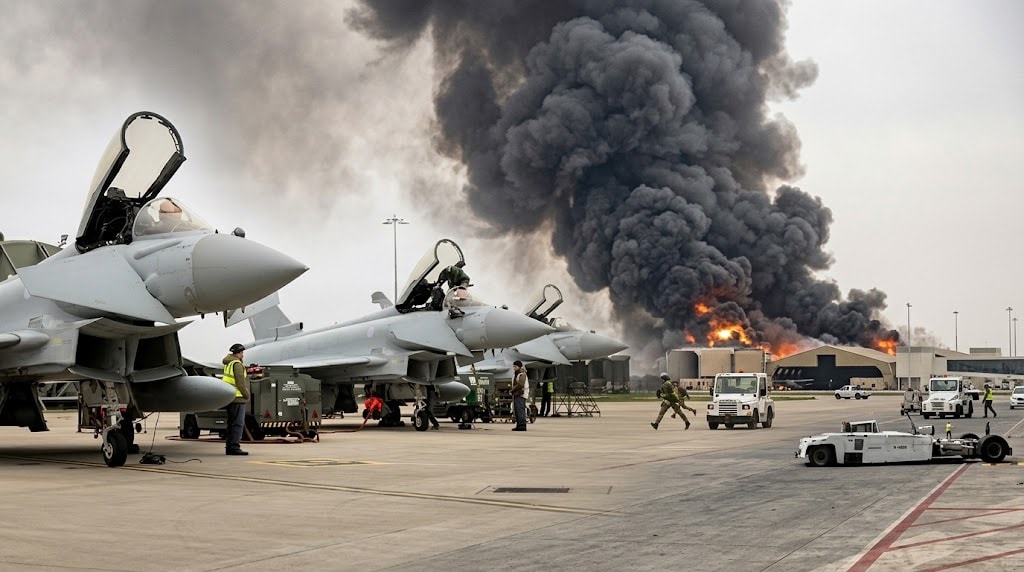
On October 20, 2026, the United Kingdom signaled its intent to intervene in this defensive struggle. The decision to deploy Royal Air Force Typhoon fighter jets to Saudi Arabia is not merely a movement of hardware, but a response to a specific, mounting threat. The deployment is framed as a defensive necessity, a move designed to bolster the skies against the very strikes that have turned civilian areas into battlegrounds.
While the Typhoon jets represent the most visible edge of this deployment, the British contribution is a multi-layered logistical and tactical commitment. The mission is not limited to air superiority; it is a comprehensive package of support intended to stabilize the defensive posture of the region. Alongside the Typhoons, the UK is sending an A400M transport aircraft, a heavy-lift asset capable of moving essential supplies and personnel across vast distances.
The primary objective of these Typhoons is to conduct defensive counter air missions.
This support extends deep into the operational mechanics of the air campaign. The UK is expanding its in-flight refueling support, a critical capability that allows fighter jets to remain airborne longer and cover more territory, effectively extending the reach of defensive patrols. Furthermore, the deployment includes the arrival of military advisers, personnel tasked with providing the expertise and coordination necessary to integrate these advanced assets into the existing defensive architecture. This combination of high-performance aircraft, logistical muscle, and human expertise suggests a commitment that goes beyond a simple hardware transfer.

Bloomberg reports the U.K. will send RAF Typhoon fighter jets to help defend Saudi cities and infrastructure against Houthi attacks. An A400M transport aircraft and military advisers will also be deployed.
The primary objective of these Typhoons is to conduct defensive counter air missions. In the context of modern warfare, this means patrolling the airspace to intercept and neutralize incoming threats before they can reach their targets. As the Houthis continue their military actions, the ability to control the skies becomes the primary line of defense for those on the ground.
This mission is inherently tied to the humanitarian fallout of the conflict. The UK’s decision to step into this fray is presented as an effort to protect civilians and work toward bringing an end to the conflict. It is a delicate balancing act, occurring against a backdrop of long-standing concerns regarding Saudi Arabia's human rights record. The UK government is navigating a path that seeks to address the immediate, lethal threat of Houthi attacks while managing the broader, more complicated political realities of its alliance with the Saudi state.
The political rhetoric surrounding the deployment emphasizes the concept of alliance and the duty of response. The UK's stance is one of support, framed not as an act of aggression, but as a response to a request for assistance from a partner facing an escalating threat.
Mr. Streeting articulated this position, framing the current state of the conflict as a breaking point. "This is an intolerable escalation, and the United Kingdom is the kind of country that when our allies call for help, we respond," he stated. This sentiment underscores the logic behind the October 20 deployment: that the intensity of the Houthi strikes has reached a threshold where passive observation is no longer a viable option for the United Kingdom. As the Typhoons begin their missions, the focus remains on whether this infusion of British air power can successfully mitigate the strikes that have defined this chapter of the Yemen conflict.

RAF fighter jets will help defend Saudi Arabia against aerial attacks from the Houthis. The Ministry of Defence said the UK would send Typhoon fighter jets to provide additional defensive military support to the kingdom amid escalating attacks by the militant rebel group ⤵️ https://t.co/iEyOHBi0Yy