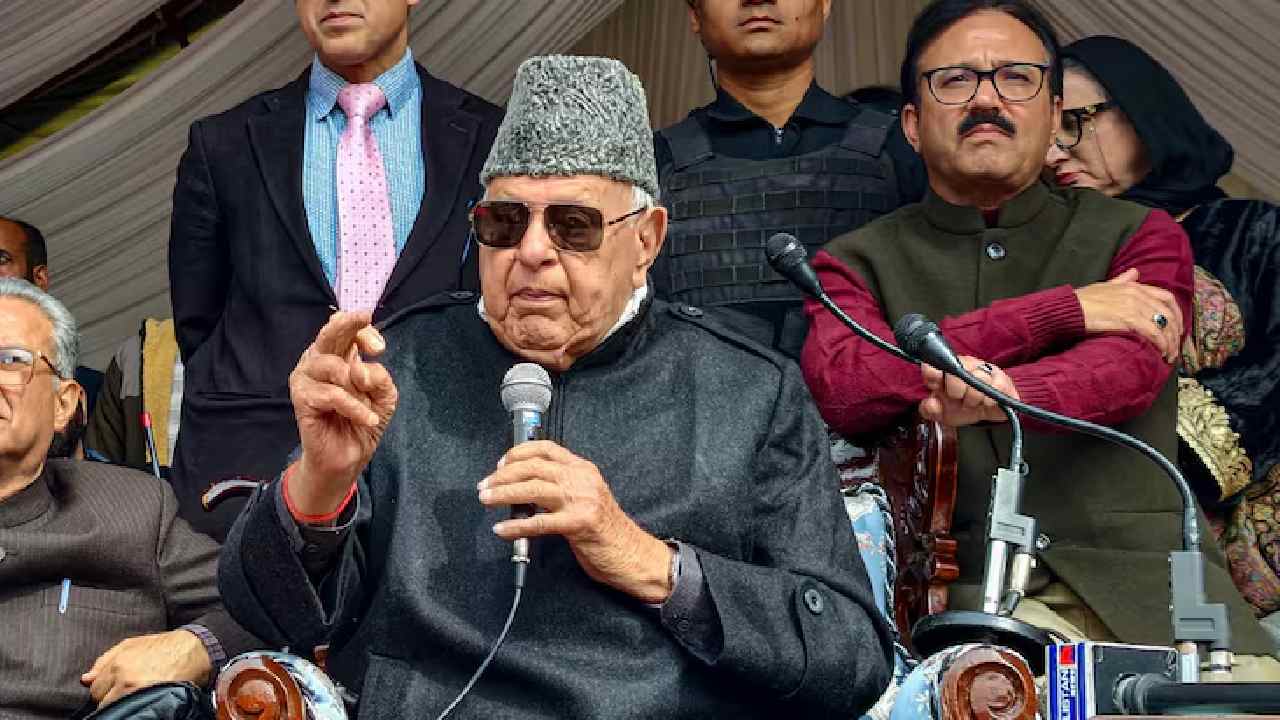
In the complex, high-stakes theater of Jammu and Kashmir politics, words are rarely just words; they are often declarations of loyalty or provocations of dissent. Recently, former Chief Minister Farooq Abdullah stepped into the center of a political storm by making a series of statements that challenged the fundamental narrative of the Indian state's relationship with the region. Abdullah, a veteran figure in the territory's political history, suggested a role for Pakistan that directly contradicted the official stance of the Indian government. By claiming that Pakistan is protecting the Kashmiri people, Abdullah did more than just offer a critique of local policy; he re‑centered the geopolitical tension that has defined the region.
Abdullah’s remarks were not merely an observation of foreign policy, but a pointed critique of the central government's intentions. He expressed a profound skepticism regarding the actions taken by Delhi, suggesting that the expectations placed upon the Indian government are not being met. In a moment of sharp rhetoric, he stated, "पाकिस्तान कर रहा कश्मीरियों की रक्षा, दिल्ली से उम्मीद भी नहीं". This sentiment underscored a deep‑seated frustration with how the central administration manages the affairs of Jammu and Kashmir.
As soon as the statements were made, the reaction from the Bharatiya Janata Party (BJP) was swift and uncompromising. For the BJP, Abdullah’s comments were not seen as legitimate political discourse, but as a direct affront to national integrity. The party moved quickly to condemn the former leader, framing his perspective as fundamentally anti‑national. The debate that followed was not merely about policy disagreements; it was a battle over the very definition of patriotism in the context of the Kashmir dispute. The BJP demanded a formal apology, insisting that such claims regarding Pakistan's role cannot go unanswered in a democratic framework.
The BJP's criticism was not limited to general condemnation; it was a targeted demand for accountability.
The BJP's criticism was not limited to general condemnation; it was a targeted demand for accountability. Party leaders emphasized that the situation in Kashmir is a matter of national security and that Abdullah's assertions required a formal response. The party has pushed for a clarification of these statements, viewing them as a dangerous deviation from the established political norms of the country. By questioning the intentions of the Indian government and elevating the role of Pakistan, Abdullah has placed himself at the center of a debate regarding what constitutes acceptable political speech in a sensitive border region.
The confrontation quickly moved from the realm of policy to the realm of personal character. Sat Sharma, a leader within the BJP, escalated the rhetoric, turning the political disagreement into a sharp personal rebuke. Sharma’s response was visceral, suggesting that if Abdullah’s affinity for Pakistan was as deep as his statements implied, he should simply move there and settle. This type of exchange highlights the intense polarization currently defining the political climate in Jammu and Kashmir, where the line between political opposition and perceived disloyalty is frequently contested.
While the international and national implications of Abdullah's words dominated the headlines, the former Chief Minister also directed his frustrations toward the local administrative machinery. Amidst the geopolitical debate, Abdullah raised concerns regarding the governance of the region, specifically criticizing the handling of pending health sector files within the Lieutenant Governor's office. This move suggests that his critique is multi‑layered, spanning from the highest levels of international relations down to the essential, day‑to‑day functions of regional healthcare administration. It paints a picture of a leader who views the current governance structure as failing the people on both a macro and micro level.
As the dust settles on the immediate fallout of the statements, the political landscape remains deeply fractured. The core of the issue remains the tension between the Indian government's policies and the perspectives of local leaders like Abdullah. With the BJP demanding apologies and the discourse revolving around themes of national loyalty and the role of neighboring Pakistan, the political dialogue in Jammu and Kashmir continues to be a volatile mix of administrative grievance and high‑stakes geopolitical assertion.
