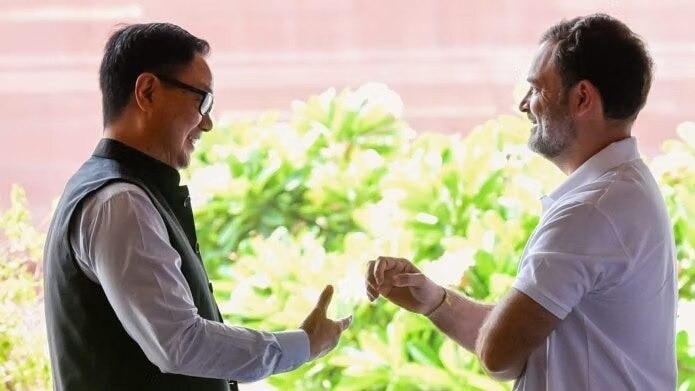
On a single day, central ministers challenged the Congress party over election results and voter list integrity, marking a significant escalation in political tensions. This confrontation centered on allegations of irregularities and questions about the legitimacy of past election outcomes.

Rajnesh Rijiju, a central minister, directed his scrutiny toward the Congress party's performance in the 2014 Lok Sabha election. He questioned how the party managed to secure only 44 MPs when Election Commissioners were appointed by their own government. His inquiry was not merely statistical but aimed at exposing what he viewed as an anomaly in the democratic process.
Rajnesh Rijiju further asked if current Congress leaders should resign and seek forgiveness for the governments between 2014 and 2026. This demand moved the debate beyond policy disagreements into a call for personal accountability from the party's leadership regarding the administration of the past decade.
The call for reform implies that the existing records are no longer reliable enough to support the integrity of future elections.
Kiren Rijiju's challenge focused heavily on the mechanics of the voting system itself. He asked how the Congress party faced a tragic defeat in 2024 when Gyanesh Kumar was not CEC. This specific detail underscored the importance of the Chief Election Commissioner's role in ensuring fair play. The questions raised regarding the number of seats won in 2014 and the role of Election Commissioners suggest a broader belief that the current administration has oversight issues.

I challenge Congress party to answer to the basic questions: 1. How did congress get only 44 MPs in 2014 Lok Sabha election when Election Commissioners were appointed by their Govt? 2. When Gyanesh Kumar was not CEC in 2024, how did Congress face a hatric defeat? 3. Will present congress CMs resign & also apologize for forming the Govts during 2014 to 2026? 4. Should all the names in voter lists who are illegal immigrants, dead, shifted or duplicate be removed from voter list or not? 5. Were SIRs carried out in 1952-56, 1958-61, 1965-66, 1983-84, 1987-88, 1993, 1995, and 2002-2004 illegal? One family party with outside forces is trying to destroy the Constitution & Indian Democracy.
A critical component of the challenge involved the voter list. Rajnesh Rijiju demanded that names of all illegal immigrants, deceased, shifted, or duplicate be removed from the voter list. This issue touches upon the foundational trust required in any democratic election. If the list contains errors, it undermines the validity of every vote cast. The call for reform implies that the existing records are no longer reliable enough to support the integrity of future elections.
The ministers did not limit their questioning to recent years. They extended their inquiries into the past, asking whether the 1952-56, 1958-61, 1965-66, 1983-84, 1987-88, 1993, 1995, and 2002-2004 elections were conducted illegally. By bringing up such a wide range of dates, the central ministers suggested that the pattern of irregularities might be systemic rather than isolated incidents. This historical framing forces the Congress party to confront decades of electoral data, not just the immediate past.

#WATCH | Delhi | On Naseeruddin Shah’s remarks on the BJP, Union Minority Affairs Minister Kiren Rijiju says, "I didn't even know that Naseeruddin was a person with this kind of 'dimagi Naxal' mindset. I just thought of him as an artist. He seemed like a decent, good artist. So I just viewed him as an artist. Turns out he's a mental Naxal himself..." On Congress President Mallikarjun Kharge's statement, he says, "Everyone in the Congress party has said that at 85, he could think and say such things as the national president of the Congress. No one imagined this. I keep meeting Kharge, we talk in Parliament, and we meet. I never thought he would turn out like this. I thought at least he is an elder and will speak with some wisdom..."
In response to these mounting pressures, Rahul Gandhi called for a unified protest against these allegations. His stance was one of defense, seeking to rally the party around the core narrative of fairness. However, the challenge remains open-ended. The ministers have set high bars, demanding accountability that goes beyond standard political debate. They expect concrete answers regarding the appointment of Election Commissioners and the composition of the voter rolls.
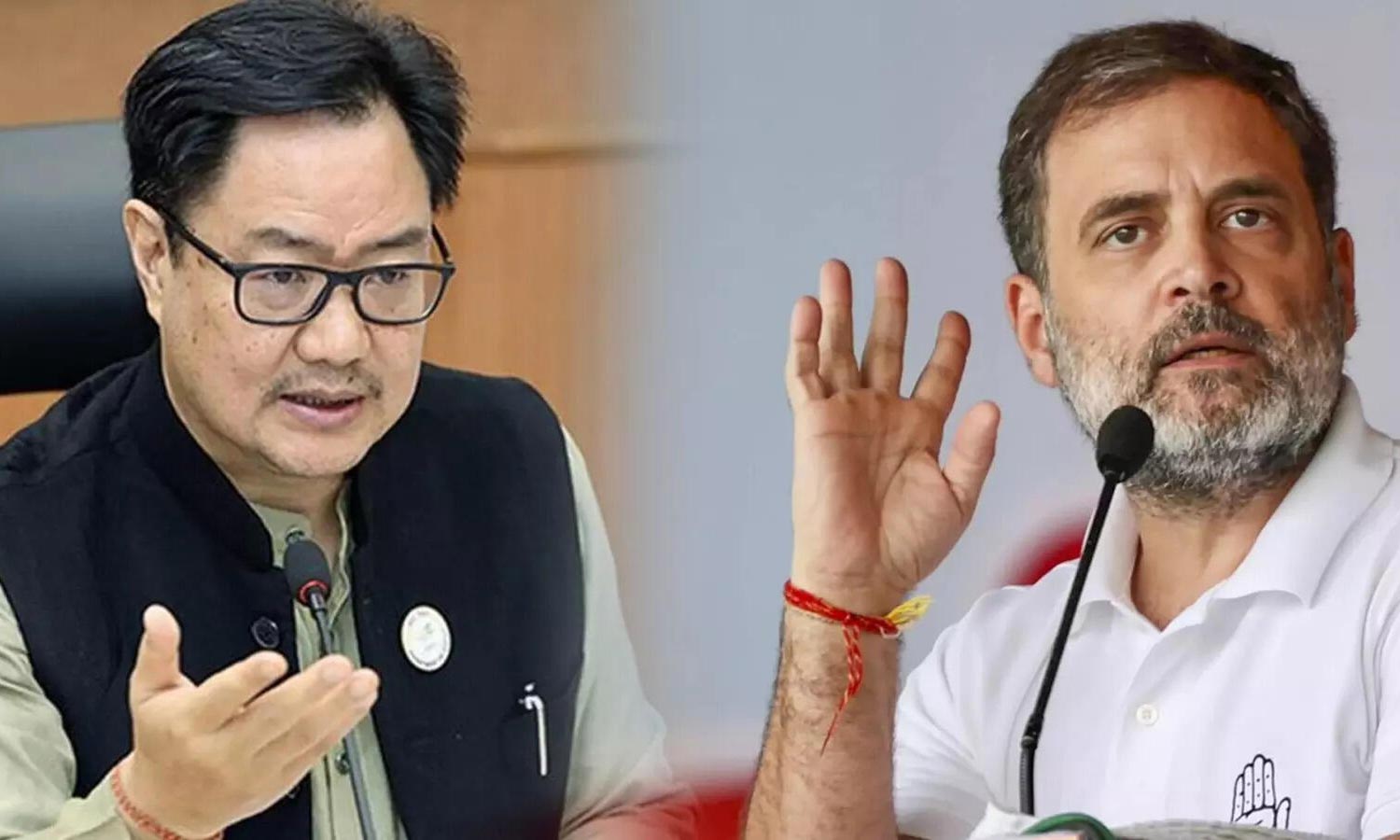
As of now, the standoff continues without resolution. The central ministers have laid out five sharp questions that require detailed responses from the Congress party. The tension reflects a wider struggle over the interpretation of election laws and the management of public resources. Until these issues are addressed, the political climate remains volatile, with both sides vying for control of the national narrative.

#BREAKING | Union Minister of Parliamentary Affairs of India Kiren Rijiju challenges Congress Kiren Rijiju questions Congress over its 2014 defeat, asks the party to explain its 2024 poll loss, and defends the SIR process while seeking a clear response from the Congress. #KirenRijiju #Congress | @divyawadhwa