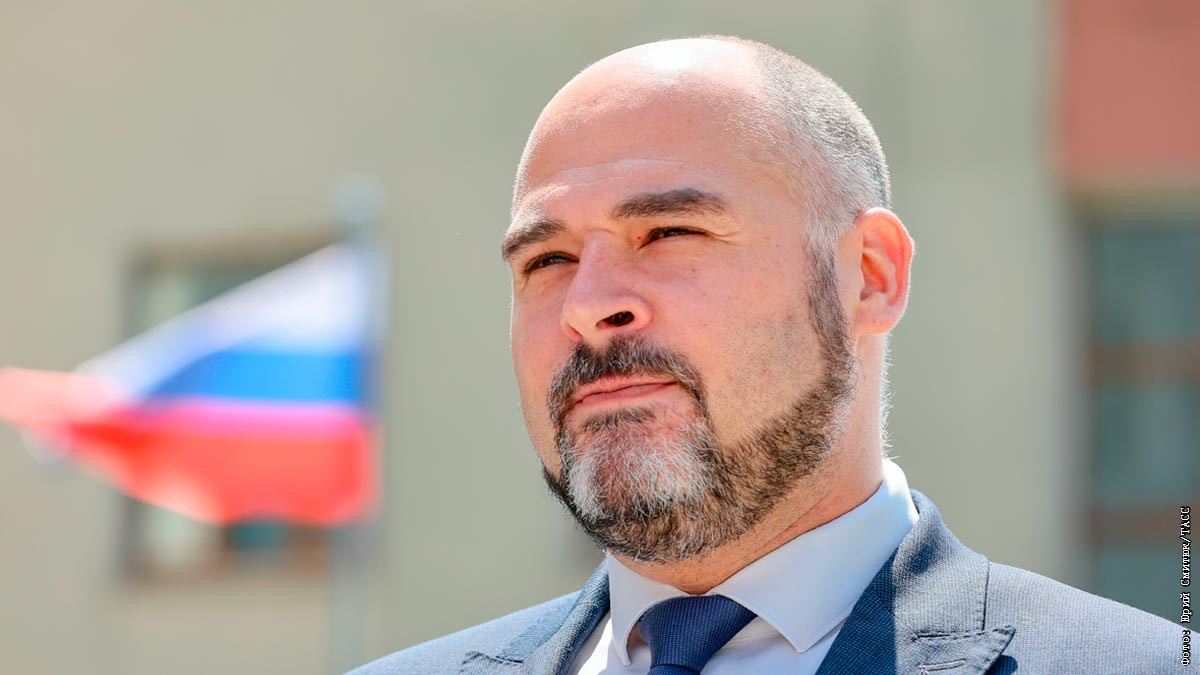
The wind off the Sea of Japan often feels personal in Vladivostok, the white-walled city where Russia meets the Pacific. For years, its mayor, Konstantin Shestakov, navigated the specific, granular politics of a city that is the gateway to the Far East. On October 22, 2026, that focus expanded. In a meeting at the Kremlin, President Vladimir Putin looked past the city limits and saw a governor for the entire Primorsky Krai. The appointment is not just a reshuffle of personnel; it is a statement that the Far East requires an administrator who understands its local reality, one who was chosen to build on a foundation rather than tear it down.

The decision was not made through a distance announcement. Putin summoned Shestakov to the Kremlin to offer the role in person. In the meeting, the President did not just hand over a title; he framed the task explicitly. He pointed out that Vladivostok, while the administrative capital and economic engine, is not the entirety of Primorsky Krai. The new governor's mandate was clear: take the success achieved in the city and apply it to a vast, diverse region that includes remote towns and complex infrastructure challenges.
Putin expressed confidence that Shestakov's recent track record made him a logical choice. He noted that the former mayor had been successful in his current role and suggested that the principles that worked for him in the city would translate to a higher level of responsibility. The emphasis was on continuity and capability, signaling to the region that the new leadership would not be an outsider parachuted in from Moscow, but a local leader elevated to a broader stage.
Shestakov's reaction was marked by gratitude and a distinct local pride.
Shestakov's reaction was marked by gratitude and a distinct local pride. He did not frame the job as a federal bureaucratic post, but as a homecoming to a wider responsibility. In his acceptance, he called both Primorsky Krai and Vladivostok his homeland. He described the appointment as a challenge that placed a