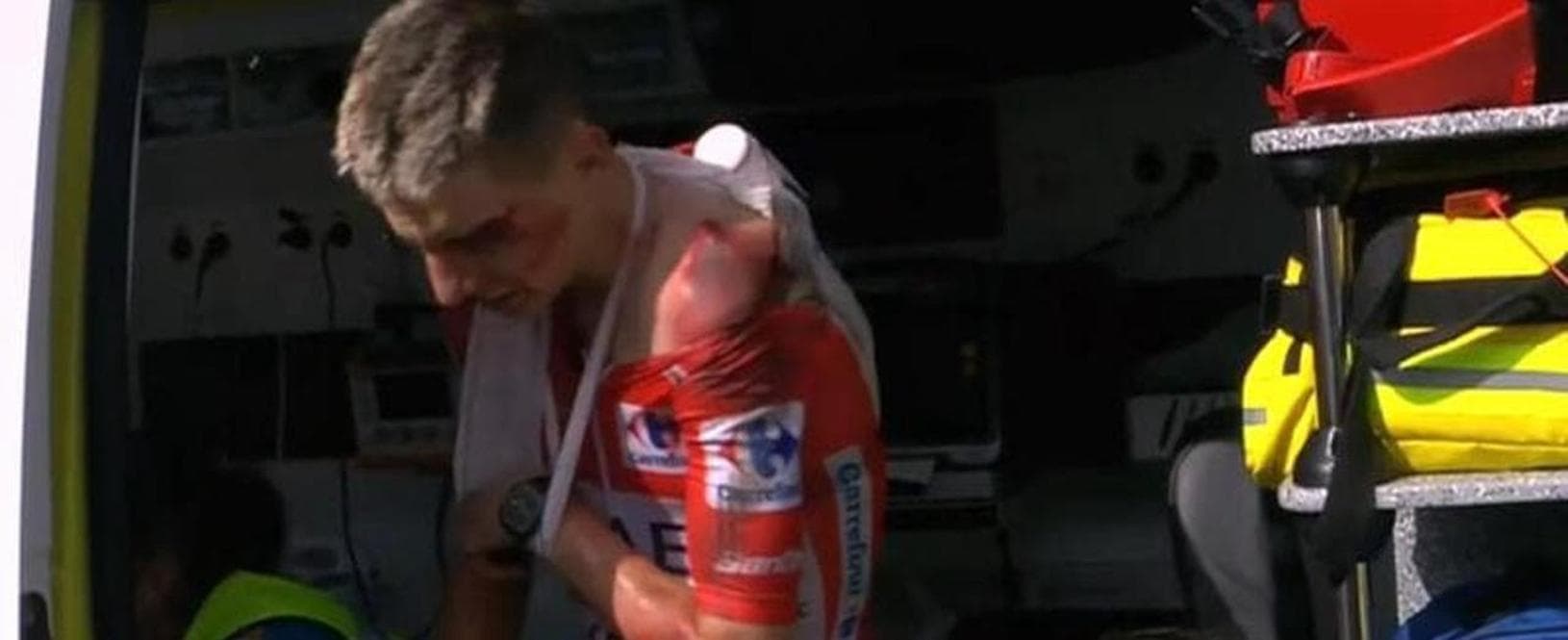
On a blistering day in the Vuelta, a cyclist’s world can tilt in an instant. For Tadej Pogacar, the fall was a sudden, brutal reminder that the sport he loves can also be unforgiving. The crash left him with a severe back injury, a fact that would only deepen in the days that followed.

When the medical team first examined him, the initial diagnosis suggested a single fractured vertebra. Yet, as the day unfolded, a more detailed scan revealed a startling truth: Pogacar had suffered three fractured vertebrae. The discovery was a stark reminder that the body can hide its wounds, and that a cyclist’s resilience is tested not just in the heat of competition but in the quiet moments of diagnosis.
Recovery was anything but linear. Pogacar spoke candidly about the mental health challenges that accompanied the physical healing. The vertigo that lingered after the injury added a layer of uncertainty to each step he took. Each day was a small victory, a step toward a future where he could once again feel the wind on his face.
He entered the European Championships, a testament to his perseverance and the hard work that had gone into his comeback.
On 2026-10-31, the same day he revealed the full extent of his injuries, Pogacar returned to the racing world. He entered the European Championships, a testament to his perseverance and the hard work that had gone into his comeback. The event was not just a race; it was a statement that he was still alive, still capable, and still ready to compete.
In a quiet interview that same day, Pogacar reflected on the experience. "Je suis juste heureux d’être en vie, ou de tenir debout," he said, translating to, "I’m just happy to be alive, or to be able to stand." The words carried a weight that went beyond the physical. They echoed the relief of survival, the gratitude for life, and the humility that comes after a brush with danger.
Today, Pogacar’s story is a reminder that even the most celebrated athletes are vulnerable. His journey from a sudden fall to a triumphant return underscores the importance of medical vigilance, mental health support, and the human spirit’s capacity to rebound. While the road ahead remains uncertain, the cyclist’s recent performance at the European Championships signals that he is once again on the path to reclaiming his place at the top of the sport.
Pogacar’s experience invites a broader conversation about safety in high‑risk sports. It highlights the need for comprehensive injury assessments and the role of psychological care in recovery. As fans and fellow athletes watch him pedal forward, the narrative is clear: resilience is not just about physical strength but also about the courage to face the unknown and the will to keep moving forward.
