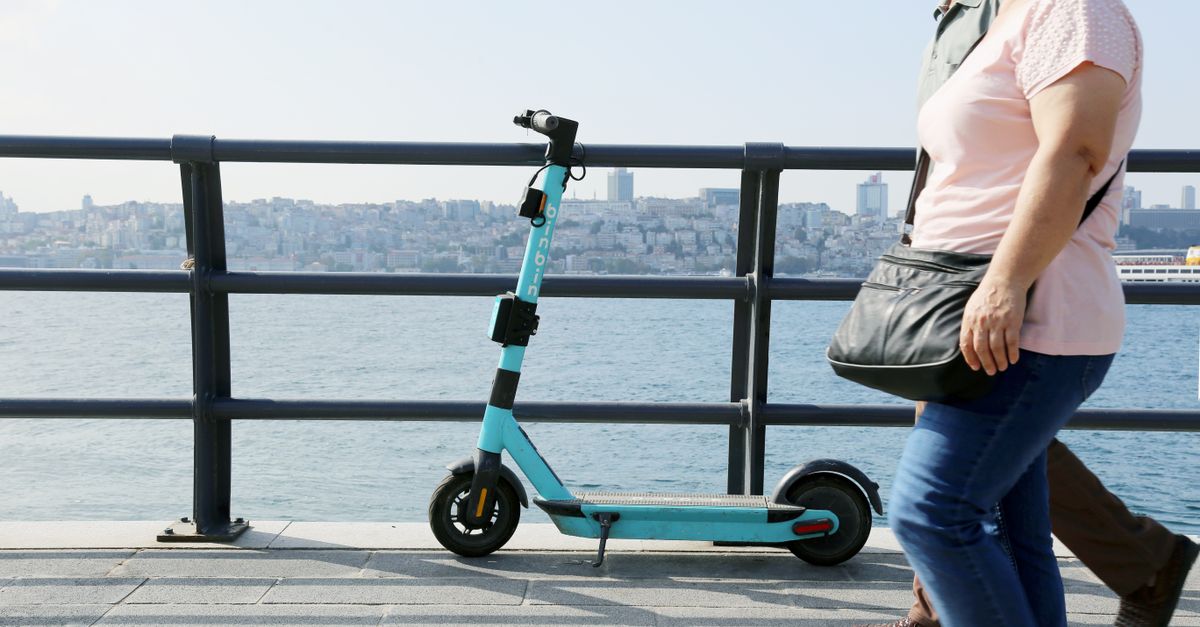
The change did not come from a single agency but from three ministries working together: the Ministry of Transport and Infrastructure, the Ministry of Environment, Urbanization and Climate Change, and the Ministry of Interior. Their joint effort produced a regulation that was published in the Official Gazette on 2026-10-13 and entered into force the same day. The announcement was framed as an amendment to the existing electric scooter rule, a move that the Ministry of Transport and Infrastructure indicated it supported on two occasions while maintaining a neutral stance once.

The revised regulation introduced a range of administrative fines that are considerably higher than before. For operating without a licence or breaking vehicle procurement rules, the fine is set at 86,900 Turkish lira. If a company fails to present the required information or documents during an inspection, the penalty is 50,000 lira. Violating the obligation to establish a call centre draws a fine of 43,447 lira. Acting contrary to general obligations concerning shared scooter services incurs a fine of 8,687 lira. For the most serious repeat offence—exceeding the permitted number of scooters for a third time—the fine reaches 170,000 lira. The regulation makes clear that each distinct violation is punished separately, so multiple infractions committed at once will trigger separate fines for each.
Beyond flat fines, the rule ties penalties to the size of a company’s fleet relative to local limits. In any given district, the lower limit of allowed e‑scooters is set at 70 percent of the authorised number, while the upper limit is 130 percent. During the winter months of November through February, the lower limit drops further to 40 percent. Companies that stay within these bands avoid the progressive fines that start at 8,687 lira and can rise to 170,000 lira for repeated over‑limit breaches. In addition to the fines, the regulation allows authorities to temporarily suspend a firm’s operating permit when it repeatedly exceeds the district‑specific ceiling.
During the winter months of November through February, the lower limit drops further to 40 percent.
The decree also touches on where the scooters themselves must come from. At least 30 percent of the vehicles in a fleet have to be sourced from manufacturers that hold TSE certification. This requirement is part of the regulation introduced by the ministries. Operators are also mandated to provide 24/7 call center or mobile application support.
The requirement is not merely advisory; failure to meet it triggers the 43,447 lira fine for violating the call‑centre establishment rule.
As of the date the regulation took effect—2026-10-13—electric scooter companies in Turkey are operating under a stricter financial and procedural framework. According to the new rules, various administrative fines ranging from 8,687 liras to 170,000 liras will be imposed for violations such as operating without a license, exceeding permitted scooter limits, failing to establish call centers, or not providing requested documents during inspections. If multiple violations occur together, a separate fine will be issued for each offense.