
In the high-stakes theater of international diplomacy, a single telephone call can shift the trajectory of nations. But in the corridors of the Kremlin, the silence coming from Kyiv has become a centerpiece of a much larger rhetorical game. On October 30, 2026, Dmitry Peskov, the press secretary for Russian President Vladimir Putin, addressed the persistent question of whether the Russian leader would actually pick up the phone if Ukrainian President Volodymyr Zelensky were to call.
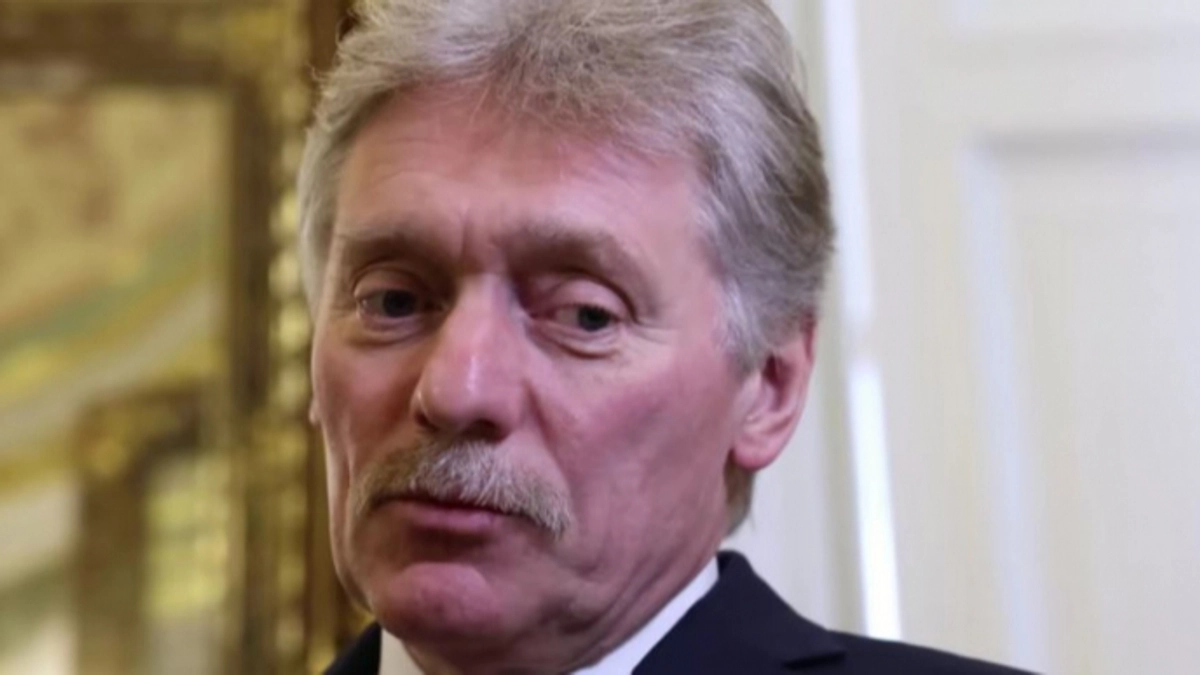
Peskov’s response was marked by a distinct touch of irony. He did not merely offer a diplomatic platitude; he framed the potential interaction as a matter of simple initiative. According to Peskov, the door is not locked, but the key remains with the caller. "He will also take the call — open to dialogue with everyone," Peskov remarked, suggesting that the readiness for communication is a constant, even if the actual connection remains absent.
To understand the weight of Peskov's words, one must look at the broader landscape of Russian diplomatic positioning. The Kremlin is currently projecting an image of a leader who is fundamentally accessible, provided the protocol is followed. Peskov has been explicit in stating that Putin is open to dialogue with all leaders, a claim that extends far beyond the immediate conflict in Ukraine.
For Kyiv, a call is not just a conversation; it is a potential trap unless accompanied by structural concessions.
This perceived openness includes the heavyweights of European politics. Peskov noted that Putin remains open to discussions with French President Emmanuel Macron and German Chancellor Angela Merkel. By name-checking these leaders, the Kremlin is signaling that it views itself as a standard participant in the global diplomatic order, waiting for the rest of the world to engage on its terms.
While the Kremlin paints a picture of universal availability, the reality on the ground is defined by a complex set of conditions and hesitations. The question of who Putin will answer is not merely about the physical act of picking up a receiver, but about the political implications of the conversation.
Ukrainian President Zelensky has expressed a conditional readiness for engagement. While he remains open to the possibility of meeting with Putin, his stance is not one of unconditional surrender to dialogue. Instead, Zelensky has suggested that such a meeting would only be meaningful if Russia demonstrates a tangible willingness for peace. This might manifest through an energy truce or perhaps a more complex three-way meeting involving other international actors. For Kyiv, a call is not just a conversation; it is a potential trap unless accompanied by structural concessions.
This tension between the promise of dialogue and the reality of its execution has already played out with other European heads of state. The Kremlin’s claim of accessibility is bolstered by recent interactions with Northern European leaders. Yuriy Usyakov, an advisor to the Ukrainian President, noted that leaders such as Finland's President Alexander Stubb and Norway's Prime Minister Jonas Gahr Støre could expect Putin to answer if they were to initiate contact.

Indeed, the chronology of recent diplomatic activity shows that these connections are not merely theoretical. On October 30, 2026, records indicate that Putin has engaged in phone calls with Macron and Merkel, as well as having spoken with Stubb and Støre. These interactions serve as the Kremlin's proof of concept: they argue that the lines are open, and the lack of a connection with Ukraine is therefore a failure of Ukrainian initiative rather than Russian obstruction.
However, the European community is not a monolith of optimism regarding these diplomatic maneuvers. Not everyone views the Kremlin's reported openness as a sign of genuine de-escalation. Danish Prime Minister Mette Frederiksen has expressed skepticism regarding the actual outcomes of the communications between Putin and the leaders of Finland and Norway.
For skeptics like Frederiksen, the act of picking up the phone does not necessarily equate to a movement toward peace. In the intricate dance of high-level politics, a phone call can be a tool for signaling, a way to project strength, or a method of managing perception, rather than a precursor to a treaty. This skepticism highlights the gap between the Kremlin's narrative of "open dialogue" and the cautious, often wary, reality of European diplomacy.
As it stands, the diplomatic landscape remains defined by a profound stillness between the two primary combatants. Despite the Kremlin's insistence that the line is open, Peskov was blunt about the current state of affairs regarding Ukraine: "No one has called yet."
This creates a stalemate of perception. The Kremlin maintains that it is ready and waiting, placing the burden of the next move squarely on Zelensky's shoulders. Meanwhile, the Ukrainian leadership remains focused on the prerequisites for a meaningful engagement, refusing to call simply for the sake of calling. The phone sits on the desk, the lines are active, but for now, the silence continues.