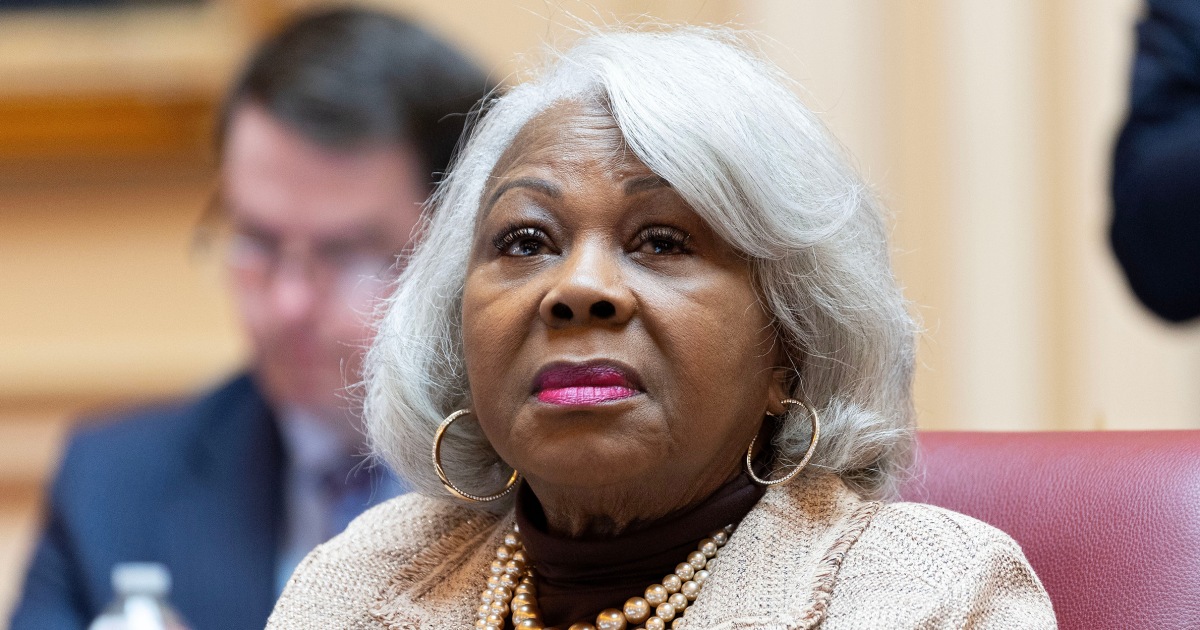
On a recent date, the political landscape of Virginia underwent a seismic shift. A federal grand jury returned an indictment that did not merely target a local official, but one of the most influential figures in the state's legislative history. Lillie Louise Lucas, an 82-year-old state senator who has occupied a seat in the chamber since 1991, now faces a litany of federal charges that strike at the heart of her public service. The allegations, brought forth by the U.S. Department of Justice and the FBI, paint a picture of a long-standing political career colliding with a clandestine criminal enterprise.
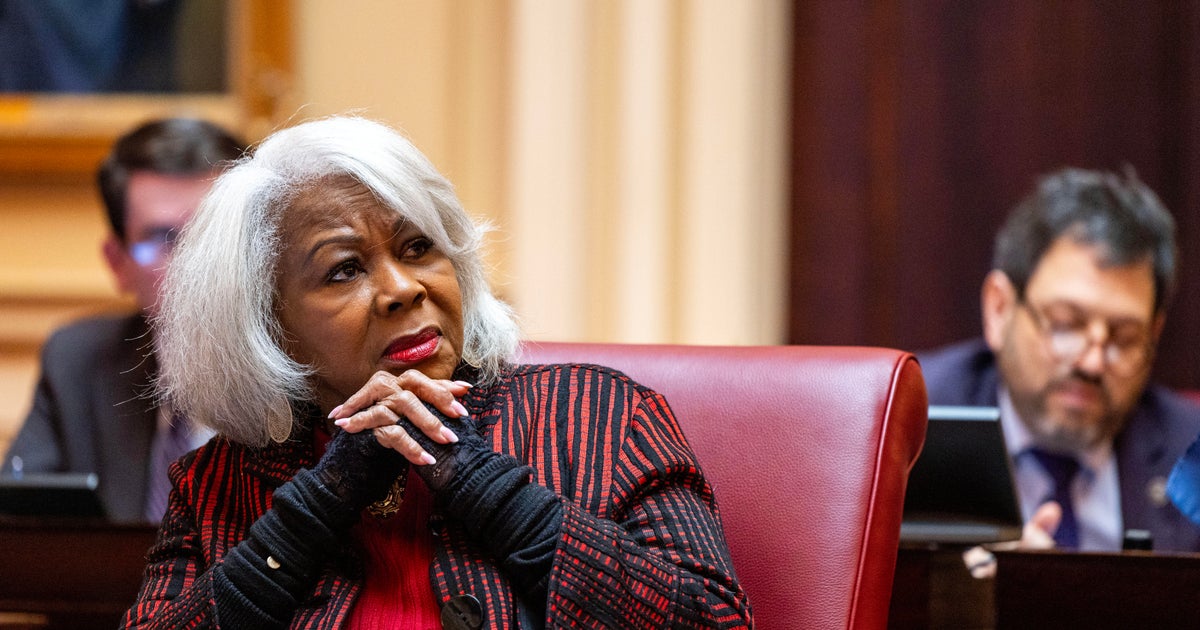
For decades, Lucas was a fixture of Virginia governance. Her resume was a map of legislative influence, having held several key leadership positions, including president pro tempore of the state Senate and chair of the Senate Finance and Appropriations Committee. To her colleagues and constituents, she was a pillar of the Democratic establishment. To federal investigators, however, she is the alleged leader of a marijuana distribution enterprise involving her own family members.
The indictment details a complex web of activity that federal authorities claim blended legal commerce with illicit operations. At the center of the investigation is a cannabis business co-owned by Lucas. While the business was framed as a legal medical cannabis venture, the Justice Department alleges it served as a front for a much larger, illegal operation. Prosecutors claim the scheme involved the conspiracy to distribute and possess marijuana, including an estimated 100 kilograms of the substance.
This timing has added a layer of complexity to an already explosive case, as the legal proceedings unfold against the backdrop of a high-stakes electoral cycle.
This was not merely a case of simple possession. The federal charges include racketeering and money laundering conspiracy, suggesting a structured organization designed to move illicit funds through legitimate channels. The indictment further alleges that Lucas used her significant political influence to further these interests, effectively leveraging her position in the state Senate to benefit her private financial gains. The charges extend to drug trafficking, fraud, and even firearms offenses, creating a portrait of a criminal enterprise that operated under the guise of political and commercial legitimacy.
The core of the prosecution's argument rests on the concept of a public servant betraying the trust of the electorate. Federal authorities allege that the Senator's actions were driven by a desire to prioritize her personal financial interests above the needs of the people she was elected to represent. This intersection of political power and illegal drug distribution forms the backbone of the racketeering charges.
Attorney General Todd Blanche addressed the gravity of the situation during a press conference following the indictment. He characterized the alleged conduct as a fundamental breach of duty, stating, "The charges alleged in this indictment reveal the behavior of a public servant who put her own financial interests before the people she was elected to serve."
The timing of the indictment is as significant as its content. The charges were unsealed just 12 days before a midterm election, a period of intense political volatility. This timing has added a layer of complexity to an already explosive case, as the legal proceedings unfold against the backdrop of a high-stakes electoral cycle.
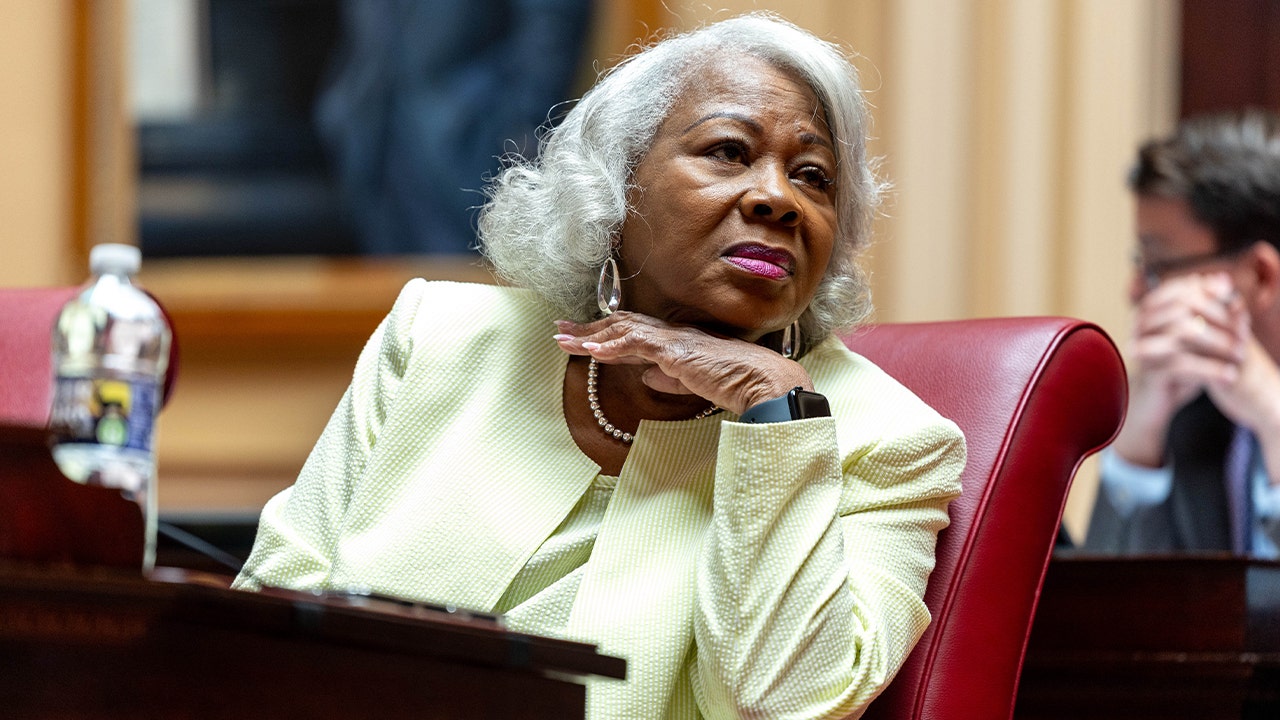
For Lucas, the federal intervention feels less like a pursuit of justice and more like a targeted political strike. She has not remained silent in the face of the allegations, framing the investigation as an attempt by the government to crush a formidable opponent. Her defense leans heavily on her personal history and her long-standing role as a fighter for her community.
As the investigation continues, the implications for the Virginia Senate are profound. Lucas has been a dominant force in state politics for over three decades, overseeing budgets and shaping policy through her role on the Finance and Appropriations Committee. The dismantling of her influence, should the charges lead to conviction, represents the end of an era for the state's Democratic leadership.
Lucas has responded to the federal onslaught with a defiant rhetoric that invokes her lived experience. She has characterized the scale of the investigation as an overwhelming use of state power against an elderly woman. "Today, the FBI, the Department of Justice, and the full weight of the federal government have been wielded against an 82-year-old great-grandmother," she said.
Beyond the legal technicalities of money laundering and racketeering, the case has taken on a deeply personal and historical tone. Lucas has connected the current federal prosecution to the systemic struggles she has faced throughout her life, framing the indictment as a continuation of a long history of those in power attempting to suppress her voice.
"I grew up under Jim Crow," Lucas remarked, drawing a line from her past to her current legal battle. "I’ve seen what happens when people in power try to silence those who stand up to them. I spent my life fighting back and I’m not stopping now."
As the legal process moves forward, the state of Virginia is left to grapple with the fallout of these allegations. What began as a career defined by legislative leadership is now a high-stakes criminal case that questions the integrity of the very institutions Lucas helped lead.

"The phrase that defined Watergate was: 'What did the President know and when did he know it?'" "The phrase that will define our era is: "What did Norfolk DA Michael Morrissey know and when did he know it?'" TRANSCRIPT: I'll tell you a story about how I got involved in this, and maybe it will help you understand why I have this kind of perspective and where I'm coming from with all this. And then if you want to talk about how you got involved and why you have your perspective, that's great. I'm happy to listen. But what I want to—where this came from—let me take you back to the halcyon days of what was it? The summer of 2023. Oh, how innocent the days were. I was just a young washcloth back then. Yes, I think I was in my either 1L or it might have been my 1L spring going into 2L of law school. And I had just come off what I thought was probably going to be the defining story of my career, which was stumbling onto this very weird situation at the Massachusetts Cannabis Control Commission involving a lot of cover-ups and a lot of corruption. And so I was intimately connected to covering state government already in the spring of 2023, summer of 2023. I was even covering sort of the way Roman Abramovich was using a Cypriot company to fund CuraLeaf, a cannabis multi-state operator, and that led me to this triumvirate of oligarchs that rose up under perestroika in the '90s: Boris Jordan, Andrei Blokh, and Roman Abramovich. Crazy stuff. I mean, the U.S. diplomatic cables, Boris Jordan feeding information to Bill Burns, who then became the CIA director. Very interesting story. I thought that was going to define my career. Little did I know, in the summer of 2023, there was a man named Brian Riccio. And some of you listening to this are probably going to be like, oh my God, like I remember him—may he rest in peace, whatever you think about his style, the man passed away because of kidney failure, God rest his soul. Brian Riccio at the time—and I'll just give you the full dynamics of this because it's my first space and we're figuring this out. So you get a story. I don't think I've ever actually told this whole story full through from the beginning to end. So at the very least, you'll get that. So summer of 2023, I'm sitting on social media and I was mostly covering the Cannabis Control Commission. Brian Riccio tangentially was covering the Cannabis Control Commission because he used to work—volunteer—for Mike Crawford. And Mike Crawford is the Young Jurks. We're on good terms now. So, but anyway, Riccio really hated Mike Crawford at the time. I don't remember what the cause of the fallout was. They just—Riccio just hated him. And so Riccio was watching what I was doing because I was covering the CCC and I also had used to volunteer with Mike Crawford all the way back to like 2017. So Riccio starts posting. And I'll never forget the first time I saw Brian Riccio's post about the Karen Read and Turtle Boy cases. For some context, and I think Aidan Kearney would tell you the same thing, Aidan Kearney had covered some of my reporting way before this, the Karen Read and John O'Keefe case. He covered my reporting about Jason Moodley up in Maine. He covered my reporting about Seun Adedeji out in Athol. That was a crazy situation. A lot of people covered my reporting about the CCC because it's really good. I've covered almost all their meetings for seven years. But anyway, so Aidan had covered me a little bit previously, or covered the work that I was writing, but we had never really like interacted. I didn't understand what TurtleBoy was. I knew a little bit about like the book and how he got unmasked. But I just thought he was someone who like used FOIAs to like mess with local like city councils. And I was like, all right, whatever. I don't really care. And then also I'd heard Kearney had known Rachel Rollins in 2020 because like Rollins sent Rayla Campbell to Joe Kennedy Jr. events during a Joe Kennedy Jr. primary with S