
A Thursday evening in Pas-de-Calais, France, was marked by tragedy when a minibus carrying HGV drivers was involved in a collision with a stationary freight train at the entrance to the Channel Tunnel. The bus, packed with men of various nationalities, was about to board a Le Shuttle shuttle for the journey across the English Channel. Little did anyone know, this routine stop would turn into a nightmare.
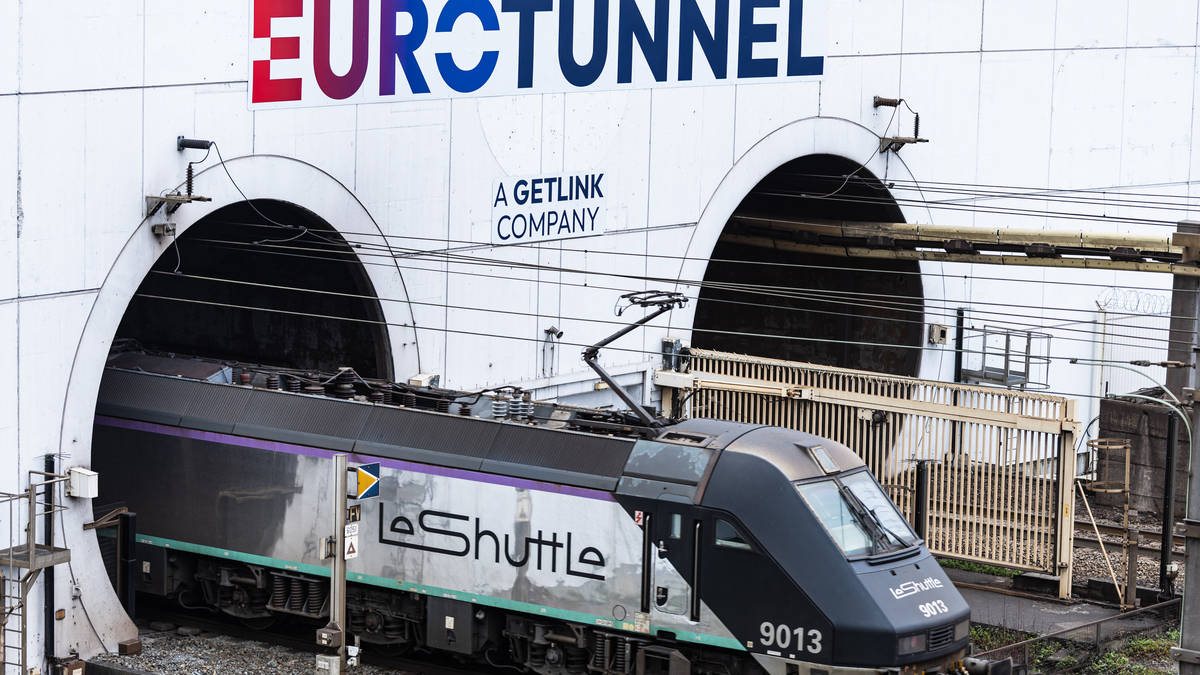
As the minibus approached the loading platform, it suddenly veered off course and crashed into a stationary freight train. The impact was catastrophic. The minibus, carrying 19 individuals, was pushed into the train, causing severe damage and multiple injuries. The crash occurred at the Eurotunnel loading platform, a critical point of entry for HGVs and other vehicles bound for the UK.

Nineteen hurt after train and bus crash at Channel Tunnel entrance https://t.co/s06x7znuVO via @DailyMail
The incident was reported within minutes, and emergency services were dispatched immediately. 'An initial report indicates 19 people involved, including the driver,' Cury stated, adding, 'No deaths are to be reported at this stage and no lives are in danger.'
Agathe Cury, the Under Prefect of the Pas-de-Calais region, launched an investigation into the crash.
Among the 19 injured were two individuals who were airlifted to the University Hospital in Lille, where they remained in intensive care. The remaining 17 were taken to hospitals in Helfaut, Calais, Boulogne, Montreuil-sur-Mer, and Dunkirk, with nine receiving immediate treatment at the scene. All injured were male, a common characteristic of HGV drivers, and their nationalities varied, reflecting the international nature of the Channel Tunnel's operations.

Nineteen hurt after train and bus crash at the Channel Tunnel https://t.co/PfTZQVVKan https://t.co/z4A96d5LhF
The response to the crash was swift and coordinated. Fifty-five firefighters, 25 mobile emergency and intensive care teams, 20 border police officers, and approximately 100 Eurotunnel staff were on the scene within nine minutes. The quick mobilization of these emergency responders was a testament to the preparedness of the Eurotunnel security and safety protocols. 'Emergency respondents were dispatched within nine minutes from the initial report of the incident,' Cury noted, highlighting the efficiency of the response.
The incident was not just a tragic accident but also a unique event. Agathe Cury, the Under Prefect of the Pas-de-Calais region, launched an investigation into the crash. 'It was the first time an incident of this type has occurred on an Eurotunnel loading platform,' Cury explained. The Eurotunnel, a complex and heavily regulated facility, had never before experienced such a collision, making the incident all the more noteworthy.

Nineteen hurt after train and bus crash at the Channel Tunnel entrance https://t.co/GWdwgxVTrM via https://t.co/pSxpFYV1oH
The crash at the Eurotunnel loading platform raises questions about safety protocols and the potential for similar incidents in the future. 'The initial report indicates 19 people involved, including the driver. No deaths are to be reported at this stage and no lives are in danger,' she reiterated, ensuring that the public remained informed and reassured.
For the families and friends of the injured, the crash serves as a stark reminder of the risks associated with the HGV industry. The men involved in the minibus, all male and of different nationalities, were part of a broader community of drivers who rely on the Channel Tunnel for their livelihood.
As the investigation continues, the incident at the Eurotunnel loading platform in Coquelles remains a somber reminder of the human cost of transportation accidents. The swift response and the launch of an inquiry highlight the commitment to safety and the ongoing efforts to prevent such tragedies. For now, the 19 injured men are in the care of medical professionals, and the broader community of HGV drivers and Eurotunnel workers will be watching closely to see what changes emerge from this tragic event.