There are certain summers in the collective memory of a region that refuse to settle into the past. For the communities of southern Turkey, June of 2006 marked the beginning of an enduring local mystery. It was a time when a brutal discovery shocked the district of Samandag, setting off an investigation that would stretch across generations without answers. On June 22, 2006, the body of a young person was discovered under grim and unusual circumstances. The victim was Ibrahim Akgul, a boy of just 17 years old, whose life had been violently cut short.

When investigators first processed the scene, they found his remains wrapped tightly in a carpet. It was a crude attempt at concealment, a macabre package left behind in Samandag that immediately suggested a deliberate, calculated effort to hide a crime. Yet, despite the initial shock and the grim nature of the physical evidence, the trail quickly went cold. The case settled into the frustrating category of a faili meçhul—a crime with an unknown perpetrator—where files gather dust and families are left waiting indefinitely for a knock on the door that never comes.
For two full decades, the murder of Ibrahim Akgul remained officially unsolved, haunting the margins of local law enforcement records. In the language of criminal justice, time can act as both an eraser and a preservative. Over twenty years, memories fade, witnesses move away, and the physical evidence of a crime scene degrades. Yet, cold cases possess a unique stubbornness. They sit in archives, waiting for shifts in technology, changes in human alliances, or simply the renewed determination of a fresh set of investigators willing to look backward when everyone else has moved forward.
Once the fatal stabbing occurred in Antakya, the perpetrator faced the immediate logistical problem of disposal.
In Turkey, the institutional architecture designed to tackle these lingering ghosts involves specialized units. The Unsolved Crimes Investigation Department, operating in tandem with the Chief Public Prosecutor's Office and the Hatay Police Department, maintains a quiet, persistent vigil over these unresolved files. They review the old autopsy reports, the decades-old witness statements, and the physical clues gathered long before modern analytical techniques became standard. For Ibrahim Akgul's family, this institutional persistence was the only flicker of hope in an otherwise dark landscape, a sign that the state had not entirely forgotten a 17-year-old boy wrapped in a carpet.
Cases that have gone cold for twenty years rarely crack open through a single lucky break; more often, they unravel through a painstaking process of mapping old connections. The recent breakthrough in the Akgul investigation demonstrated the sprawling, interconnected nature of modern police work. Authorities did not just focus on a single locality; instead, they cast a wide net across regional boundaries, tracking down individuals whose lives had intersected with the victim two decades prior.
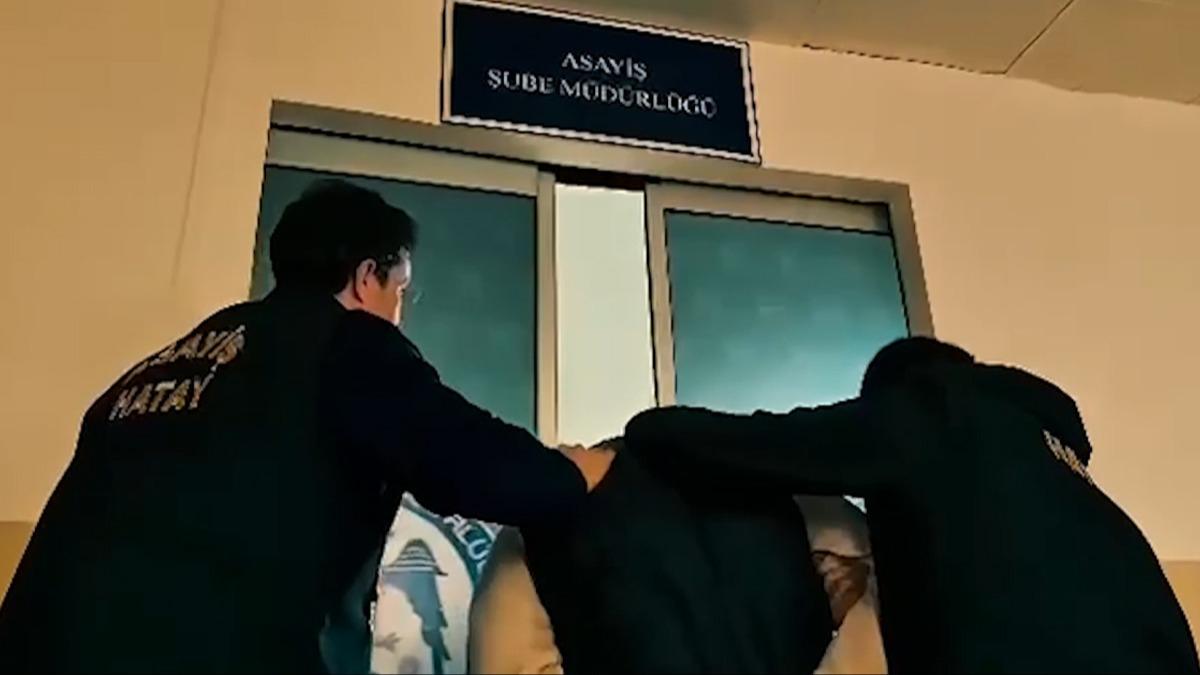
Under the coordination of specialized investigators and prosecutors, coordinated operations led to the detention of 12 suspects. These arrests were not confined to a single neighborhood or even a single city. The police web stretched across multiple urban centers, sweeping through Hatay, Izmir, and Mersin. It was a massive logistical and investigative effort, reflecting how far people scatter over twenty years, and how thoroughly a decades-old secret can travel across the provinces of Turkey as individuals attempt to outrun their pasts.
As the net tightened and suspects were brought in for questioning, the fog that had obscured the case for twenty years began to lift. Investigators started to piece together the narrative of what actually happened on that fateful day in 2006, shifting the case from an abstract tragedy to a concrete sequence of events. At the center of this reconstruction was the city of Antakya, located a significant distance from where the victim's body was ultimately recovered.

According to the findings of the renewed investigation, the violence that ended Ibrahim Akgul's life did not happen by chance, nor did it occur where the body was found. The 17-year-old was stabbed to death inside Antakya. The fatal blow was allegedly delivered by an individual identified in the case files as S.S. What followed was a deliberate effort to erase the connection between the killer and the crime scene, transforming a murder inside a building into a haunting roadside mystery in a neighboring district.
Once the fatal stabbing occurred in Antakya, the perpetrator faced the immediate logistical problem of disposal. A dead body is an undeniable weight, both physically and psychologically, and leaving it at the scene was clearly not an option. The solution chosen by S.S. involved a grim transport operation across the geography of the Hatay region.
To move the remains without drawing immediate attention, the killer wrapped Akgul's body in the carpet that would become the defining visual detail of the 2006 discovery. With the help of accomplices, the burden was loaded up and transported across a distance of 40 kilometers from Antakya to Samandag. That harrowing journey bridged two different landscapes in the province—moving from the urban interior to the coastal district where the carpet-wrapped package was ultimately abandoned. It was a calculated relocation designed to mislead investigators, buying the perpetrators years of relative safety.
How does a murder remain secret for twenty years when multiple people are involved? In the case of Ibrahim Akgul, the answer lies in the corrosive power of shared fear and complicity. As investigators dug deeper into the web of suspects, they uncovered a culture of silence that had persisted across two decades, maintained by those who knew the truth of what happened in Antakya and Samandag.
According to the investigation's revelations, accomplices who aided in the aftermath of the crime spent twenty years hiding their involvement out of sheer terror. Whether cowed by the principal perpetrator or paralyzed by the realization of what they had participated in, these individuals chose the safety of silence over the risk of confession. They watched as the case became a cold file, living with the knowledge of a 17-year-old's murder tucked away in their minds, until the combined pressure of police re-investigation finally fractured their collective endurance.
The long arc of the investigation reached a critical procedural milestone as the suspects were formally processed through the legal system. Following the sweeping multi-province detentions and the subsequent interrogation sessions, the individuals implicated in the 20-year-old conspiracy were brought to face the formal mechanisms of justice.
On October 2, 2024, the detained suspects were referred to judicial authorities. This transfer marked the transition from police detective work to the courtroom, where evidence, testimony, and legal arguments collide. The referral represented the tangible fruit of the re-investigation, bringing people who had spent two decades believing they had escaped history directly into the accountability of the modern Turkish legal apparatus.
When the judicial proceedings concluded for the initial wave of referrals, the legal system delivered a tiered response reflecting the varying degrees of involvement and culpability uncovered during the investigation. Out of the 12 total suspects who had been detained across Hatay, Izmir, and Mersin, the court's decisions split the group into distinct legal categories.
Three suspects faced the most severe outcome, being placed under formal arrest as the primary anchors of the prosecution's case moving forward. Two other individuals were released under judicial control, meaning they remain tethered to the legal process with specific restrictions while investigations continue. The remaining suspects were released, though the shadow of the renewed legal scrutiny lingers over them all.
Today, the twenty-year-old mystery of Ibrahim Akgul's death has moved from the realm of total obscurity into the harsh light of judicial accountability. The recent legal maneuvers, highlighted by developments, underscore a fundamental reality of criminal investigations: time does not automatically grant immunity.
What began as an anonymous body wrapped in a carpet on a summer day in June 2006 has now been mapped out, from the fatal stabbing in Antakya to the 40-kilometer transport to Samandag, and finally to the courtroom doors. As the legal process grinds forward with its three primary detainees and ongoing judicial controls, the case serves as a stark reminder that cold files can still catch fire, and secrets kept for a generation can ultimately be forced into the open.