On November 5, 2026, the political landscape in the United States underwent a significant transformation as the Democratic Party secured victory in the midterm elections. For the government in Kyiv, the news arrived as a potential inflection point in a conflict that has defined the global geopolitical order for years. Ukrainian President Volodymyr Zelensky, observing the shift from abroad, expressed a cautious but distinct optimism regarding what this change in the American legislature might mean for the ongoing war effort.

Zelensky’s perspective on the election results is rooted in the specific rhetoric and policy commitments of the Democratic Party. In an interview with ZDF, the Ukrainian leader noted that while he remains grateful for the bipartisan support Ukraine has received thus far, the Democrats have articulated a particularly clear and unwavering commitment to the nation’s defense. He emphasized that the Democrats have spoken explicitly about the necessity of renewing and strengthening the vital connection between the United States and Europe. For a country relying heavily on international aid, this clarity of purpose from a newly empowered legislative majority is viewed as a potential catalyst for more robust, sustained assistance.

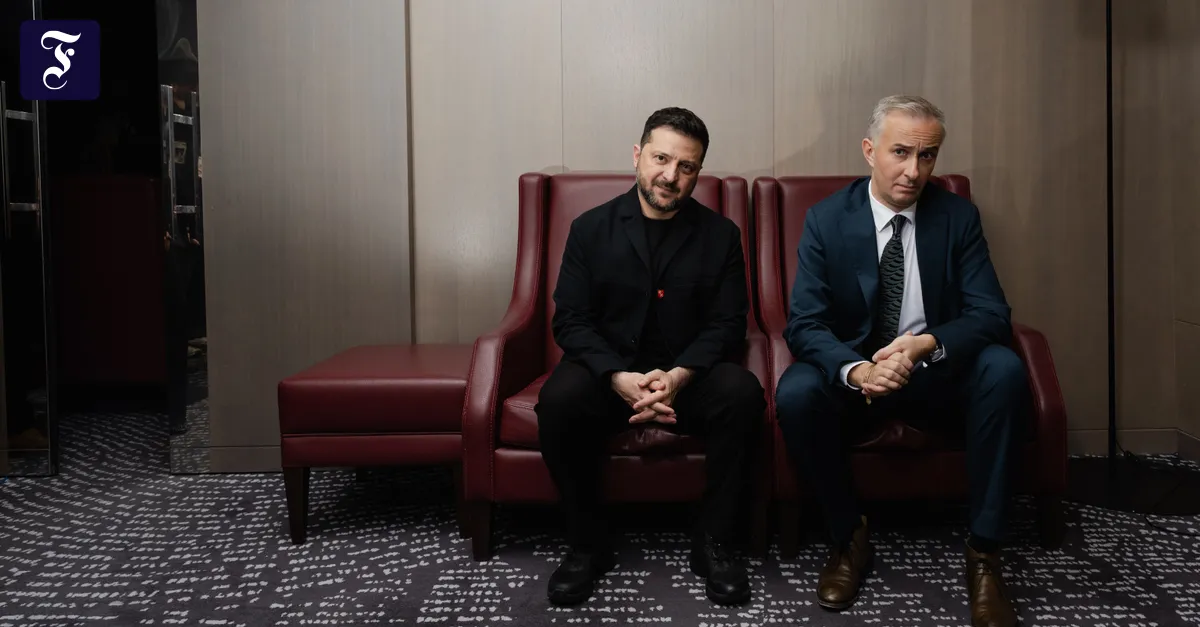
Wolodymyr Selenskyj im Interview bei Jan Böhmermann. #nocomment
Beyond the logistical benefits of potential new aid packages, Zelensky sees the Democratic victory as a strategic tool to alter the internal calculus of Russian President Vladimir Putin. The Ukrainian president believes that if the United States Congress moves to solidify strong financial and military support—aligning itself more closely with the current level of commitment seen in Europe—the impact on Moscow could be profound. Zelensky posited that such a move would serve as a powerful signal to the Kremlin, forcing Putin to reconsider the viability of his military campaign. The core logic is simple: if the international community’s support for Ukraine continues to grow, the cost of continuing the war may eventually outweigh any perceived benefit for the Russian leadership.
While the legislative focus remains on the halls of Congress, the executive branch has also been active in facilitating high-level diplomacy.
While the legislative focus remains on the halls of Congress, the executive branch has also been active in facilitating high-level diplomacy. On the same day as the midterm results were finalized, November 5, 2026, First Lady Melania Trump hosted representatives from both Russia and Ukraine at the White House. This gathering, which took place against the backdrop of the election news, serves as a precursor to upcoming, critical negotiations scheduled to be held in Abu Dhabi. These meetings represent a rare, direct point of contact between the warring parties, occurring at a moment when the political tides in Washington appear to be shifting.
Zelensky’s stance remains one of pragmatic diplomacy. He has been careful to acknowledge the contributions of the Republican party, stating, “I am grateful to the Republicans, but the Democrats are very clearly stating their support for Ukraine and providing it with assistance.” His hope is that this new political configuration will establish a more stable balance of power. By securing a more predictable and generous flow of aid, Ukraine aims to move from a position of endurance to one of greater strategic leverage. As the dust settles on the midterm elections, the focus now shifts to whether these political promises will translate into the tangible military and financial support that Kyiv believes is necessary to bring the war to an end.