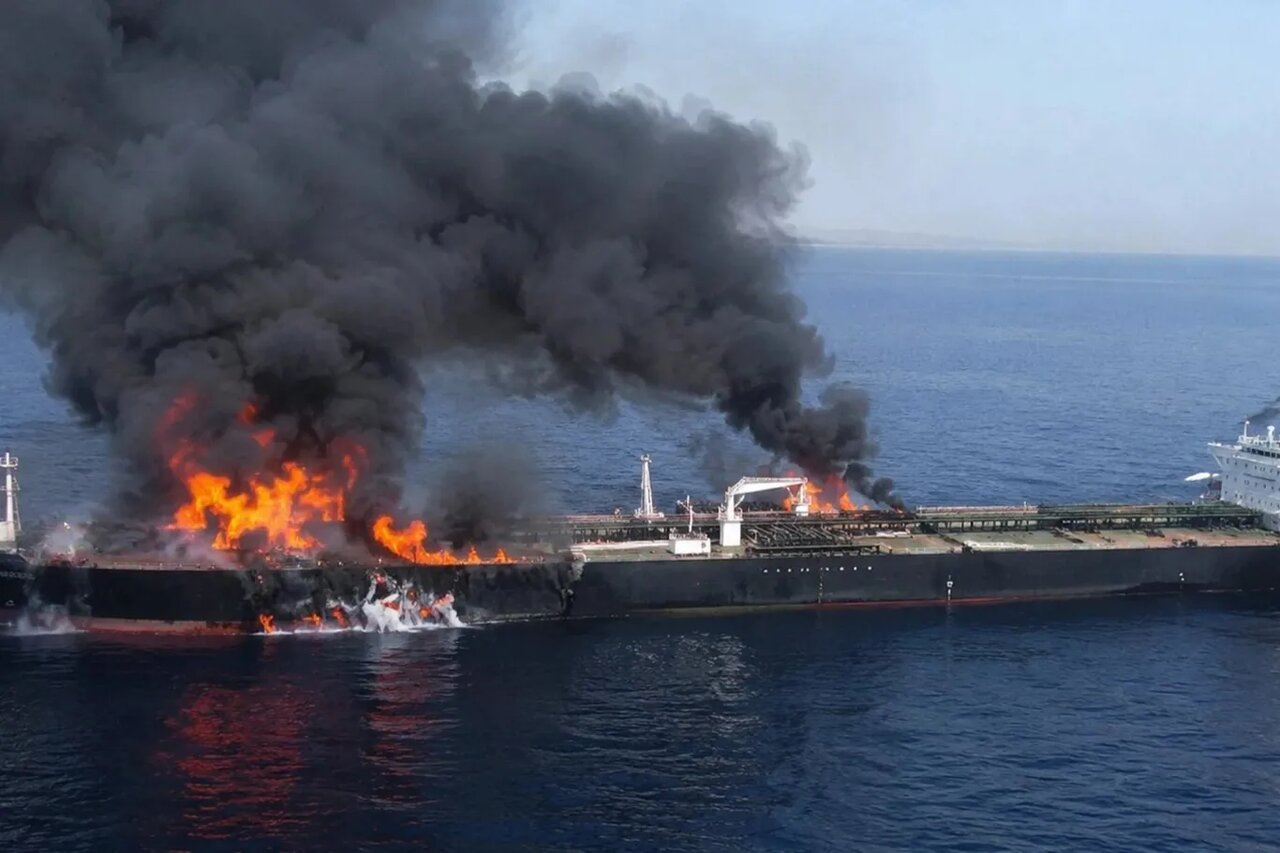
On October 23, 2026, the rhythmic, heavy pulse of global energy transit was interrupted by the violent percussion of underwater explosions. In the Strait of Hormuz—a narrow, vital waterway that serves as a primary artery for the world's oil supply—two massive supertankers met an unexpected and destructive force. According to reports from the Islamic Revolutionary Guard Corps Navy, the vessels collided with mines, triggering immediate and catastrophic explosions that tore through the hulls of the massive ships.

These were not mere transport vessels; they were supertankers, the titans of the sea designed to move the lifeblood of modern industry across vast oceans. The scale of the incident is underscored by the sheer volume of cargo at risk: the two tankers were carrying over 4.5 million barrels of crude oil. In the volatile geography of the Middle East, such a concentration of flammable wealth represents more than just a commercial loss; it represents a massive environmental and geopolitical flashpoint.
The circumstances leading up to the blasts suggest a deviation from the established maritime order. The Iranian Guard Corps Navy reported that the two tankers were attempting to navigate through a non-designated southern route within the Strait. The Iran Revolutionary Guards announced that the tankers were attempting to pass through this unauthorized route in the strait when they hit the mines.
The explosions ignited the cargo and the vessels themselves, leading to severe fires that quickly took hold.
In the highly regulated and often tense waters of the Hormuz Strait, following designated shipping lanes is a matter of both safety and protocol. By moving through a route not sanctioned for their transit, these vessels entered a zone where the presence of mines resulted in a sudden, violent confrontation between steel and explosives.
The impact of the mines was not merely structural. The explosions ignited the cargo and the vessels themselves, leading to severe fires that quickly took hold. As the flames climbed, the situation on board transitioned from a mechanical emergency to a fight for survival. The intensity of the explosions and the subsequent fires forced a desperate decision: the crews abandoned the ships.
Witnessing the abandonment of such massive vessels—ships designed to be self-contained floating cities—highlights the severity of the damage. The explosions were powerful enough to cause significant damage to the ships' engines, rendering the supertankers dead in the water and helpless against the encroaching inferno. The sight of two supertankers, laden with millions of barrels of oil, drifting and burning while empty of their human operators, marks a harrowing moment in maritime history.
The aftermath of the October 23rd incident leaves a landscape of maritime ruin. The Strait of Hormuz, a passage where the world watches every movement for signs of instability, is now home to two burning giants. The Islamic Revolutionary Guard Corps, alongside the young journalists' public relations office, has been central to the reporting of these events, documenting a scene defined by the smoke of burning crude and the silence of abandoned decks.
As it stands, the situation remains a testament to the volatility of the region's most critical transit point. The two supertankers, crippled by mine strikes and engulfed in fire, remain a stark reminder of how quickly a routine voyage can transform into a massive industrial and environmental crisis.