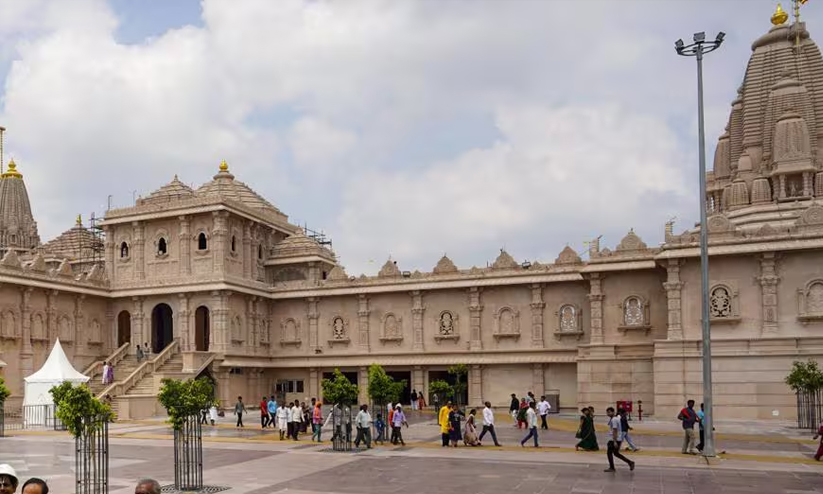
The Ram Temple in Ayodhya, a site of immense spiritual and cultural significance, has been at the center of a legal battle involving allegations of financial misconduct. Authorities uncovered serious irregularities during the donation counting process, raising concerns over the handling of funds meant for the temple’s upkeep and development. The Supreme Court of India has now concluded its monitoring of the case, marking a shift in how the investigation and trial will proceed.

A Special Investigation Team (SIT) conducted a thorough examination of the case, reviewing financial records, conducting forensic audits, analyzing CCTV footage, and collecting witness statements. The investigation revealed 105 instances where money was allegedly removed or concealed from the temple premises during the donation counting process. These findings highlighted systemic issues in the handling of funds, with some accused individuals allegedly diverting money for personal gain.

Ayodhya Ram temple donation row: SIT chargesheet filed, UP govt tells SC https://t.co/dWpCoPge8U
Following the SIT’s investigation, the Uttar Pradesh government filed a charge sheet against eight individuals accused of involvement in the theft. The charge sheet, submitted to the anti-corruption court in Ayodhya, detailed extensive evidence spanning financial dealings, assets, and transactions. The Supreme Court, after reviewing the case, decided to end its direct oversight, allowing the trial to proceed in the lower courts.
The charge sheet, submitted to the anti-corruption court in Ayodhya, detailed extensive evidence spanning financial dealings, assets, and transactions.
In a move to ensure transparency and accountability, the Supreme Court permitted the petitioners who had originally filed the case in the public interest to participate in the ongoing trial proceedings. This decision underscores the importance of public involvement in ensuring that justice is served and that the allegations of misappropriation are thoroughly examined.
The case now moves forward with the trial court taking the lead, while the voices of those who sought accountability remain integral to the process.

No CBI Probe Into Ayodhya Ram Temple Theft After UP SIT filed chargesheet against 8 accused, Supreme Court decided to stop monitoring the case and directed Magistrate in Ayodhya to “proceed in accordance with law." Agreeing that “public interest is involved in the case," SC permitted petitioners before SC to assist the Magistrate in the same manner “as victims of crime are permitted to assist criminal proceedings.” @Harishvnair1 brings us more