
In the high-stakes theater of global football, there are players who exist in the periphery of greatness, and then there are those who carry the crushing weight of destiny on their shoulders. For years, Harry Kane has occupied that heavy, often lonely space. He is a striker defined by a relentless, almost mathematical productivity, yet for much of his career, the ultimate individual validation seemed to remain just out of reach.
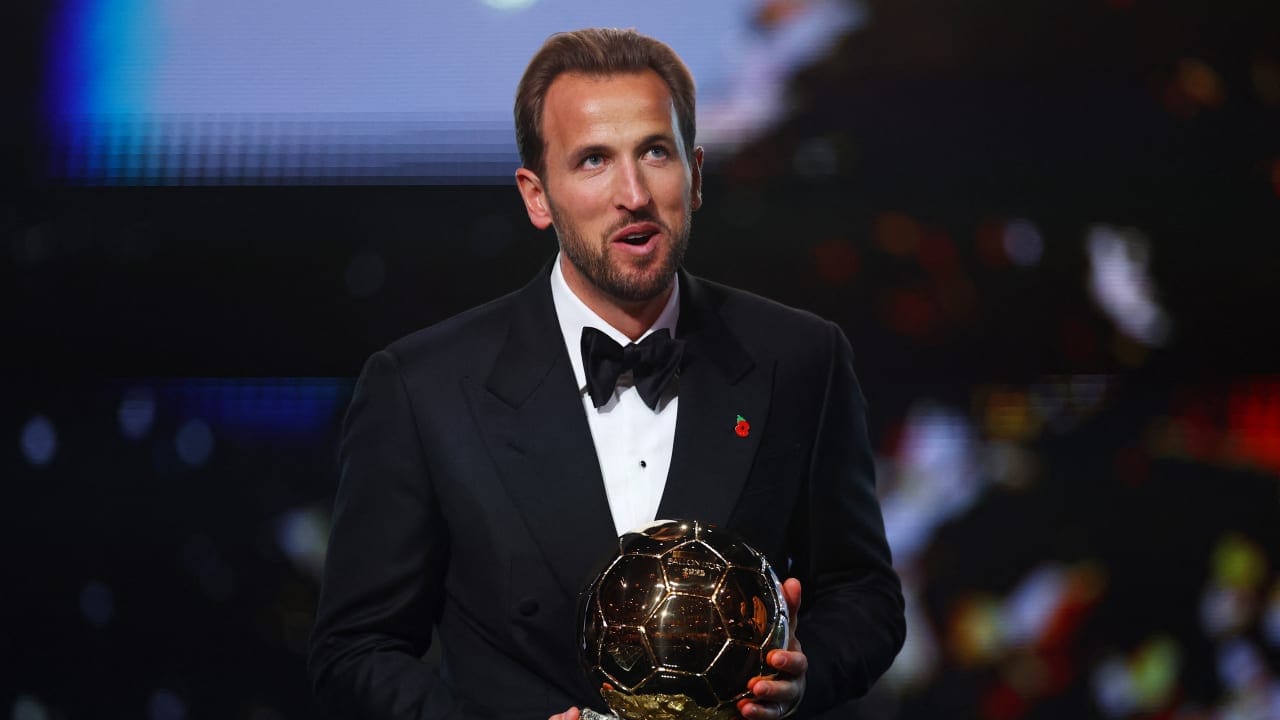
That changed on a Monday at the Palladium Theatre in London. In a ceremony held on English soil for the first time, the 33-year-old striker was named the winner of the 2025-2026 Men's Ballon d'Or. As he ascended the stage, the man who has spent a career navigating the highs and lows of professional sport admitted to a rare vulnerability. "I'm a little nervous, I'm not going to lie," Kane said. "It's different to playing a big match because it's out of my control."
To understand why the voting shifted so decisively toward the Bayern Munich forward, one must look at the sheer, staggering volume of his output. The 2025-2026 campaign was not merely good; it was an anomaly of efficiency. Kane finished the season with a total of 73 goals in 65 appearances across club and country.
For a player whose previous best Ballon d'Or finish was 10th, the leap to the top represents the culmination of a journey that was never a straight line.
For Bayern Munich, he was the engine of a domestic treble, netting 61 goals in 51 games. This included 36 goals in the Bundesliga—a feat that saw him finish as the league's leading scorer for the third consecutive season—and 14 goals in the Champions League. He was, quite simply, Europe's top club goalscorer.
But his influence extended far beyond the German borders. During the summer, Kane carried that clinical form into the World Cup, where he scored six goals to lead England to a third-place finish. It was the country's best performance on the world stage since their 1966 triumph. In a year where heavyweights like Kylian Mbappé and Lamine Yamal were also favorites, Kane’s ability to outpace them in pure goal production made his claim to the trophy undeniable.

I’m not about talent only, I’m about hard work and execution, and who does it better now than Harry Kane? ❤️👏🏽 #BallonDor https://t.co/PeQJZFB06p
Kane’s victory is more than just a personal milestone; it is a historical correction. He becomes the first Englishman to win the Ballon d'Or since Michael Owen in 2001, joining an elite lineage of English winners that includes Sir Stanley Matthews, Sir Bobby Charlton, and Kevin Keegan. For Bayern Munich, the win ended a drought stretching back to 1981, when Matthias Sammer claimed the honor.
This triumph also saw Kane collect the inaugural Men's Striker of the Year award and the Gerd Muller Trophy, further cementing a season where he was unmatched in individual output. For a player whose previous best Ballon d'Or finish was 10th, the leap to the top represents the culmination of a journey that was never a straight line. "I hope my journey, it wasn't straightforward," Kane remarked during his acceptance speech. "I didn't go straight to the top, I had to experience a lot of loan moves and fight my way to get to where I am now."
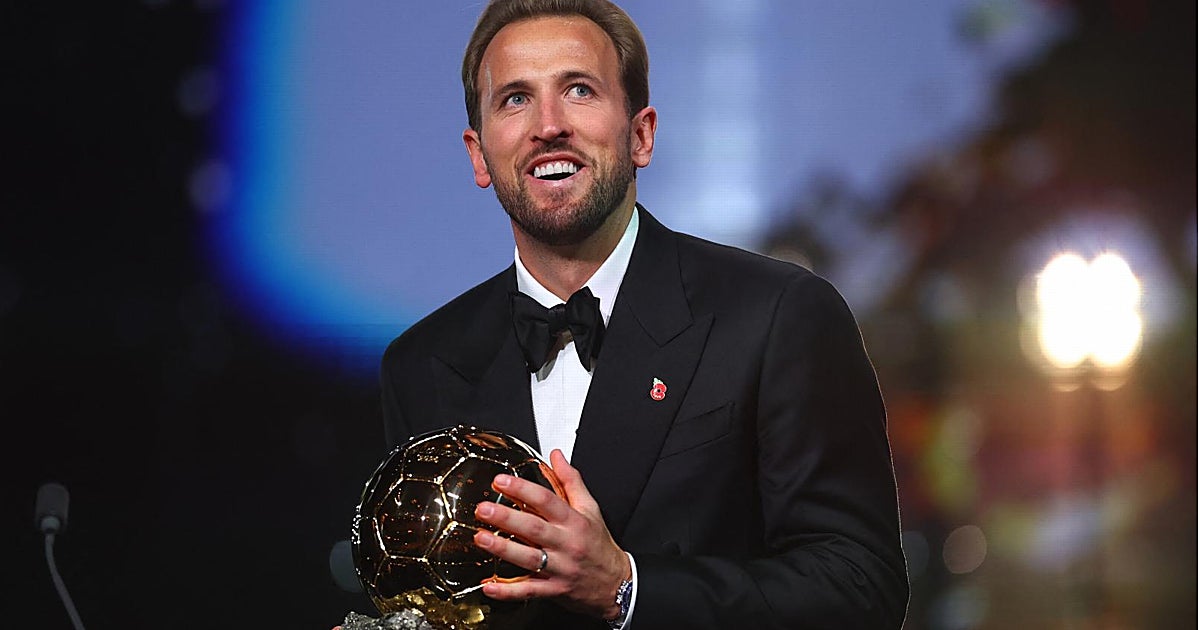
While the headlines focus on the 73 goals, the reality of Kane's success is built on the daily grind of elite competition. He credited his growth to the environment at Bayern Munich, noting that the necessity of training against players like Dayot Upamecano every week pushed him to a higher level.
Even his former manager, Thomas Tuchel, noted the inevitability of the moment. "I ran out of superlatives to describe your performances a long time ago," Tuchel said, expressing delight that the football world had finally provided formal recognition.
Yet, amidst the accolades, Kane was quick to deflect the spotlight. He spoke of the sacrifices made by his family and the collective effort of his teammates. "Without you guys and the rest of the team it wouldn't be possible, the way you guys push me, the way we compete," he told his Bayern Munich colleagues. He dedicated the trophy to his wife, Kate, describing her as his best friend and greatest support. "It is something we can celebrate, not me. We're a team."
The London ceremony served as a showcase for a new generation of talent and established leaders. While Kane took the top prize, the evening recognized several other pivotal figures in the sport. Lamine Yamal was named the best young player, signaling the arrival of a new era, while Unai Simon took home the Yashin Trophy.
In the coaching ranks, Luis de la Fuente was honored as Coach of the Year following his success with Spain. The ceremony also saw Bukayo Saka receive the Socrates Award, highlighting the intersection of footballing excellence and social impact.
As the lights dimmed at the Palladium, the narrative of Harry Kane had been rewritten. He is no longer just a prolific scorer or a reliable captain; he is the standard-bearer for a generation of strikers, a man who fought through the loans and the doubts to finally stand at the summit of the game.