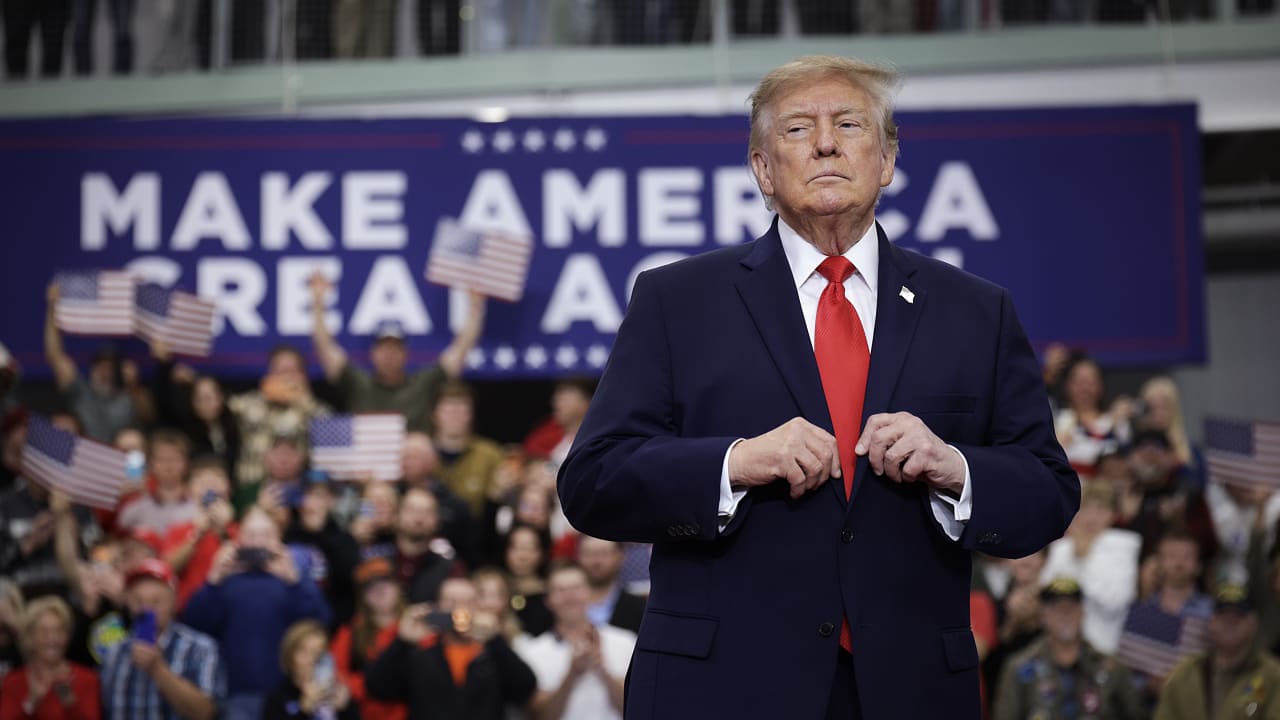
On a crisp October afternoon in Wasilla, Alaska, President Donald Trump stepped onto a campaign stage before a crowd of supporters and delivered a pointed message to Tehran. The setting was a typical midterm election rally, with the president using the platform to address foreign policy concerns that had been building in the weeks prior. His words were immediate and unambiguous, framing Iran as a looming threat that required a swift response from Washington. The rally itself became the venue for a series of statements that would later be scrutinized for their timing and tone, as the nation's attention was already divided between domestic politics and international developments.
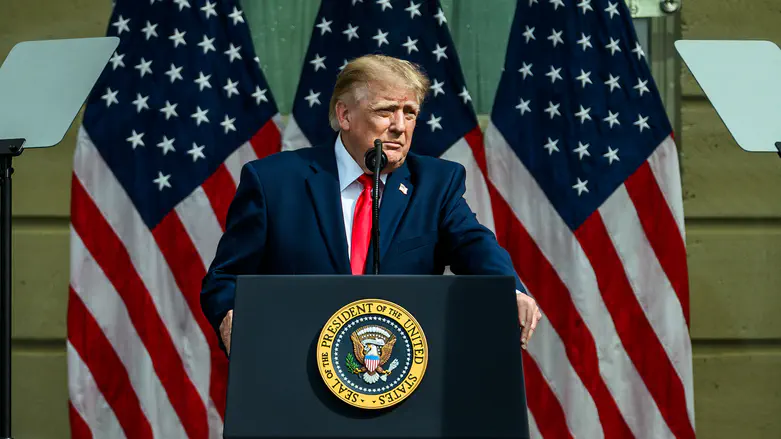
During his remarks, Trump declared that the United States was ready to act, using the phrase "we're going to do a number" to convey the severity of any potential response. He told the audience, "Oh, wait till you see what we do to Iran. We're going to do a number. We sort of had it." This language suggested that preparations were already underway and that a decision on next steps was imminent. Trump further emphasized that he would decide on the course of action "very soon," reinforcing the sense that the window for diplomacy was narrowing and that military options were being actively considered.
To underline the urgency, Trump pointed to Iran's internal struggles, describing the country as a "failed state" beset by economic collapse. He cited a specific figure, saying Iran faced "300% inflation" and emphasized that the government lacked the funds to meet basic obligations. "They have no economy. They have 300% inflation. They have no money. They're not paying their troops. They're not paying anybody," he asserted. By highlighting these economic woes, Trump sought to illustrate that Iran's capacity to sustain a prolonged confrontation was limited, thereby strengthening the case for a swift U.S. move.
Despite the hard‑line tone, Trump also hinted at ongoing diplomatic engagement.
A central thread in Trump's address was the prevention of Iran obtaining a nuclear weapon. He returned repeatedly to this point, stating that "the big thing is they were not going to have a nuclear weapon" and that the United States would not allow such an outcome. Earlier in the week he had declared that Iran would not get a nuclear weapon, noting that related facilities were "buried under thousands of tons of rock." The repetition of this pledge served to frame any potential action as a defensive measure aimed at curbing proliferation, a narrative that resonated with his broader foreign policy rhetoric.

Iran has adopted new tactics to intensify attacks on commercial shipping in and beyond the Strait of Hormuz, aiming to keep oil prices high ahead of the November U.S. midterm elections, according to two senior Iranian officials. The strategy includes more frequent attacks and an expansion into the Gulf of Oman and waters near Qatar and the UAE. At least five shipping incidents were reported in the past 48 hours. Source: Reuters
Despite the hard‑line tone, Trump also hinted at ongoing diplomatic engagement. He told the crowd that the United States was "having productive discussions with the Islamic Republic of Iran," a statement that appeared at odds with his warnings of imminent action. Earlier in the week he had claimed that productive talks were underway, even as he labeled Iran a failed state and warned of looming military steps. This juxtaposition created uncertainty about whether the administration was pursuing a dual track of negotiation and preparation for force, leaving observers to parse the true intent behind the conflicting messages.
The rally took place just weeks before the nationwide midterm elections scheduled for November 3. Trump had previously said that the United States would refrain from further military action until after the elections, yet his Alaska remarks suggested readiness to act sooner. He maintained that the election outcome would not influence his decisions, insisting that any move would be based solely on strategic considerations. The proximity of the rally to the vote date intensified speculation about whether foreign policy posturing was being used to bolster domestic political prospects, even as the president denied any electoral calculus.

🇺🇸‼️ 🇮🇱Trump and Netanyahu discussed the possibility of new strikes against Iran in the coming weeks, Axios reports, citing sources. According to the outlet, Netanyahu expressed concern over Israeli intelligence indicating that Iran is attempting to revive its nuclear program. Officials stated that Trump made no specific promises but replied, "Get ready." The discussion comes against the backdrop of upcoming elections in both countries: October 27 in Israel and November 3 in the United States.
In the weeks following the Alaska rally, attention has stayed fixed on Iran's nuclear facilities and the economic pressures bearing down on Tehran. Trump had earlier stressed that Iran's nuclear facilities were 'buried under thousands of tons of rock,' a detail that underscored both the difficulty of any potential strike and the administration's determination to prevent Tehran from crossing the nuclear threshold. His Alaska remarks came against the backdrop of an Axios report indicating he had discussed a major new operation against Iran with Israeli Prime Minister Benjamin Netanyahu ahead of upcoming elections in both countries, lending international context to the warnings delivered in Wasilla. The conflicting signals—a vow of imminent action alongside claims of productive discussions, set against his earlier pledge to hold off on military moves until after the midterms—have fueled speculation about whether strikes could come before voters head to the polls on November 3. Trump, however, maintained that any decision would be driven by strategic considerations rather than electoral timing, framing the standoff as a matter of national security that transcended the political calendar.