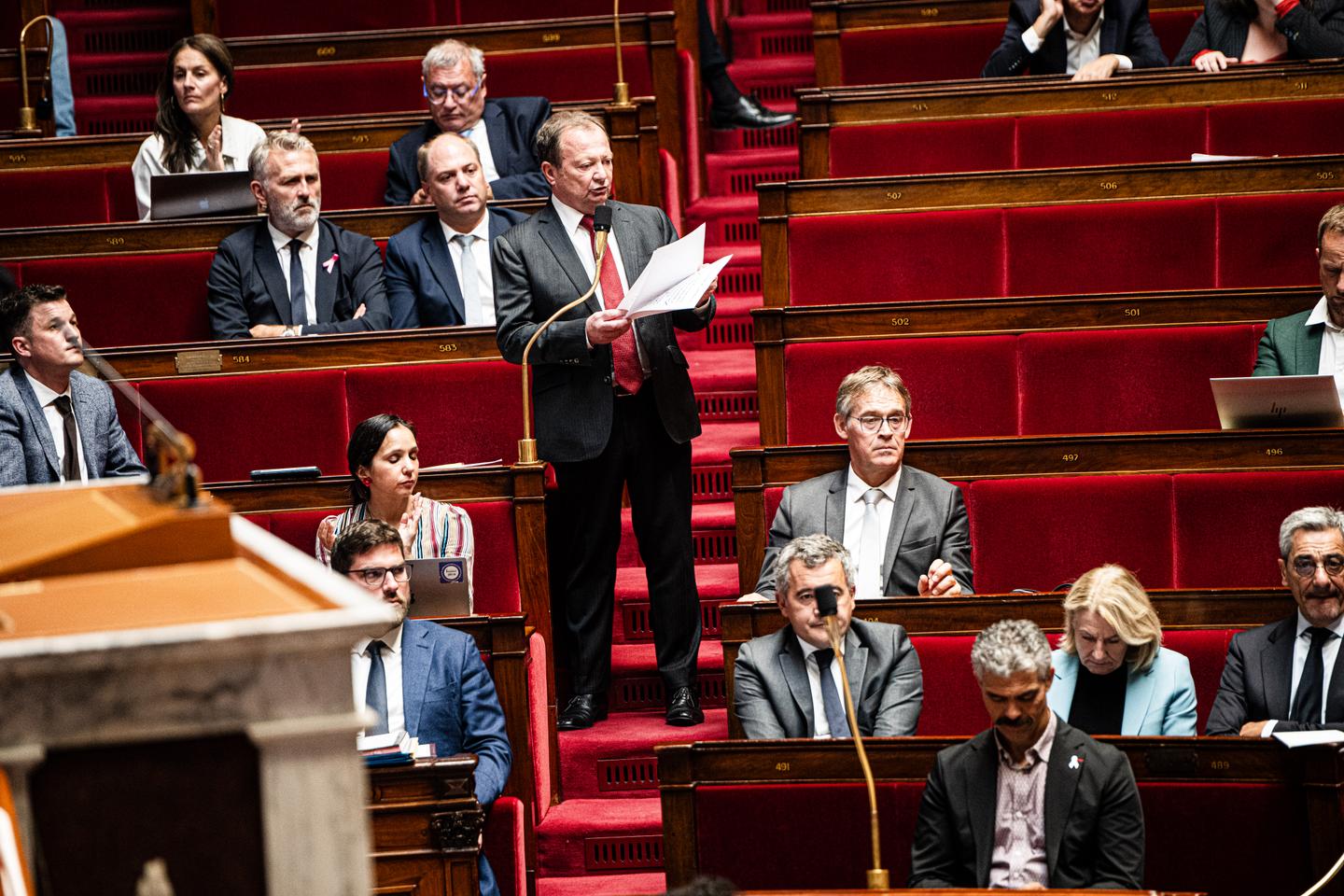
On November 5, 2026, the political landscape of the French National Assembly shifted in a way that few had anticipated. Within the halls of the Palais Bourbon, a significant majority of the communist and ultramarine group—nine out of 17 deputies—formally announced their support for Jean-Luc Melenchon, the figurehead of La France insoumise, as their preferred candidate for the 2027 presidential election. This was not merely a routine endorsement; it was a deliberate, public departure from the party line, signaling a profound internal rift that threatens to reshape the dynamics of the French left.

The deputies involved in this decision framed their move as a pragmatic, if difficult, necessity. In a statement released to the public, the group emphasized that they were acting out of a sense of duty in the face of a volatile political climate. "À l'approche d'une élection présidentielle aux enjeux immenses, nous prenons nos responsabilités, par-delà nos attaches partisanes," the group declared. By prioritizing what they perceive as the broader survival of their political project over traditional party loyalty, these lawmakers have effectively signaled that they are willing to bypass their own institutional structures to influence the outcome of the upcoming race.
At the heart of this decision lies a singular, driving fear: the prospect of a victory for Marine Le Pen. The deputies have made it clear that their support for Melenchon is rooted in a tactical calculation. They view him as the most viable candidate capable of reaching the second round of the presidential election to challenge the far-right leader. In their view, the urgency of preventing a Le Pen presidency outweighs the internal party preference for Fabien Roussel, the current leader of the French Communist Party (PCF). The endorsement is, in essence, an act of defensive consolidation, aimed at rallying the left around a candidate they believe has the best chance of survival in a high-stakes contest.
They view him as the most viable candidate capable of reaching the second round of the presidential election to challenge the far-right leader.
For Fabien Roussel, the announcement represents a significant blow to his own presidential ambitions. Roussel's campaign has struggled to gain the momentum necessary to distinguish itself in a crowded field, and this public rejection by his own parliamentary colleagues only serves to deepen his political isolation. The move by the nine deputies acts as a direct challenge to his authority, suggesting that a substantial portion of his own parliamentary base has lost faith in his ability to lead the movement toward the Elysée Palace. The internal friction is now out in the open, leaving the PCF in a state of visible disarray.
As the political machinery of France gears up for 2027, the decision of these nine deputies has fundamentally altered the conversation. "Nous nous engageons à soutenir la candidature à l'élection présidentielle de Jean-Luc Melenchon," the group stated, leaving no room for ambiguity. This endorsement effectively forces the hand of the broader left, creating a new, albeit contentious, reality. Whether this move will succeed in galvanizing a broader coalition or simply accelerate the fragmentation of the left remains to be seen, but for now, the path toward the next presidential election has become significantly more complex.