
The sky over the Brčko region of Bosnia is usually a canvas for the rhythmic chopping of rotors, a sound that has become almost ambient for the thousands of soldiers stationed there as part of the European Union’s peacekeeping effort. For four people, that sound stopped forever on a day that, like so many before it, began with the mundane discipline of a training exercise. There is no drama in the official record, no combat engagement, no enemy fire. There is only the sudden, catastrophic failure of a CH-47 Chinook helicopter, a twin-rotor workhorse of modern logistics, during a routine maneuver. The result was a tragedy that echoed far beyond the borders of the small town where the wreckage lay: four dead and eleven injured, all of them Italian nationals serving in a multinational force that has kept this corner of the Balkans stable for over two decades.
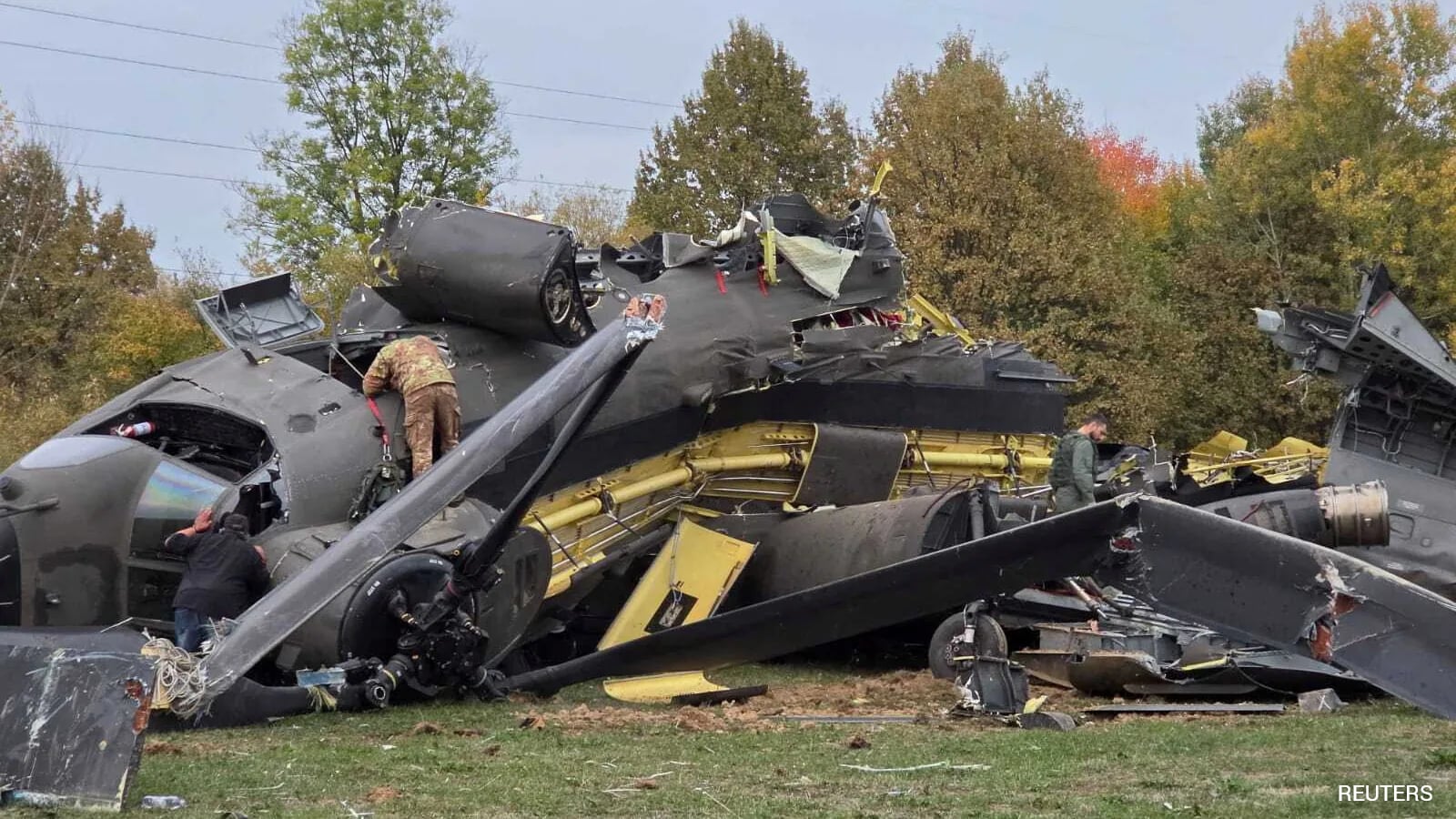
To understand the shock of the incident, one must understand the scale of the operation it interrupted. The European Union Force, known as EUFOR, maintains a presence in Bosnia and Herzegovina to help preserve the country’s peace after the devastating war of the 1990s. It is a large undertaking, with approximately 1,200 personnel participating in the mission. These are not just soldiers; they are diplomats, analysts, and support staff working in an environment that, while historically volatile, is now defined by cooperation rather than conflict. The crash did not happen in the heat of battle. It happened during a training run. This distinction is critical. When a military accident occurs in combat, it is often shrouded in the fog of war, in the chaos of engagement. But a crash during routine training is a pure systems failure, or a human one, happening in peacetime. It strips away the excuses. It leaves only the machinery, the pilot, the weather, and the ground. For the fifteen people on board that day, the safety of the exercise became the first casualty.
The Italian government moved quickly to confirm the identities of the victims, a procedural step that transforms a statistical tragedy into a human one. All fifteen individuals on the helicopter were Italian nationals. Among the four who died were two soldiers and two volunteers from the Italian Red Cross. This mix of military personnel and humanitarian workers highlights the integrated nature of modern peacekeeping. It is not just about holding lines on a map; it is about medical support, logistics, and care. The presence of Red Cross volunteers in the airframe of a military transport chopper is a testament to the blurring lines between war and aid in this region. For the families in Italy, the news was not just about the loss of a son or a partner, but the loss of someone who had chosen a life of service, in a place that is still learning to live with its past. The distinction between the soldier and the volunteer is lost in the smoke of a crash, but it remains in the minds of those left behind.
One detail from the official reports offers a sliver of relief in an otherwise bleak picture: no civilian casualties were reported.

Italian military helicopter on peacekeeping mission crashes in Bosnia and Herzegovina The helicopter was involved in Operation Althea, which helps enforce the Dayton Accords. At least four people were killed and another 12 injured.
In Rome, the reaction was immediate and personal. Guido Crosetto, the Italian Defence Minister, issued a statement that skipped the bureaucratic formalities of crisis management and went straight to the heart of the matter. "In this time of profound grief, my first thoughts go to the families of our fallen soldiers, to whom I extend my personal condolences," he said. This quote marks a pivot in the public response from the logistical to the emotional. It acknowledges the human cost of the mission. The Italian government’s confirmation that all were nationals was a way of reclaiming the victims from the anonymity of international incident reports. They were not just 'personnel of the EU Force'; they were Italians. They were Italian soldiers and Italian volunteers. This framing ensures that the grief is felt domestically, that the flag is draped over the caskets, and that the national memory is secured against the dilution of international bureaucracy.
While the world mourns, the EUFOR has launched a thorough investigation. This is a standard protocol, but it carries a specific weight here. The EU Force is not a standing army; it is a temporary mandate granted by the European Union to ensure stability. An accident that results in fatalities casts a shadow on that mandate. If the cause is found to be mechanical, it is a failure of maintenance. If it is human, it is a failure of training or oversight. The investigation is not just about assigning blame; it is about ensuring that the next fifteen people on a similar flight do not face the same fate. The speed of the investigation matters. In peacekeeping operations, trust is the currency. If the force cannot guarantee the safety of its own members, it can hardly guarantee the safety of the host nation. The EUFOR’s role is to prevent a return to war, but it must first prevent the erosion of its own credibility. The crash in Brčko is a test of that credibility.

🇮🇹🇧🇦 TERRIFYING footage captures the moment an Italian military CH-47 Chinook SPINS OUT OF CONTROL and crashes in Bosnia and Herzegovina. The helicopter went down near Brčko during an EU peacekeeping training operation. FOUR people were killed and 11 injured, according to the latest reports. The aircraft was almost completely destroyed. Investigators are still trying to establish what went wrong. Writer: Oliver https://t.co/mZPZBoZWqP
One detail from the official reports offers a sliver of relief in an otherwise bleak picture: no civilian casualties were reported. This is a significant fact, easily overlooked in the focus on the military and volunteer victims. Brčko is a complex municipality, home to a majority Serb population within a Bosniak-majority entity, a remnant of the post-war peace deal. A helicopter crash in such a sensitive area could have ignited local tensions, especially if it had involved local residents or damaged civilian property. The fact that the incident was contained to the military and volunteer personnel on board suggests that the crash did not occur in a dense urban center. It was a failure in the air, not on the ground. This containment is a matter of luck and geography, but it is also a matter of operational discipline. The military keeps its distance, even in tragedy.
The crash occurred on October 30, 2026. This date places the incident in a recent context, one where the peace in Bosnia is still tenuous. The EUFOR mission is not static; it is a constant process of verification, engagement, and deterrence. The presence of 1,200 personnel is a reminder that the international community is not gone. It is watching. It is ready. The death of four individuals, therefore, is not just a local tragedy; it is a reminder of the cost of peace. Peace is not free. It is bought with risk, with the possibility of accident, with the fear of loss. The families of the four dead are now part of the history of the mission. Their names will be recorded in the EUFOR’s logs, but their stories will live in Italy, in the hearts of those who knew them.


🚁 Italian military helicopter on EU peacekeeping mission crashes in Bosnia 🕯️ Four killed, 11 injured, says Italy’s defence ministry 🇮🇹 PM Meloni expresses sorrow over the tragedy #Bosnia #BosniaAndHerzegovina #HelicopterCrash #EUFOR #Italy #Meloni #Chinook #CNBCTV18Digital https://t.co/Bx5CgPDZ6r
As the investigation continues, the immediate aftermath is one of silence and procedure. The helicopter is being examined. The black boxes are being read. The families are being supported. The Italian military has withdrawn from the public square of the incident, allowing the EUFOR to take the lead. This is a display of professionalism, but also of pain. The incident will likely be classified, the details redacted, the lessons learned in closed rooms. But the facts remain: four dead, eleven injured, a routine training exercise, a failure of the machine. The Brčko region returns to its daily rhythm, but it is a rhythm marked by the absence of the four who no longer return. The EUFOR will continue its work. The helicopters will still fly. But they will fly with a different awareness, a heavier burden of responsibility. The crash is not the end of the story, but it is a chapter that will not be forgotten. It is a reminder that even in the most carefully planned operations, the sky is unpredictable, and the cost of peace is always higher than it appears.