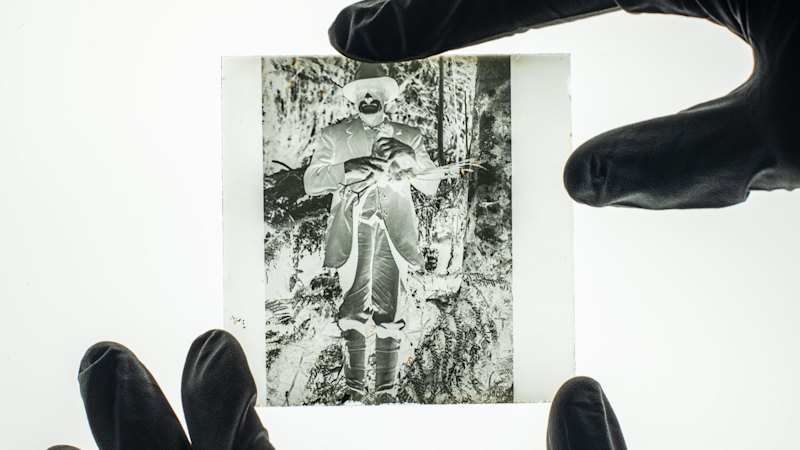
In the quiet corners of Australia’s bush, a 20th-century naturalist once conducted an ambitious study of birds. Michael Sharland, a man whose name has largely faded from the public record, spent years meticulously documenting the continent’s avian life. His dedication to understanding the rhythms of the natural world was remarkable, as he sought to capture the essence of Australian birds in a way that could be studied and shared. This was not merely a hobby; it was a commitment to ornithology that few were willing to follow.

Sharland’s work was driven by a profound curiosity. He was not content with casual sightings; he wanted to document the birds in their natural habitats. His efforts culminated in a vast collection of visual evidence, a treasure trove of knowledge that has now found a new home in the Australian Museum. The museum, recognizing the historical and scientific value of his contributions, has embarked on a project to digitize his extensive records. This initiative, carried out in partnership with students from the University of Sydney, is not just about preserving old negatives and prints; it is about breathing new life into a legacy that spans decades. The digitization process will allow researchers and enthusiasts alike to explore Sharland’s detailed observations and images of various bird species across Australia, ensuring that his work remains accessible for generations to come.
The scale of Sharland’s collection is staggering. He amassed over 2,600 photographic negatives and 1,600 prints, each a testament to his patience and passion. Among these images is a record from 1939, a year that marked significant changes in the world, yet for Sharland, the focus remained steadfast on the birds. The negatives and prints are more than just pictures; they are historical documents that offer a window into the past. They capture the birds in their natural habitats, frozen in time, providing a visual archive that is invaluable to ornithologists and historians alike. The Australian Museum’s project aims to make this archive searchable and usable, turning a dusty collection into a dynamic resource for scientific research.
These young scholars are not just digitizing files; they are engaging with the content, learning from Sharland’s methods and insights.
The collaboration with the University of Sydney students brings a fresh perspective to this endeavor. These young scholars are not just digitizing files; they are engaging with the content, learning from Sharland’s methods and insights. This intergenerational exchange is crucial. It ensures that the knowledge embedded in the images is not lost but is instead passed down to a new generation of naturalists. The students are helping to organize, catalog, and preserve the collection, ensuring that it meets modern standards of accessibility and usability. This partnership is a model for how institutions can bridge the gap between historical collections and contemporary research needs.
As the digitization project progresses, the significance of Sharland’s work becomes increasingly clear. His dedication to understanding and documenting the natural world is evident in his extensive collection. The Australian Museum’s efforts to preserve his legacy are a testament to the enduring value of such work. By making his records available to the public, the museum is ensuring that Sharland’s contributions are not forgotten. The project is a reminder that even in an age of digital immediacy, there is immense value in the slow, deliberate work of documenting the natural world. Sharland’s collection, once a private archive, now serves as a conduit for knowledge, connecting the past to the present and future.