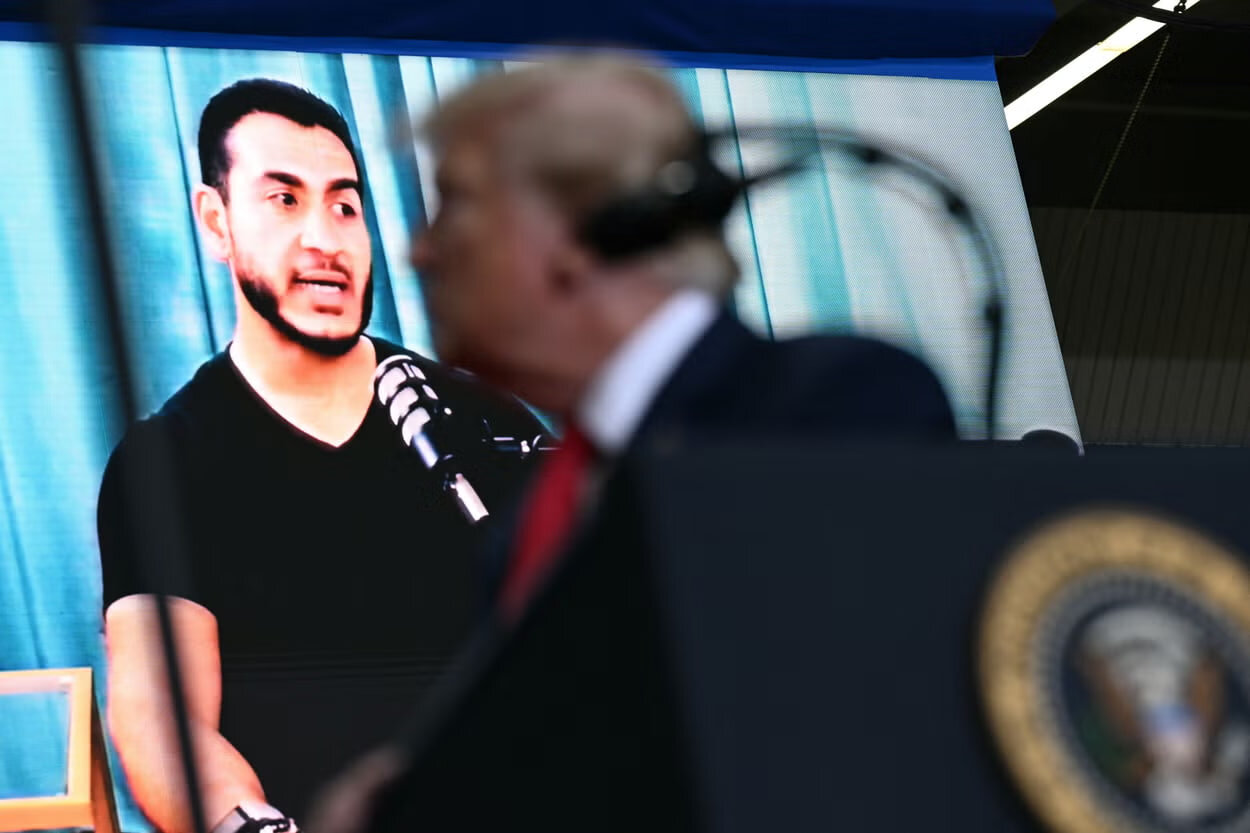
In Port Huron, Michigan, the air was thick with the energy of over 4,000 supporters gathered for a campaign rally on October 26, 2026. But as the crowd swelled, the tone of the evening shifted from standard political campaigning to something far more visceral. Donald Trump, speaking to the assembled faithful, did not merely critique the platform of his opponent; he turned his sights on the identity of the man himself. The target was Abdul El‑Sayed, the Democratic nominee for the United States Senate in Michigan, a man whose very presence in the race has become a lightning rod for the most intense rhetorical battles of the midterm cycle.

Trump’s attack on El‑Sayed was not incidental; it was foundational. The former president accused El‑Sayed of being a jihadist, suggesting he would need to pass through a metal detector to enter the Senate. The rhetoric went beyond political disagreement, venturing into the territory of physical suspicion.
To the crowd in Port Huron, Trump painted a vision of a future defined by chaos. He framed El‑Sayed’s potential victory as a threat to national security, stating that if Democrats were to win, it would “open the floodgates and invite hordes of jihadis to our shores, creating a nightmare of violence and terror until you cannot even have a Christmas.”
El‑Sayed, facing a barrage of personal attacks, has attempted to pivot the conversation back to the material realities of his constituents.
While the attacks on El‑Sayed’s faith were aimed at the candidate, Trump also turned his attention to the voters who might support him, specifically targeting the Jewish community. In a move that drew immediate backlash, he disparaged Jewish voters who find common ground with the Democratic nominee: “Any Jewish person that supports this guy should be ashamed of themselves.”
Beneath the heated rhetoric of identity lies a substantive policy rift that has contributed to the tension in this race. El‑Sayed has emerged as a staunch critic of United States military aid to Israel, a position that has placed him at the center of intense debate. This stance has already drawn criticism from some Jewish voters in Michigan, creating a friction point that Trump sought to exploit.
El‑Sayed, facing a barrage of personal attacks, has attempted to pivot the conversation back to the material realities of his constituents. He has argued that the focus on his name and his faith is a calculated distraction designed to obscure the economic struggles of Michigan families. “They think that by pointing at my name and my faith, that somehow you’re going to ignore the fact that you can’t afford your gas or your groceries, can’t see a doctor,” El‑Sayed remarked, framing the attacks as a tactic to avoid discussing the cost of living and healthcare access.
Despite the intensity of the opposition, El‑Sayed has maintained a posture of defiance. When confronted with the weight of the accusations, his responses have been characterized by a refusal to be intimidated by the rhetoric. In one instance, he met the hostility with a sharp, personal rebuttal, stating, “I’ll be Senator Mohamed to you, bro.”

As the election approaches, the race for the United States Senate in Michigan remains one of the closest and most volatile contests of the midterm elections. The events in Port Huron have set a precedent for how the candidates will be characterized: as a choice between traditional policy debate and a high‑stakes confrontation over identity, faith, and national security. For the voters in Michigan, the question is no longer just about who will represent them in Washington, but how the very language of American politics will be used to define who belongs in the halls of power.