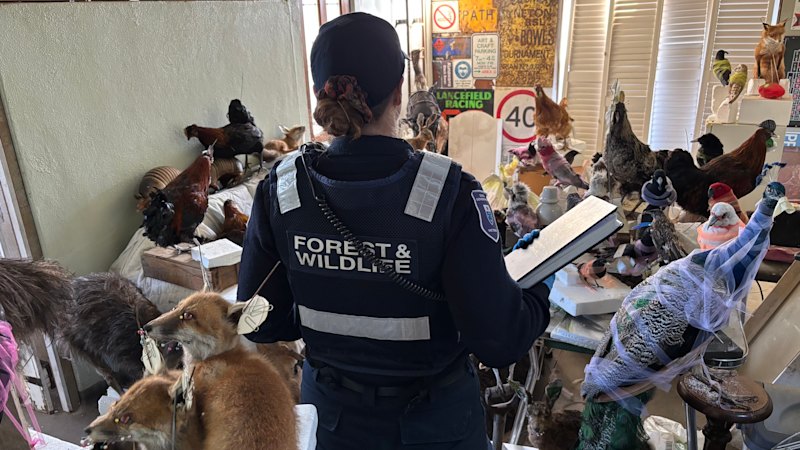
In the town of Kyneton, Victoria, the quiet rhythm of life was interrupted by a discovery that felt more like a scene from a dark gothic novel than a standard regulatory inspection. What began as a targeted wildlife raid ended in the uncovering of a massive, illicit cache of biological remains. Spread across a residence and an antiques business, investigators found the remnants of hundreds of creatures, a collection that sat in stark contrast to the curated elegance usually associated with the trade of antiquities.

The sheer volume of the find was staggering. Authorities moved through the premises to find more than 700 dead native birds, reptiles, and mammals. This was not a small collection of curiosities, but a vast assemblage of the natural world, stripped of life and repurposed as inventory. Among the most striking finds were 78 stuffed emus, the large, flightless birds that serve as a symbol of the Australian landscape. The presence of so many such iconic animals suggested a scale of operation that went far beyond casual collecting.
As investigators delved deeper into the dealer's holdings, the diversity of the species became increasingly apparent. The collection was a grim catalog of Australia's fauna, including 42 brushtail possums and 26 echidnas. These animals, ranging from common mammals to more specialized species, were part of a broader pattern of illegal possession. The raid revealed that the dealer was not just holding these items, but was also involved in the illegal sale of wildlife, turning the natural heritage of the country into a commercial commodity.
This finding added a layer of complexity to the investigation, as it brought animal welfare into the spotlight.
The raid did not only uncover the dead. In the midst of the preserved specimens, authorities also discovered 15 live reptiles held in enclosures. This finding added a layer of complexity to the investigation, as it brought animal welfare into the spotlight. The dealer faced charges not only for the illegal possession and sale of wildlife but also for failing to meet necessary animal welfare standards, highlighting a systemic disregard for the living creatures under his care.
The legal proceedings that followed the October 21, 2026, raid brought the dealer's motivations into sharp focus. During the court proceedings, the gravity of the situation was articulated by the magistrate, who expressed a profound sense of confusion regarding the dealer's actions. The court noted that the collection included many species that are considered both iconic and endangered, making the illegal trade even more significant in its impact on conservation efforts.
On that same day, October 21, 2026, the dealer entered a guilty plea to the charges brought against him. The legal consequences were swift. The court imposed a fine of $10,000, a penalty intended to address the illegal possession, the unauthorized sales, and the failure to uphold welfare requirements. The sentencing served as a formal condemnation of the practice of treating protected wildlife as mere decorative objects.

One to Watch – Kyneton . #stayinside @NewgateFarm https://t.co/STHUcoGckt
Perhaps the most stinging part of the legal resolution was not the monetary fine, but the judicial commentary on the dealer's character and choices. The magistrate pointed to a fundamental contradiction in the dealer's behavior, noting the gap between his apparent understanding of the natural world and his decision to bypass the protections meant to safeguard it. It was a moment that underscored the tension between the appreciation of nature and the exploitation of its remains.

As the dust settles in Kyneton, the case remains a stark reminder of the thin line between collecting and exploitation. The discovery of 700 animals—ranging from the massive emu to the small, spiny echidna—has left a lasting impression on the community. The legal resolution marks the end of this specific chapter, but the implications for wildlife protection and the regulation of the antiques trade continue to resonate.