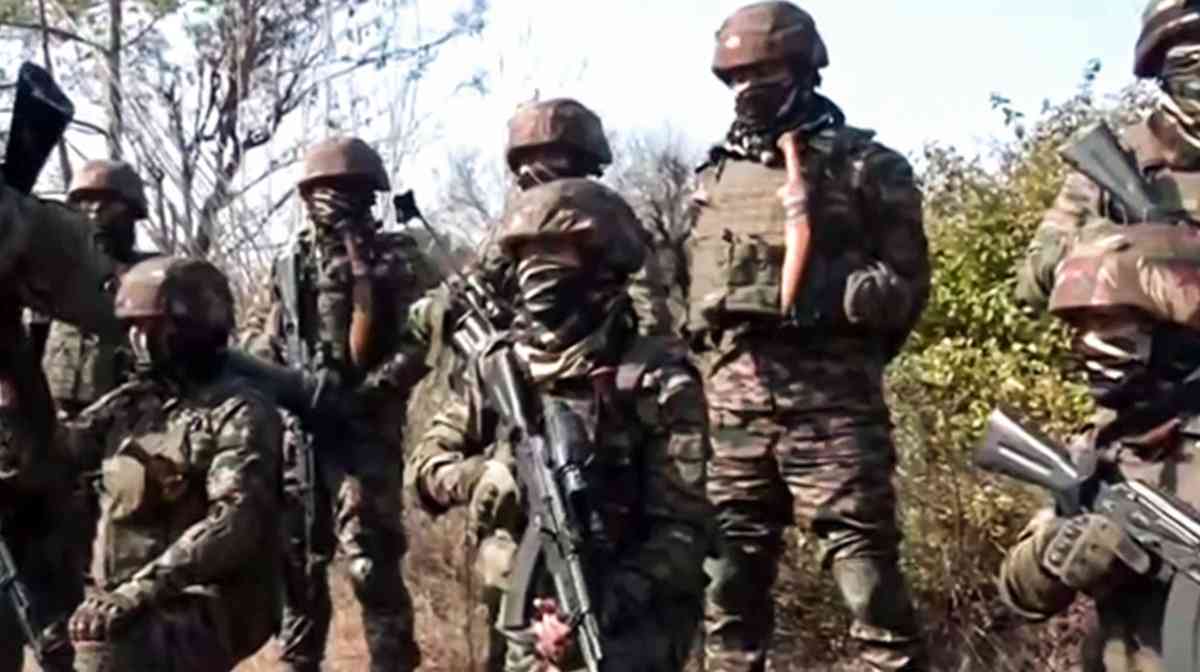
The Line of Control, or LoC, is more than just a political demarcation; it is a jagged, unforgiving landscape of mountains and valleys that separates Indian-administered territory from Pakistan-administered Kashmir. In the KG sector of the Poonch district, this border is a place of constant vigilance, where the geography itself acts as a silent sentry. On October 12, 2026, that silence was shattered not by gunfire, but by the sudden, violent percussion of a landmine.

In the high-stakes environment of border security, landmines represent a hidden, lethal layer of defense. They are passive deterrents, waiting in the earth to punish those who attempt to cross the line undetected. For those attempting to slip through the shadows of the Poonch hills, the ground beneath their feet can transform from a path into a trap in a single, devastating moment.
Reports emerging from the region indicate that the explosion was not a random accident of nature, but the result of an attempted infiltration. Four individuals, suspected of being terrorists originating from Pakistan, were caught in the blast. The force of the explosion was enough to end their journey instantly, leaving them dead in the rugged terrain of the KG sector.
Among those killed was identified as Mohammad Faiyan, a figure of significant importance within the militant landscape.
These men were not mere transients. According to reports, the deceased were residents of the Mandla and Madarpur areas, located within the Hajiira tehsil of the Poonch district in Pakistan-administered Kashmir. Their presence in the KG sector suggests a deliberate movement toward Indian territory, an attempt to bypass the heavily monitored corridors of the border.
The implications of this incident extend beyond the loss of four lives. Among those killed was identified as Mohammad Faiyan, a figure of significant importance within the militant landscape. Faiyan was reportedly a key commander for Lashkar-e-Taiba (LeT), a militant organization known for its operations in the region.
The death of a commander like Faiyan represents a disruption in the command structure of such groups. In the complex web of militancy in Jammu and Kashmir, the loss of experienced leadership can create temporary voids in operational capability, even as the underlying tensions of the border remain unchanged. Alongside Faiyan, the other three individuals identified in the explosion were Mohammad Ishaq, Mohammad Wakaas, and Mohammad Asim.
Despite the clarity of the reports circulating through news channels, the official landscape remains quiet. In the aftermath of such high-profile incidents, there is often a period of calculated silence from the state. As of now, no official confirmation has been issued by the Indian Army or the relevant security agencies regarding the identities of the deceased or the specific circumstances of the explosion.

This lack of official word is common in the immediate wake of border skirmishes or infiltration attempts. Security agencies often conduct thorough forensic and intelligence assessments before making formal statements, ensuring that the details of the encounter—and the identities of those involved—are verified beyond doubt. For the residents of the Poonch district, however, the echoes of the explosion serve as a stark reminder of the volatility that defines life along the Line of Control.