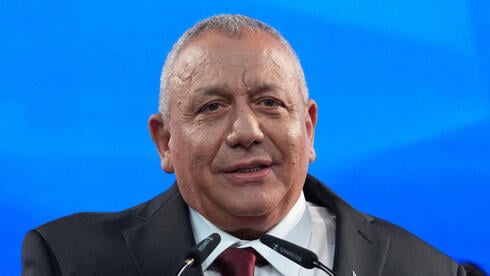
In the wake of a significant political shift in Israel, the political landscape is being redrawn by a single, driving impulse: the desire for a new direction. Gadi Eisenkot, the leader of the Yashar party, has emerged not just as a political figure, but as a symbol of a movement seeking to replace the status quo. According to Eisenkot, the recent electoral movement in Israel was a clear signal from the electorate. "The citizens of Israel voted for change and for the replacement of the current government," he stated, framing the upcoming formation of his coalition as a direct response to the public's will.

This domestic pivot comes at a moment of profound transition in the United States. On November 4, 2026, the U.S. midterm elections concluded with a significant shift in power, as Republicans lost their majority in Congress. This change in the American legislative landscape creates a new set of variables for Israel's foreign policy, necessitating a leader who can navigate a transformed Washington.
For years, the relationship between Israel and the United States has rested on a foundation of bipartisan support—a consensus that transcends individual election cycles. However, as the American political structure shifts, there is a palpable need to ensure that this connection remains resilient. Eisenkot has made it a cornerstone of his platform to restore and reinforce these ties.
He suggests that a robust partnership can act as a stabilizing force, creating a more predictable and secure environment for all nations involved.
His vision is not merely to maintain the existing relationship, but to actively re-establish and deepen it. He has pledged to strengthen the bipartisan foundations that have long sustained the partnership, recognizing that a stable alliance requires more than just transactional diplomacy; it requires a shared commitment to democratic values and mutual benefit. By focusing on these foundations, Eisenkot aims to insulate the relationship from the volatility of partisan shifts in the U.S. Congress.

Eisenkot vows to restore bipartisan US-Israel ties as he moves to form government In message to 'our friends and partners in the United States and around the world,' Eisenkot pledges to form a national emergency government, rebuild... https://t.co/qT4HCBhrPQ https://t.co/UIt8C4vx5g
The implications of this renewed partnership extend far beyond the bilateral relationship between two nations. Eisenkot views the US-Israel bond as a critical engine for broader regional dynamics. He has articulated a vision where a strengthened alliance serves as a catalyst for stability across the Middle East.
By deepening ties with the United States, Eisenkot believes Israel can better advance shared security interests. This is not an isolated pursuit of national safety, but a strategic effort to influence the wider region. He suggests that a robust partnership can act as a stabilizing force, creating a more predictable and secure environment for all nations involved. In his view, the security of Israel and the security of the Middle East are inextricably linked through the strength of this international cooperation.
As Eisenkot prepares to form his government, his eyes are turned toward the executive leadership in Washington. He has explicitly stated his intention to work with President Donald Trump to advance these shared objectives. This focus on direct, high-level engagement is central to his strategy for navigating the post-midterm American political environment.
"Under my leadership, we will renew and deepen that partnership, strengthen the bipartisan foundations that have long sustained it," Eisenkot said. He emphasized that this cooperation is intended to do more than just manage crises; it is about proactive growth. He expressed a desire to work with the Trump administration to "advance our shared security interests, strengthen regional stability, and open new doors to prosperity for the peoples of the Middle East."
What does it mean to "open new doors to prosperity" in a region often defined by conflict? For Eisenkot, the strengthening of the US-Israel relationship is a prerequisite for economic and social advancement. He frames the partnership as a tool that can move the region beyond mere survival toward a state of shared opportunity.
By aligning security interests and diplomatic goals, Eisenkot argues that the alliance can create the necessary conditions for economic development. This vision suggests that stability is the bedrock upon which prosperity is built. If the partnership can successfully manage regional tensions and foster a sense of shared security, it may pave the way for new economic corridors and collaborative ventures that benefit the peoples of the Middle East at large.
As the dust settles on the November 4 elections, the focus shifts to the complex task of coalition building. Eisenkot, as the leader of the Yashar party and a central figure in the opposition bloc, faces the challenge of translating his promises into a functional government. The stakes are high, as his ability to form a stable coalition will determine whether his vision for a renewed, bipartisan relationship with the United States can become a reality.
For now, the political momentum rests with Eisenkot. He has set a clear agenda: a government defined by its commitment to democratic values, its pursuit of regional stability, and its dedication to a deeply integrated partnership with a changing United States. The world is watching to see if this vision of a renewed alliance can withstand the complexities of modern geopolitics.