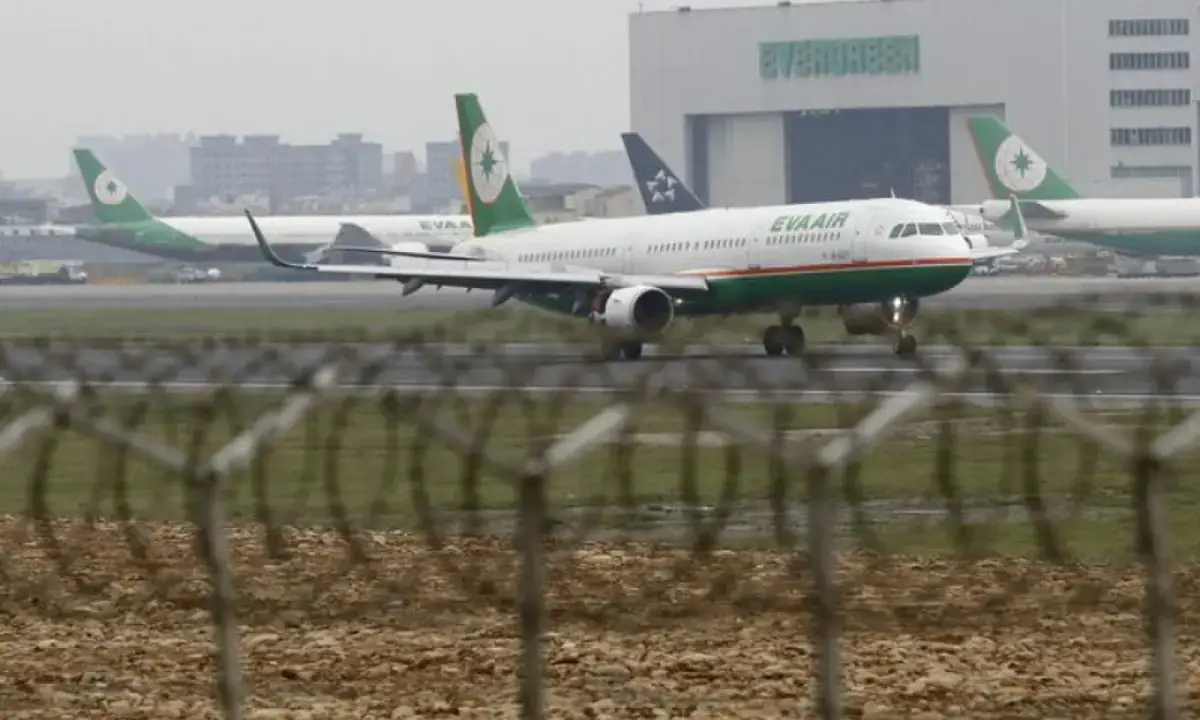
In the high‑altitude world of international aviation, the shortest distance between two points is rarely a straight line; it is a negotiation of sovereignty, politics, and treaty. Recently, Pakistan has officially closed its airspace to Taiwanese aerospace companies, a move that effectively erases the flight paths of Taiwanese carriers from the maps of South Asia. This is not a technical glitch or a temporary safety measure, but a deliberate application of the One‑China policy—the diplomatic principle that recognizes Beijing as the sole legitimate government of China.
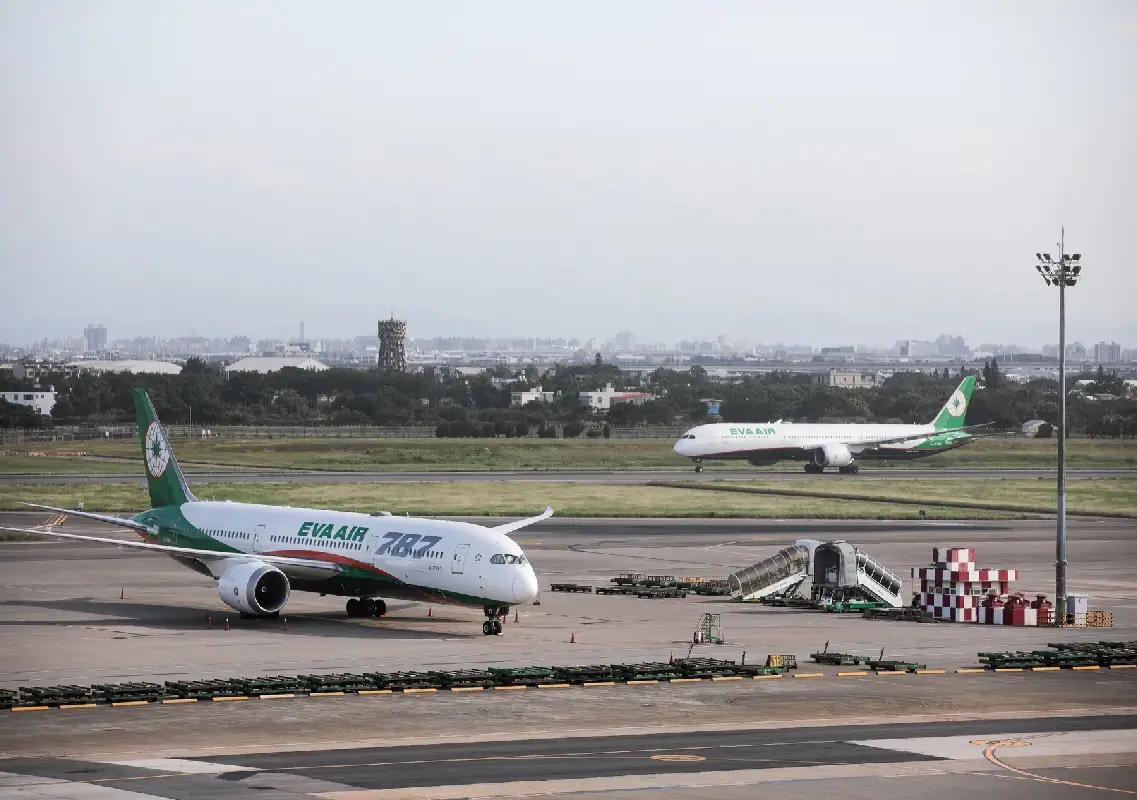
For the pilots and passengers of Taiwan’s major carriers, the sky just became significantly larger and more expensive. The decision to bar Taiwanese airlines from Pakistani airspace represents a moment where high‑level geopolitical stances manifest as tangible, physical disruptions in the global logistics network. It is a reminder that the invisible lines drawn by diplomats on parchment eventually become the hard boundaries that dictate how machines move across the globe.
This shift is not an isolated incident of bureaucratic friction but a reinforcement of a long‑standing strategic relationship. Pakistan’s decision underscores a deep‑seated diplomatic and strategic alignment with China. By restricting the movement of Taiwanese aircraft, Pakistan is signaling its unwavering support for Beijing’s stance on Taiwan. This alignment is not merely rhetorical; it has been actively championed by Pakistan's defense minister, moving the One‑China policy from the realm of diplomatic statements into the realm of operational reality.
For these airlines, the closure of Pakistani airspace is not a minor inconvenience; it is a fundamental disruption to their flight operations.
Khawaja Asif, a key figure in this transition, made the government’s position explicit. "The aviation division follows the One‑China policy, allowing only mainland China," Asif stated, clarifying that the restriction is a matter of institutional adherence to a specific political framework. In this view, the airspace is not just a transit corridor, but a tool of statecraft used to uphold the recognition of a single Chinese state.

JUST IN: 🇵🇰🇹🇼 Pakistan closes its airspace to all Taiwanese airlines in support of China.
When a nation closes its airspace, the impact is felt immediately by the companies tasked with navigating the new reality. The restrictions have specifically targeted major carriers, including China Airlines and EVA Air. For these airlines, the closure of Pakistani airspace is not a minor inconvenience; it is a fundamental disruption to their flight operations.
To maintain their international schedules, these carriers are now forced to divert their routes. One primary alternative involves navigating through Russia, a detour that alters the economics of a flight. This action underscores the country's diplomatic and strategic alignment with China. For the passenger, this means changes to flight schedules.
To understand why this matters, one must look at the intersection of commercial interests and national identity. Airspace is a sovereign resource. Every nation has the right to dictate who flies through its territory, but when those decisions are made to satisfy the requirements of a policy like the One‑China principle, the commercial sector becomes an involuntary participant in a larger struggle for recognition.

By implementing these restrictions, Pakistan has moved beyond the theoretical. The decision impacts the very mechanics of how Taiwanese companies interact with the world. It creates a barrier that is both physical and economic, ensuring that the political reality of the One‑China policy is respected even in the most routine of international activities: the crossing of borders at thirty thousand feet.

Pakistan Bars Taiwanese Airlines From Its Airspace Under One-China Policy #Pakistan #Taiwan #China #TaiwanAirlines #OneChinaPolicy #PakistanAirspace https://t.co/ZSg3kLsWdS
The move serves as a definitive marker in Pakistan’s foreign policy trajectory. While the aviation industry often strives for a borderless, frictionless flow of goods and people, the reality of the modern world is increasingly defined by the hardening of political boundaries. Pakistan’s actions demonstrate that even the most globalized industries—such as commercial aviation—are not immune to the gravitational pull of regional power dynamics.
As carriers like China Airlines and EVA Air adjust their navigation systems to account for the new Pakistani boundaries, the broader world watches the precedent being set. The closure of the airspace is a clear signal that for Pakistan, the strategic necessity of maintaining its relationship with Beijing outweighs the logistical ease of the international aviation network. The sky, once a shared space for transit, has become a theater where the lines of sovereignty are drawn with uncompromising clarity.