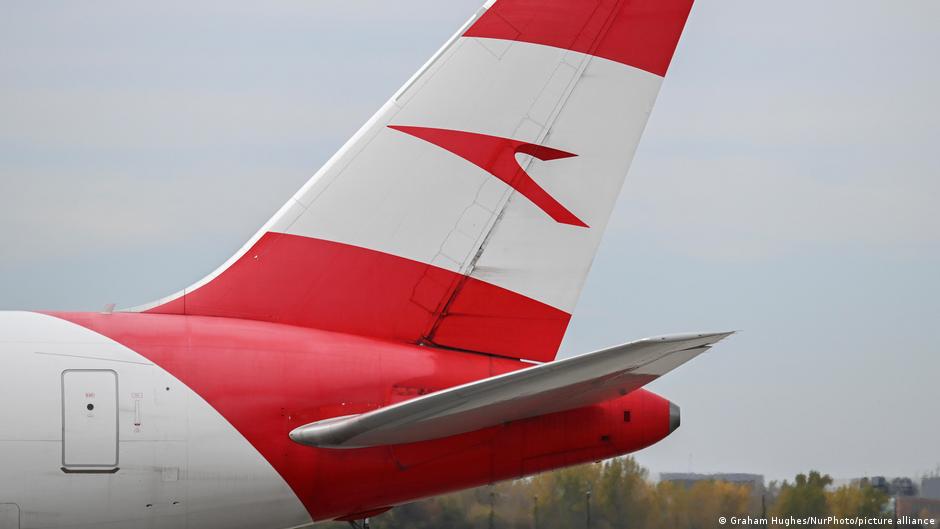
On that day, the routine mechanics of international travel were abruptly shattered. Austrian Airlines flight OE82, an Airbus A320, had departed Tel Aviv. For the 51 passengers and 6 crew members on board, the journey toward Vienna was meant to be a standard transit across the Mediterranean and into European airspace. Instead, as the aircraft approached the Romanian border, the atmosphere inside the cabin shifted from the quiet hum of cruising altitude to the sharp tension of an emergency.
A bomb threat was communicated to the flight crew, transforming a commercial transport into a vessel under immediate suspicion. In the high-stakes environment of modern aviation, such threats necessitate an immediate and decisive response, prioritizing the safety of everyone on board above the flight plan. The crew was forced to abandon their course to Vienna, seeking the nearest secure ground.
As the threat loomed, the response from national authorities was swift and visible. The Bulgarian Air Force deployed MiG-29 fighter jets to intercept and escort the Airbus A320. This maneuver, often seen in high-security scenarios, ensures that a potentially compromised aircraft is monitored closely by military assets as it descends toward a controlled landing. The sight of fighter jets flanking a commercial airliner serves as a stark reminder of the gravity of the situation.
The Ministry confirmed the launch of a special investigation team, a dedicated group tasked with dissecting the timeline of the threat and determining its origin.
The aircraft eventually touched down at Vasil Levski Airport in Sofia, Bulgaria. The descent, marked by the presence of military escorts, concluded with the plane safely on the tarmac, but the tension within the cabin was only beginning to transition into the procedural rigor of a security crisis.

Tel Aviv-Vienna flight makes emergency landing in Bulgaria after unspecified threat https://t.co/N9kmGs0dV1
Once the wheels were down in Sofia, the focus shifted from the sky to the terminal. The 51 passengers and 6 crew members were evacuated from the aircraft to undergo a thorough security search. This process is designed to ensure that no hazardous materials remain on board and to verify the legitimacy of the threat. During this period of uncertainty, the passengers were left in a state of limbo, waiting for the results of the inspection and the next steps of their journey.
The Bulgarian Ministry of Transport moved quickly to manage the fallout of the diversion. The Ministry confirmed the launch of a special investigation team, a dedicated group tasked with dissecting the timeline of the threat and determining its origin. While the immediate physical danger was mitigated by the landing, the legal and investigative work to understand why the threat was made began in earnest on the ground.
For those caught in the middle of the diversion, the primary concern shifted from immediate safety to the logistics of travel. The Ministry of Transport stated that a replacement plane would be provided to the passengers once the necessary inspections of the original Airbus A320 were complete. This protocol ensures that the aircraft itself is cleared of any danger before it is ever cleared to fly again.

As the investigation team began its work, the passengers faced the reality of a disrupted itinerary. Rebooking processes were initiated, with authorities promising to get travelers back on their way as soon as the security protocols allowed. The incident in Sofia highlighted the delicate balance between maintaining the flow of global travel and the absolute necessity of halting that flow when a threat is detected.

A bomb threat diverted Austrian Airlines flight OS82 from Tel Aviv to Vienna on October 18. The Airbus A320 landed safely in Sofia with 51 passengers and six crew members aboard, the airline confirmed. Bulgarian authorities say an air force fighter escorted the aircraft and passengers were taken off while security teams inspected it. The defense ministry said the response was coordinated with NATO’s air operations center in Spain. Austrian said passengers would be rebooked after the inspection. The diversion and military response are confirmed. Whether an explosive device was present, who issued the threat and why remain unconfirmed.
The Austrian Airlines incident did not occur in a vacuum. It follows a period of heightened concern regarding cockpit security and mid-flight emergencies. A Flydubai aircraft traveling from Dubai to Tel Aviv experienced its own harrowing diversion. In that instance, the crisis was not an external threat but an internal one: a co-pilot attacked the captain with a knife.
The violence in that cockpit led to a sudden loss of altitude, a moment of extreme peril for those on board, before the other pilot was able to regain control of the aircraft. That flight was forced to make an emergency landing in Tabuk, Saudi Arabia. While the nature of the threats differed—one being a reported bomb threat and the other a physical assault—the result was the same: a sudden, forced departure from a planned route and a reliance on emergency protocols to save lives.
As the investigation into flight OE82 continues, the incident serves as a case study in the layers of defense that protect modern aviation. From the crew members who receive and act upon threats, to the military pilots who escort diverted planes, to the specialized investigation teams deployed by ministries of transport, the response to a single threat involves a massive, coordinated mobilization of state resources.
For now, the aircraft remains in Sofia, a silent witness to the investigation. The passengers are being rebooked, the MiG-29s have returned to their bases, and the investigation team is working to turn a moment of chaos into a clear set of facts. In an era where security is a constant variable, the ability to divert, land, and investigate remains the primary line of defense against the unpredictable.

Threat forces Israel to Austria flight into emergency landing - The Airbus jet landed safely in Bulgaria and all passengers and crew aboard were unharmed, officials said. Via @BBC: https://t.co/dn2qeOU1P8