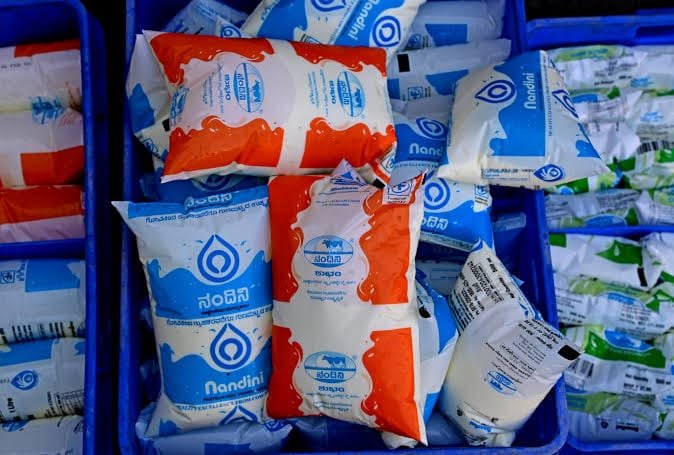
For the average household in Karnataka, the morning glass of milk is more than a dietary staple; it is a barometer of the state’s economic health. On October 29, 2026, the Karnataka cabinet made a significant intervention in this daily ritual, approving an 8-rupee-per-liter hike in milk prices. This decision, scheduled to take effect on November 1, marks the latest chapter in a series of price adjustments that have defined the dairy sector in recent years. Following previous increases on June 1, 2024, and March 1, 2025, the state government has once again turned to price policy to stabilize a sector grappling with the mounting costs of animal feed, essential medicines, transportation, and plastic packaging.

The mechanics of this price increase are designed to distribute the burden and the benefit across the supply chain. According to Krishna Baiya Gouda, the government has reached a clear consensus on the allocation of these funds: “We have agreed to a 7 rupees per liter hike for farmers and 1 rupee for unions.” This structure is intended to provide direct relief to the primary producers who form the backbone of the state’s dairy industry. By funneling the bulk of the increase directly to the farmers, the government aims to mitigate the financial strain caused by the recent heavy rainfall and the subsequent reduction in milk production that has plagued the region.

Bengaluru | Karnataka Minister Krishna Byre Gowda says, "The state government has discussed and decided to increase the price of milk up to Rs 8 per litre..." https://t.co/g2qmD8Ynpc
The scale of this decision is substantial, impacting approximately 10 lakh farming families across Karnataka. For these families, the shift is not merely a bureaucratic update but a critical lifeline. Before this adjustment, farmers were receiving 35 rupees per liter for their milk. With the new 7-rupee increase, that figure rises to 42 rupees per liter. Furthermore, the government has introduced a 5-rupee-per-liter subsidy, bringing the total price for farmers to 47 rupees per liter. This multi-layered approach reflects the government's supportive stance, acknowledging that the sustainability of the dairy industry depends entirely on the financial viability of its smallest producers.
In a surprising turn during the same October 29 cabinet meeting, the government also addressed the pricing of other essential commodities.
In a surprising turn during the same October 29 cabinet meeting, the government also addressed the pricing of other essential commodities. K. Krishnabhairao announced a broader strategy, stating, “We have also decided to increase the price of salt by 10 rupees per liter.” This move to set the price of salt at 47 rupees per liter is part of a larger, urgent effort to address the volatility caused by environmental factors, including the recent heavy rains, and to appease the growing unrest among farmers who have been protesting for better conditions.

The price of Nandini milk is set to go up by ₹8 per litre in Karnataka. The State Cabinet took a decision in this regard on October 29 following a demand by farmers for hike in procurement price of milk. Of this, ₹7 will go to farmers, and ₹1 to Karnataka Milk Federation (KMF). ✍️ @BSSatishKumar https://t.co/KF54kgsynt
Despite the controversy that often accompanies such price hikes, the Karnataka government maintains that these measures are essential for the long-term health of the state’s agricultural infrastructure. Even with the new pricing, the state’s milk remains positioned lower than the national average of 57 rupees per liter. This comparison serves as a reminder that Karnataka is navigating a complex national market where the costs of production are rising universally. By adjusting prices now, the state hopes to insulate its dairy unions and farmers from the worst of these inflationary pressures.
As November 1 approaches, the impact of these changes will begin to ripple through the economy. While consumers may view the hike with understandable criticism, the government’s narrative remains focused on the necessity of the intervention. By balancing the needs of 10 lakh farming families against the realities of a changing climate and rising operational costs, the Karnataka cabinet has signaled that it is willing to take decisive, if unpopular, action to keep the state’s dairy sector from buckling under the weight of its own expenses. The success of this policy will ultimately be measured by whether it can provide the promised stability to the farmers who keep the industry running.

Karnataka hikes Nandini milk price by Rs 8 per litre, to be effective from 1st November "Farmers wanted a hike of Rs 10. Of the Rs 8 per litre, Rs 7 will go to farmers and Rs 1 to the KMF. This will help lakhs of farmers during the drought situation," Greater Bengaluru Development Minister Krishna Byre Gowda said. https://t.co/esmC763h5D