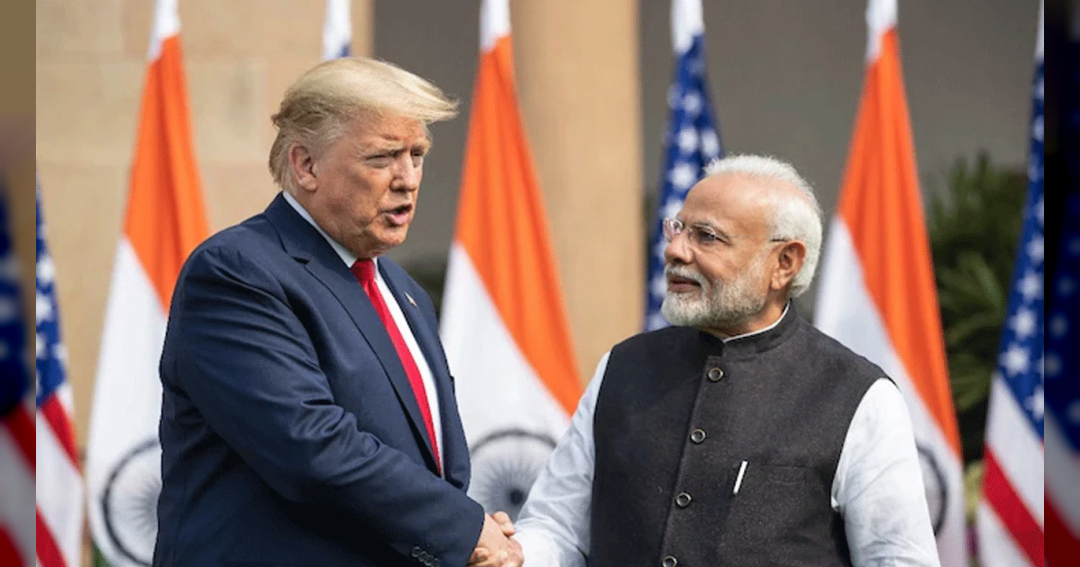
President Donald J. Trump announced that the United States would suspend the import duties that had been imposed on Russian oil and gas. The decree, issued from Washington, D.C., temporarily removed the punitive tariffs that could have reached 100 % on goods from the five largest importers of Russian‑origin crude. Trump’s statement was framed as an act of national interest: “it was in the US ‘national interests’ to withhold some of the sanctions.” The move came as a surprise to many, given that the sanctions were part of a law signed in September and had been a key tool in the U.S. strategy against Russia.

India, which imports roughly 90 % of its annual oil requirement, had been caught in the crossfire of those sanctions. The temporary relief meant that Indian exporters of oil‑related products no longer faced the looming threat of a 100 % duty on their shipments to the United States. For a country that has long balanced its energy needs with global market dynamics, the pause offered a brief window of economic breathing room.
The Sanctioning Russia and Iran Act of 2026, authorized on January 1 of that year, gave Washington the authority to impose tariffs on Russian oil and gas. While the Act had not yet been fully activated, it remained in force, allowing the President or high‑ranking officials to revive the tariff threat at any time. Trump’s executive order, which paused sanctions against Russian officials, banks, and organizations, did not affect the previously imposed tariffs. The law’s existence means that the relief is not permanent; the U.S. can re‑impose duties if geopolitical tensions shift.
” These statements reflected a sense of optimism, tempered by the knowledge that the U.
The temporary waiver also came at a time when crude oil prices were hovering above $100 a barrel. Analysts noted that the sanctions had likely contributed to higher prices, especially amid rising costs linked to the U.S.–Israeli conflict with Iran. By easing the tariff burden, Trump’s decision could help temper price spikes, though the underlying market forces remain complex.
Coinciding with the tariff pause, India and the United States entered a new phase of trade talks. The first phase of the India‑US trade deal had been finalized and was being legally drafted, according to Indian Commerce Minister Piyush Goyal. “The first phase of the trade deal had been finalized and was being legally drafted,” Goyal said, underscoring the momentum behind the negotiations.
Indian External Affairs Minister S. Jaishankar added that the two sides were ironing out differences and moving toward a “landing point” in negotiations. Meanwhile, Indian Finance Minister Nirmala Sitharaman expressed hope that the proposed trade deal would be concluded at the earliest, “in the interest of both bilateral and global trade.” These statements reflected a sense of optimism, tempered by the knowledge that the U.S. still possessed the legal levers to re‑introduce tariffs.
Sergio Gor, a senior trade official, described the pace of negotiations as “incredible.” He noted that the “big items are done,” suggesting that the bulk of the deal’s structure was already agreed upon, leaving only finer details to be negotiated.

In a further twist, Trump announced a decision to buy diesel from Moscow. The diesel purchase could provide a short‑term source of fuel for U.S. military or commercial needs, but it also highlighted the complexity of the U.S. approach to Russia—simultaneously imposing sanctions while seeking limited cooperation.
Despite the temporary reprieve, the threat of a 100 % tariff remains a real concern for India. The Sanctioning Russia and Iran Act of 2026 keeps the possibility of re‑imposition alive, and the executive order that paused sanctions does not alter the underlying tariff provisions. For Indian exporters, the relief is a fleeting respite rather than a permanent shift.
Moreover, the broader geopolitical context—rising oil prices, U.S. congressional elections, and the U.S.–Israeli conflict—creates a volatile backdrop. The Trump administration’s decision to suspend sanctions may be seen as a tactical move to ease economic pressure, but it also places the U.S. in a delicate position, balancing national interests with global diplomatic repercussions.
Today, the United States remains in a state of suspended sanctions on Russian oil, while the legal framework for imposing tariffs is still active. India’s energy imports continue to be a major part of its economy, and the temporary waiver offers a brief window of reduced tariff risk. Yet the possibility of re‑imposition looms, reminding policymakers that the geopolitical chessboard is far from settled.
In the end, the story of Trump’s tariff pause is one of temporary relief amid enduring uncertainty—a reminder that in international trade, a single executive order can shift the balance for a moment, but the underlying legal and political structures keep the stakes high.