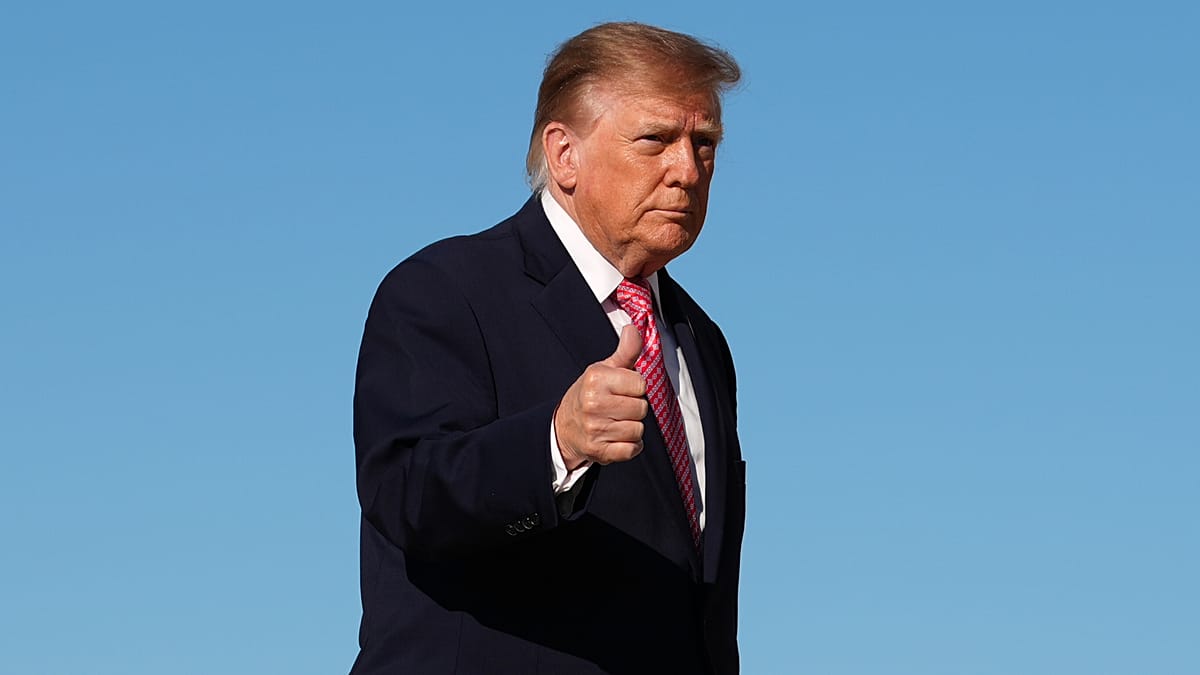
On October 20, 2026, Donald Trump, the former U.S. president, announced that he was ready to sit down with Vladimir Putin and Xi Jinping in China. The meeting would take place next month, a detail that has already sparked speculation in diplomatic circles. Trump’s statement came after a series of public remarks that have drawn attention to his willingness to step into a role that many see as reserved for sitting heads of state.

The proposal is not merely a casual suggestion. Trump explicitly framed the conversation around denuclearization, stating that he would do it “not so much for Ukraine, because Russia, frankly, has been fine with Ukraine. They haven’t been doing much.” The focus on nuclear arms reduction signals a shift in priority from the ongoing conflict in Ukraine to a broader strategic issue that involves all three powers.
Trump’s remarks are notable for their bluntness. He has long been critical of Ukrainian President Volodymyr Zelensky, accusing him of not wanting to end the war. In a recent interview, Trump said, “I would do anything he can to end the conflict, whether somebody’s there or not.” This stance underscores a belief that a new negotiator could bring fresh energy to a stalled peace process.
Her comment reflects the uncertainty that still surrounds the logistics of a trilateral summit.
However, Trump’s emphasis on denuclearization suggests that he sees the nuclear dimension as a more pressing concern. He has repeatedly highlighted the need for global security reforms, and the proposed meeting would bring together the three largest nuclear powers in a single forum.

10 years ago today, the third and final Clinton v Trump debate, with the famous “puppet” exchange about Putin: https://t.co/Z1PGVCzZcX
The Kremlin’s spokesperson, Dmitry Peskov, acknowledged that the idea of a summit involving the three leaders has been mentioned. Peskov said, “Given that all three heads of state might potentially attend a summit in China, the topic of such a hypothetical meeting has indeed been mentioned.” While the statement is cautious, it confirms that the notion has entered official discourse.
In Beijing, Mao Ning, a senior official, stated that she had no information about a possible meeting. Her comment reflects the uncertainty that still surrounds the logistics of a trilateral summit.
Andriy Sybiga, a Ukrainian diplomat, warned that a meeting between the leaders of Russia, China, and the United States would do only the opposite: encourage Putin to continue the war. Sybiga’s criticism highlights the deep skepticism among Ukrainian officials that a U.S. president who has not been in office for years could influence the outcome of the conflict.

Trump’s suggestion that a new negotiator could bring a different perspective is therefore met with cautious optimism and wary skepticism.

🥴🤡Honestly speaking, Russia, overall, has behaved adequately toward Ukraine. — Trump https://t.co/uQUCdX5an6
The proposed trilateral meeting comes at a time when the world is grappling with the consequences of the Ukraine war and the broader implications of nuclear proliferation. By focusing on denuclearization, Trump’s proposal seeks to address a global security issue that transcends the immediate conflict.
The idea of a summit in China also echoes the APEC summit that took place in Shenzhen on November 18, 2022, where leaders from the Asia-Pacific region gathered to discuss economic and security matters. While the APEC event was not a diplomatic summit, it set a precedent for high‑level meetings in China.
As the date for the proposed meeting approaches, the international community watches closely. The United States, Russia, and China have all signaled that they are open to dialogue, but the exact agenda remains unclear. The focus on denuclearization could either open a new chapter in global security or become a diplomatic footnote if the talks fail to produce concrete outcomes.
In the meantime, Ukraine continues to call for a resolution to the war, while the world remains divided over how best to address the nuclear threat. Trump’s willingness to step into a diplomatic role adds a new, unpredictable variable to an already complex geopolitical landscape.