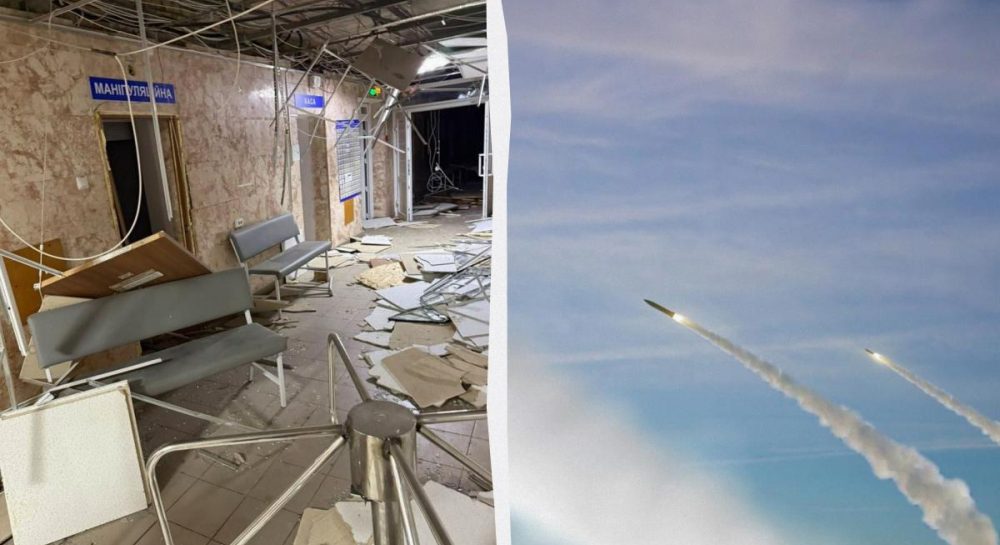
On the night of October 19, Russian forces launched a large-scale attack on Ukraine. It was an assault defined by a mix of weaponry: strike drones, cruise missiles, and ballistic missiles aimed at infrastructure.

By morning, the Ukrainian Air Force had tallied a defensive effort, neutralizing 247 aerial targets out of the onslaught. Yet behind that aggregate lay a reality. While Ukrainian defenders managed to sweep the overwhelming majority of incoming drones and several cruise missiles out of the sky, they did not shoot down a single Russian ballistic missile.
To understand how an air defense network can destroy hundreds of incoming weapons and still suffer impacts, one has to examine how the attack was assembled. Russian forces launched an array of 269 strike unmanned aerial vehicles incorporating a mix of hardware. Among them were standard types like the Shahed, newer systems such as the S-8000 Banderol, and smaller platforms including the Gerbera and Parodia decoys.
The strikes and impacts reached deep into the Dnipro, Rivne, Vinnytsia, and Kyiv regions.
Behind this swarm came the missiles. The attack included Iskander-K cruise missiles alongside Iskander-M and S-400 ballistic missiles.
Faced with this mix, the Air Force brought down 243 unmanned aerial vehicles alongside four Iskander-K cruise missiles, successfully neutralizing 247 incoming targets in total.
Yet the defense met its limit when confronting the ballistic threat. None of the Iskander-M or S-400 ballistic missiles launched during the operation were intercepted.
The consequences of those unintercepted warheads and falling debris were felt across the country. Hits and falling wreckage were recorded across multiple locations, sending emergency crews scrambling into residential neighborhoods and transport hubs. The strikes and impacts reached deep into the Dnipro, Rivne, Vinnytsia, and Kyiv regions.
In the capital, the assault left an immediate humanitarian and structural toll. The State Emergency Service reported that one person was killed and eight others were injured in Kyiv. Falling debris and direct strikes damaged residential buildings, struck a medical facility, and severely compromised urban transit. Metro infrastructure sustained significant damage, forcing interruptions to train services.
Beyond the physical destruction in the capital and surrounding regions, the raid revealed friction in the flow of defensive intelligence. Following the strikes, Radio Liberty journalist Alex Raufoglu reported that the United States once again failed to warn Ukraine ahead of time regarding Russia’s use of ballistic missiles during the night.
The events of October 19 underscore the nature of the war over Ukrainian airspace. Ukraine has demonstrated an ability to clear the skies of hundreds of incoming drones and cruise missiles. Yet as long as ballistic missiles slip through completely unchecked, urban centers like Kyiv and key transit infrastructure remain exposed to devastating blows.