The evening of October 17, 2026, was meant to be a demonstration of economic frustration, but it quickly degenerated into a spectacle of urban violence. What began as mass protests against soaring fuel prices and a rapidly declining purchasing power erupted into a firestorm of arson and looting across French cities. The atmosphere, initially charged with legitimate grievance, curdled into chaos as elements of the crowd targeted commercial establishments and public buildings. By the time the smoke cleared, the damage was extensive, marking a sharp escalation in the tensions that have been simmering in the country for months.
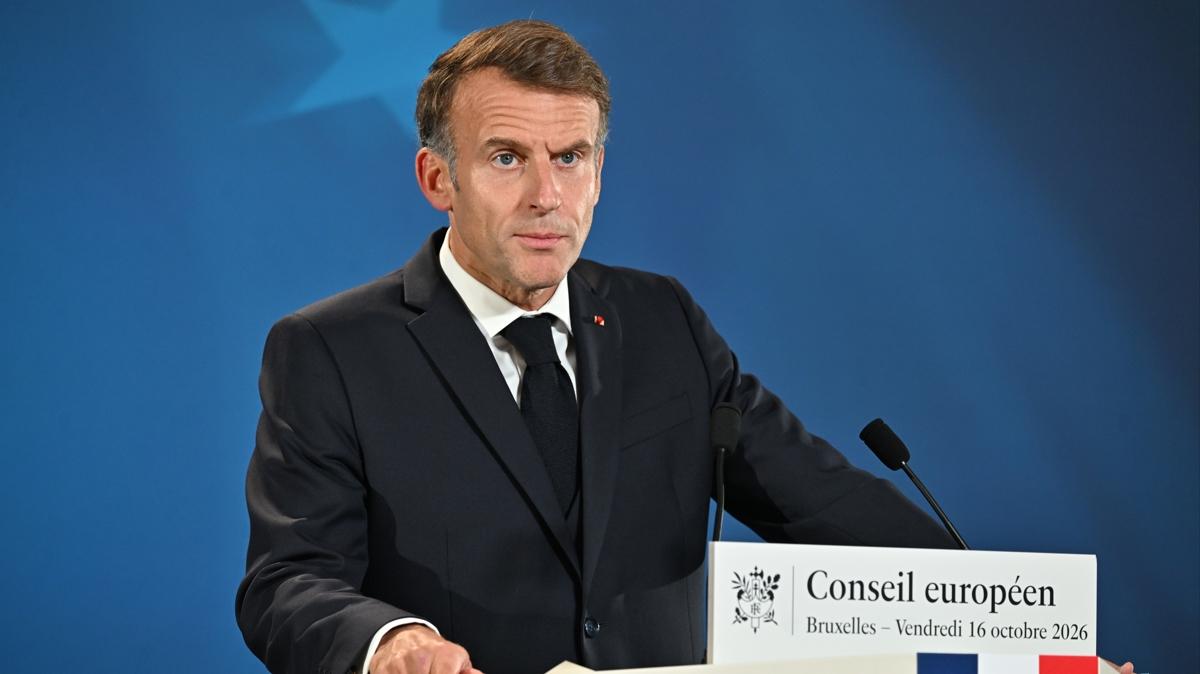
The following morning, on October 18, President Emmanuel Macron broke his silence with a critical televised address. Standing before the nation, he attempted to draw a clear, hard line between the citizens who participated in the protests peacefully—tens of thousands of whom he explicitly acknowledged—and the violent mobs that had descended on their cities. "Nothing explains, excuses or justifies" the violence, Macron declared, his tone firm as he confronted the public. He framed the night's events not just as a crime against property, but as a profound moral failure of social cohesion, stating that everyone felt a mix of "rage and shame" over what had transpired.

🇫🇷 FRENCH POLITICAL ELITE ERUPTS AFTER PM LECORNU’S SHOCK RESIGNATION Sebastien Lecornu’s government collapsed less than 24 hours after naming its cabinet, triggering a political firestorm across France - and calls for Macron himself to step down. Marine Le Pen called it “the end of the joke”, demanding a dissolution of the National Assembly. Jean-Luc Mélenchon went further, urging parliament to consider Macron’s impeachment. Even Macron’s own allies turned on him. Outgoing minister Agnès Pannier-Runacher slammed the "circus" of French politics, while Socialist MP Arthur Delaporte declared: “Macronism is plunging the country into chaos.” Lecornu’s cabinet, barely distinguishable from Bayrou’s before it, failed to rally support in a fractured National Assembly - and with the 2026 budget on the line, Macron’s grip on power has never looked weaker. Source: Reuters
In his speech, Macron placed the blame squarely on specific actors. He accused "unscrupulous elements" and far-left extremist groups of orchestrating the initial breakdown of order, which was then exploited by common criminals who moved into the vacated spaces to loot and destroy. The President did not stop at attribution; he issued a demand for immediate financial accountability. "Those who destroyed must pay; those who looted must reimburse," he stated. This message signaled a shift in tone from political appeasement to a promise of strict legal and financial retribution for those responsible for the destruction of public and private infrastructure.
Instead of offering measured criticism, Bardella delivered a stark ultimatum: "This evening, I expect Macron to apologize and leave.
The statistics behind the headlines revealed the sheer scale of the breakdown in public order. Exactly 2,000 individuals were detained by the authorities as the situation remained fluid, a figure that highlighted the magnitude of the confrontation. Even more telling was the impact on the state's defenders: exactly 600 law enforcement officers were injured in the clashes. These numbers were not just abstract figures; they represented a physical and psychological toll on the men and women tasked with maintaining the security of the state. The injury count served as a stark reminder to the French public that the state was not merely an abstract concept, but a collection of vulnerable individuals who had been pushed to their limits.

🚨🇫🇷NEW: Jordan Bardella, leader of the National Rally, has said that he isn't calling for the resignation of Emmanuel Macron, but instead a "budgetary discussion" with the new Prime Minister [@BFMTV]
The political fallout from these events did not stay contained within the administration. Jordan Bardella, the leader of the National Rally, seized the moment to escalate the crisis into a direct challenge for the President's leadership. Instead of offering measured criticism, Bardella delivered a stark ultimatum: "This evening, I expect Macron to apologize and leave." Bardella argued that France was paying the price for decades of complacency and a weakened internal security apparatus, suggesting that the current leadership had failed in its fundamental duty to protect its citizens. This was a striking departure, coming from a political figure whose party has a complex, often contentious, relationship with the current executive.
Bardella’s move was not just a personal attack; it was a call for systemic change. By demanding the President's resignation, he was implicitly arguing that the current government was entirely incapable of managing the domestic security environment. He pressured the administration to take immediate, aggressive measures to prevent future riots, moving the debate away from temporary responses and toward a fundamental restructuring of how the state handles social unrest. For Bardella, the violence on the streets was a symptom of a much deeper malaise in the country’s political leadership.

🔴🇫🇷 National Rally President Jordan Bardella has called on Emmanuel Macron to dissolve the National Assembly following the resignation of Prime Minister Sébastien Lecornu. Take a listen 👇 https://t.co/kMsLwMr5Pd
This volatile scene plays out against a critical backdrop: the country is only six months away from a presidential election. This timeline transforms the riots from a temporary political nuisance into a defining campaign issue. Macron emphasized the need to shift the political debate back to the ballot box and the legislative process, warning that the streets are no place for a democratic resolution of economic grievances. For the next six months, the question of who can guarantee stability—and who is responsible for the chaos of October 17’—will dominate every campaign trail.