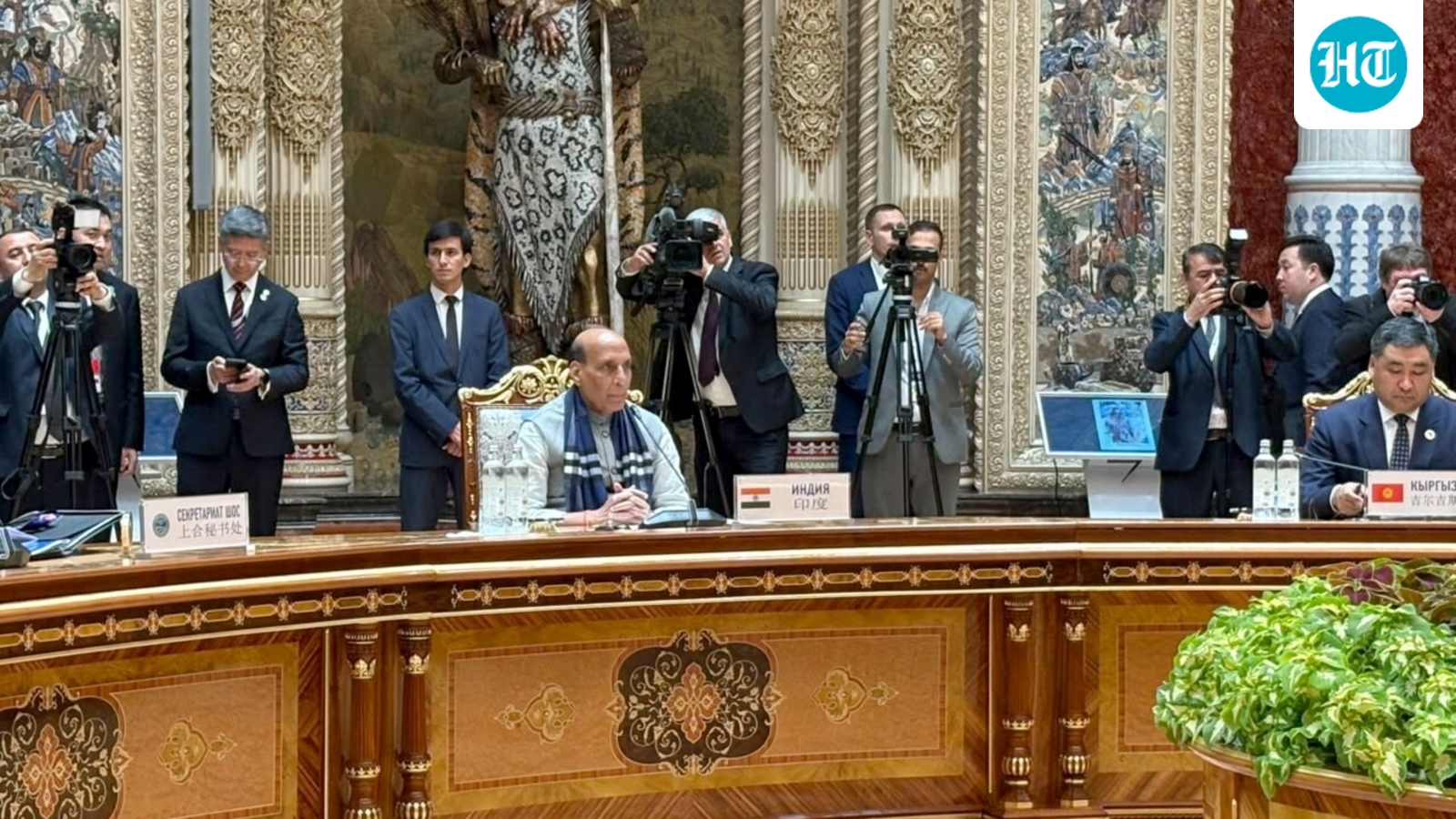
In the capital of Tajikistan, the geopolitical currents of Central and South Asia converged on October 20, 2026, as the 25th Meeting of the Shanghai Cooperation Organisation (SCO) Council of Heads of Government convened in Dushanbe. Among the delegates gathered to discuss the future of regional stability was India’s Defence Minister, Rajnath Singh. His presence at the two-day official visit underscored India’s strategic commitment to the SCO, an intergovernmental organization that serves as a critical forum for security and economic cooperation across Eurasia. As the sessions commenced, the atmosphere was defined by the pressing need for a unified stance on the threats that continue to destabilize the region.

For Rajnath Singh, the conversation regarding regional security could not be separated from the persistent shadow of terrorism. Addressing the assembly, Singh moved beyond the typical rhetoric of condemnation, instead focusing on the structural foundations that allow extremist violence to persist. He articulated a vision of an "ecosystem of terrorism"—a complex network of financing, logistical support, and ideological shelter that sustains militant groups. "The entire 'ecosystem of terrorism' must be firmly and collectively 'dismantled'," Singh declared. This was not merely a call for military action, but a demand for a systemic dismantling of the infrastructure that enables terror to thrive, arguing that such networks are the primary obstacles to regional growth and stability.
Central to Singh’s address was a firm rejection of the ambiguity that often plagues international counter-terrorism efforts. In the presence of Pakistan’s Deputy Prime Minister and Foreign Minister, Ishaq Dar, Singh emphasized that the international community must move past the era of selective engagement. He asserted that there can be "no justification for terrorism" and, crucially, that there can be "no double standards in dealing with it." The message was clear: national interests cannot be used to excuse the support or sheltering of groups that threaten the lives of innocent civilians. "There can be 'no place' for those who finance, support, or shelter terrorists," he added, framing the fight against terror as an absolute moral and security imperative.
By disrupting investment and commerce, extremism effectively traps societies in cycles of poverty and radicalization.
Beyond the high-level diplomatic maneuvering, Singh highlighted the tangible, devastating impact that terrorism exerts on the social and economic fabric of nations. He spoke to the human cost, noting that terrorism results in the loss of innocent lives, but also to the broader developmental decay that follows. By disrupting investment and commerce, extremism effectively traps societies in cycles of poverty and radicalization. According to Singh, this environment "deprives youth of the opportunities they rightfully deserve," turning potential into volatility. By framing terrorism as an economic and social poison, he sought to broaden the SCO’s mandate to treat security as a prerequisite for prosperity.
While security dominated the discourse, the summit also looked toward a structured future for economic integration. Singh expressed his support for the adoption of an action plan for 2026-2030, aimed at bolstering the Multilateral Trade and Economic Cooperation Programme. This initiative reflects the broader goals previously underlined by Prime Minister Narendra Modi, who had emphasized the need for concrete action on connectivity and regional opportunities. Singh reiterated India’s commitment to this inclusive economic engagement, provided that such projects are built on a foundation of mutual respect for sovereignty and territorial integrity—a pointed reminder that economic connectivity cannot be divorced from the political realities of the region.
As the summit concluded, the contrast between the stated goals of the SCO and the realities on the ground remained sharp. The mention of India’s recent Operation Sindoor, which targeted terror infrastructure in Pakistan and Pakistan-occupied Kashmir, served as a backdrop to Singh’s diplomatic appeals. The message delivered in Dushanbe was one of urgency: that the path to regional development is blocked by the very networks that the SCO is tasked with monitoring. As the organization looks toward its 2030 objectives, the challenge remains whether its members can move from collective dialogue to the collective dismantling of the structures that Singh insists are the primary threat to the region’s future.