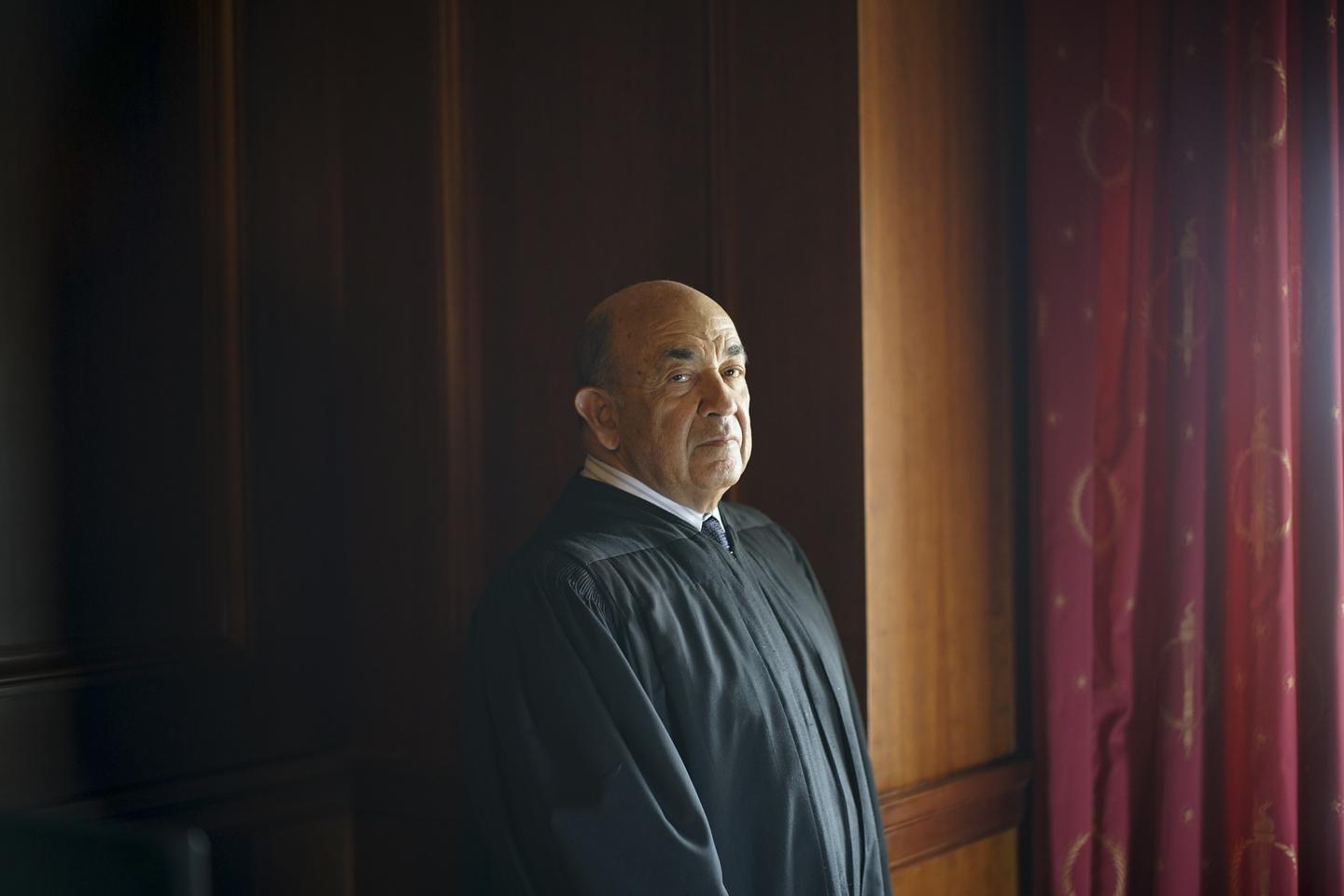
In the hushed corridors of the New York federal courthouse, the departure of Alvin K. Hellerstein carries a weight that extends far beyond the judicial bench. Died on October 28, 2026, at the age of 92, Hellerstein was not merely a judge; he was a living archive of the most defining legal battles of the last forty years. To understand the magnitude of his passing, one must look at the sheer scope of his docket. Appointed to the federal bench in 1998, Hellerstein found himself presiding over cases that touched the very foundations of American security and international law. His career was a long, unbroken line of high-stakes adjudication, bridging the gap between the immediate aftermath of domestic terrorism and the complex extraterritorial reach of the U.S. justice system.

For many, Hellerstein’s identity became inextricably linked to the World Trade Center attacks of September 11, 2001. He presided over the civil cases related to the 9/11 attacks, a role that required a unique blend of procedural rigor and profound human empathy. The courts became the primary venue for the families of victims to seek accountability, and Hellerstein was known for his strict discipline in managing these proceedings while maintaining a deep compassion for the plaintiffs. He did not just interpret the law; he helped build the legal framework for dealing with the psychological and financial devastation of that day. His approach to the CIA treatment of detainees also set significant precedents in national security law, demonstrating that the judicial branch would not simply abdicate its role to the executive in the name of security. This period of his career established his reputation as a judge who could navigate the most sensitive political waters with a steady hand.
Years later, Hellerstein’s influence on American politics took a sharper turn. He presided over the significant cases involving President Donald Trump, most notably the hush money conviction. In a ruling that sent shockwaves through the legal community, Hellerstein rejected the president's efforts to move the case to federal court. This decision was a critical assertion of state judicial authority and a testament to Hellerstein’s willingness to stand firm against powerful political figures. It was a moment where the personal integrity of the judge and the institutional integrity of the courts collided with the highest levels of executive power. His handling of these cases showcased a judge who viewed the law as a shield for the rule of law, regardless of the political winds blowing in Washington.
His handling of these cases showcased a judge who viewed the law as a shield for the rule of law, regardless of the political winds blowing in Washington.
Perhaps the most forward-looking aspect of Hellerstein’s legacy is the case against former Venezuelan President Nicolás Maduro. Hellerstein had been overseeing the trial set to begin in July 2027. This was not a simple criminal proceeding; it was a complex international matter involving accusations of systematic repression and torture against both Maduro and his wife, Cilia Flores. The case involved figures such as Hugo Carvajal and Cliver Alcala, whose trials and sentencings were part of the broader legal effort to hold the Venezuelan government accountable for human rights abuses. The trial was set to be a watershed moment in international justice, offering a venue for victims to be heard in an American court. However, with Hellerstein’s death, the continuity of this specific legal narrative faces an interruption. The tribunal has not yet announced who will take over his cases, leaving the fate of these high-profile proceedings in a state of legal limbo.
As of now, the legal world is in a period of transition. The death of a judge of this caliber leaves a void that is not easily filled. Hellerstein’s cases, from the civil suits of 9/11 victims to the international trials of Venezuelan officials, represent the breadth of modern federal jurisdiction. While the specific trial against Maduro was scheduled to commence in 2027, the question remains who will guide that process in the former judge’s absence. His legacy is one of a man who served as the anchor for stability in a chaotic era, applying the letter and spirit of the law with consistency and care. For the new generation of jurists and legal scholars, Hellerstein’s career remains a study in the power of the judiciary to remain independent, empathetic, and resolute.