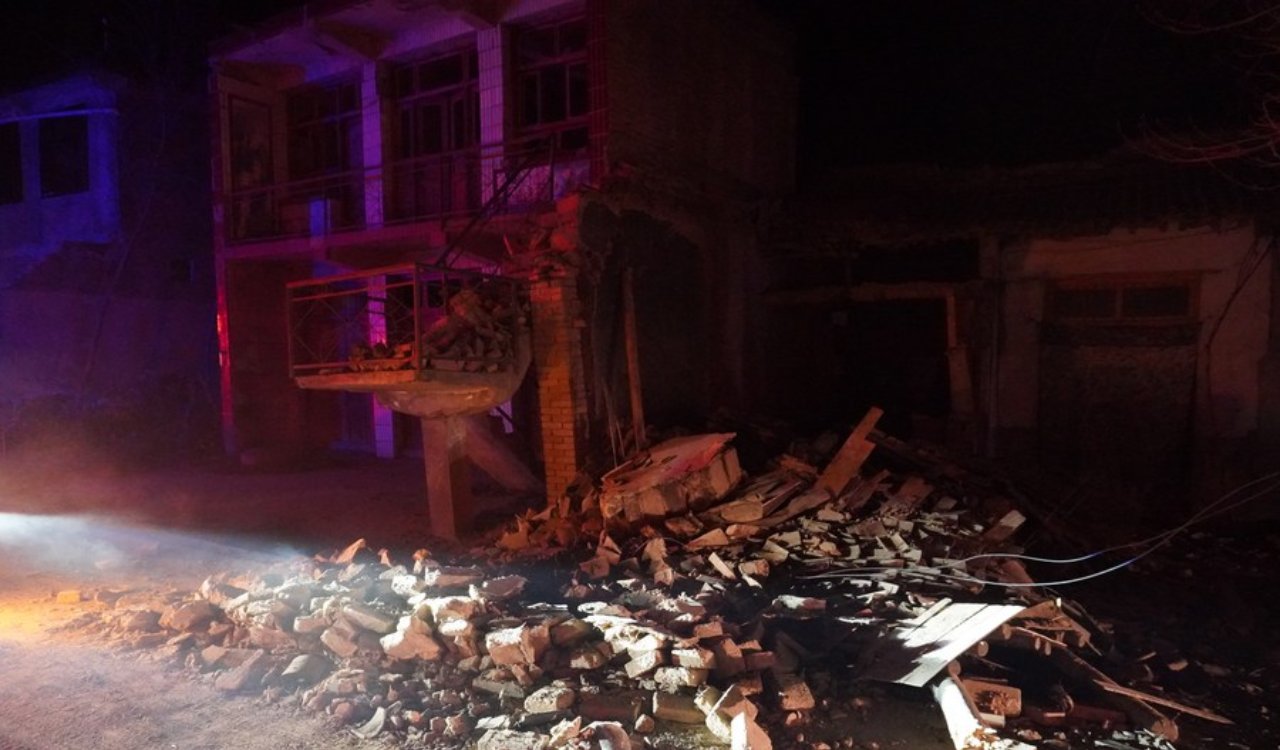
On Thursday, October 23, 2026, the earth beneath Tibet underwent a violent transformation. A magnitude 7.0 earthquake struck the region, sending shockwaves through a landscape already defined by its extreme altitude and rugged isolation. For the residents of this high-plateau territory, the event was a sudden and devastating intrusion of geological force, turning the stability of their daily lives into a scene of urgent crisis. By the time the tremors subsided, the human cost had become clear: 16 people were confirmed dead, and 32 others had sustained injuries, marking a grim start to a recovery operation that would soon span the affected districts.

As reports began to filter out through the Xinhua News Agency, the scale of the physical destruction became apparent. The epicenter of the quake was pinpointed 183 kilometers east-northeast of Nagqu city, a location that placed the heart of the seismic activity in a sparsely populated but deeply vulnerable zone. For these communities, the loss of shelter is not merely a logistical challenge but a profound displacement, leaving families to contend with the sudden erasure of their homes in an environment where the elements are rarely forgiving.

Sixteen dead, 32 injured after strong 7.0-magnitude earthquake struck China’s Tibet region late Thursday (October 22, 2026), and casualties have been reported, state news agency Xinhua said, citing local authorities. https://t.co/wbjJz426ny https://t.co/UyaE88Sf5s
In the immediate aftermath of the disaster, the government moved to contain the unfolding tragedy by activating a Level-II emergency response. This classification signals a high-priority mobilization of resources, intended to streamline the flow of aid, medical personnel, and heavy equipment to the most isolated pockets of the region. Rescue operations are currently the primary focus, with teams navigating the difficult terrain to reach those who remain trapped or displaced. The coordination of these efforts is a race against time, as the logistical hurdles of the Tibetan plateau—characterized by thin air and challenging topography—complicate the delivery of life-saving supplies to the survivors of the 300 collapsed structures.
Experts are increasingly looking at the intersection of seismic activity and the changing climate of the region.
While the immediate focus remains on the search for survivors and the treatment of the 32 injured, the earthquake has also brought a broader, more existential anxiety to the surface. Experts are increasingly looking at the intersection of seismic activity and the changing climate of the region. Tibet, like many high-altitude environments, has been experiencing the effects of rising temperatures and the steady, alarming retreat of its glaciers. These environmental shifts do not cause earthquakes, but they do alter the stability of the terrain, potentially increasing the vulnerability of the region to secondary disasters like landslides or flooding in the wake of such a significant seismic event.
As of now, the region remains in a state of suspended animation, caught between the urgent necessity of the rescue effort and the long-term reality of recovery. The international community, including observers in the United States, is monitoring the situation as the government continues its Level-II response. The path forward for the survivors of Nagqu and the surrounding areas will be long, defined by the need to rebuild not just the 300 destroyed homes, but a sense of security in a land that has proven itself to be fundamentally unstable. For the people of Tibet, the earthquake of October 23 is a stark reminder of the precarious balance between human settlement and the raw, shifting power of the earth.