
For the residents of India’s eastern coastline, the rhythm of life is often dictated by the temperament of the Bay of Bengal. On October 27, 2026, that rhythm shifted toward a state of high alert as Cyclone Arnab began its steady, menacing progression. Originating in the South-West Bay of Bengal, the storm has captured the attention of meteorologists and government officials alike. It is a reminder of the volatile nature of the region’s climate, where warm waters can rapidly fuel atmospheric disturbances into formidable weather events.

Currently, the cyclone is maintaining a consistent forward speed of 20 kilometers per hour. This velocity, while seemingly moderate, belies the destructive potential of the system as it tracks toward the shore. The India Meteorological Department and other weather officials have been tracking the storm’s trajectory with precision, noting that its path places the coastal regions of Andhra Pradesh, Odisha, and West Bengal directly in its crosshairs.
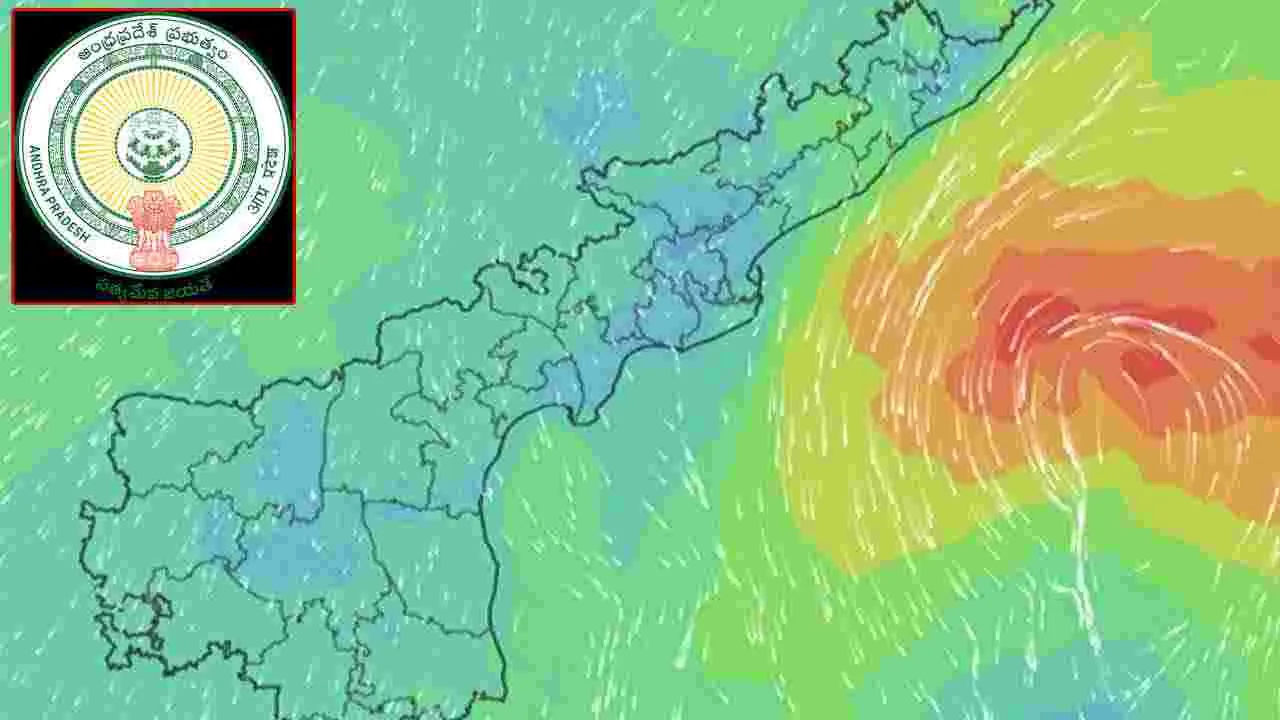
As of the latest tracking data, Cyclone Arnab is positioned at a critical distance from several key urban centers. It is currently centered approximately 170 kilometers from Visakhapatnam and 180 kilometers from Kakinada. Further down the coast, the storm sits 270 kilometers from Machilipatnam and 350 kilometers from Bapatla. These distances are shrinking by the hour, forcing local administrations to transition from monitoring to active emergency response.
Such winds carry the capacity to cause significant structural damage, uproot trees, and disrupt essential power and communication infrastructure.
The impact of the cyclone is expected to be widespread, with heavy rainfall projected to lash a broad swath of territory. Districts including Visakhapatnam, Srikakulam, Vijayawada, Mahbubnagar, Kurnool, and Anakapalli are bracing for intense precipitation. Meteorologists are particularly concerned about the storm’s intensity; as it nears the coast, maximum wind speeds are expected to reach between 125 and 135 kilometers per hour. Such winds carry the capacity to cause significant structural damage, uproot trees, and disrupt essential power and communication infrastructure.
In the face of this impending threat, the machinery of state disaster management has swung into motion. The State Disaster Management Authority, working in tandem with the National Disaster Response Force (NDRF), has deployed resources across the vulnerable districts. These teams are the frontline defense, tasked with evacuation, search and rescue, and the rapid clearing of debris to ensure that emergency services remain mobile.
The political leadership has also taken a direct hand in the preparations. The Chief Minister has conducted an on-site inspection of the situation, meeting with officials to assess the readiness of the state’s emergency infrastructure. These instructions are focused on minimizing the human toll, with a heavy emphasis on preparedness for potential flooding and the dangerous storm surges that often accompany such powerful cyclones.
As Cyclone Arnab continues its march toward the coast, the atmosphere in the affected states is one of tense anticipation. Residents have been urged to heed the warnings issued by the meteorological department, which include preparing for flooding and the severe winds that define this storm. The coming hours will be a test of the region’s resilience. While the path and intensity of a cyclone can be unpredictable, the mobilization of resources and the clear directives from the state government reflect a concerted effort to mitigate the damage. For now, the focus remains on the horizon, watching as the storm closes the final kilometers between the open sea and the shore.

Cyclone ‘Arnab’ Live Updates: ‘Very severe cyclonic storm’ triggers evacuations, Air India issues advisory; 53 trains cancelled Follow live updates- https://t.co/cKxk8Gr0vu https://t.co/BzEFPEJFRQ