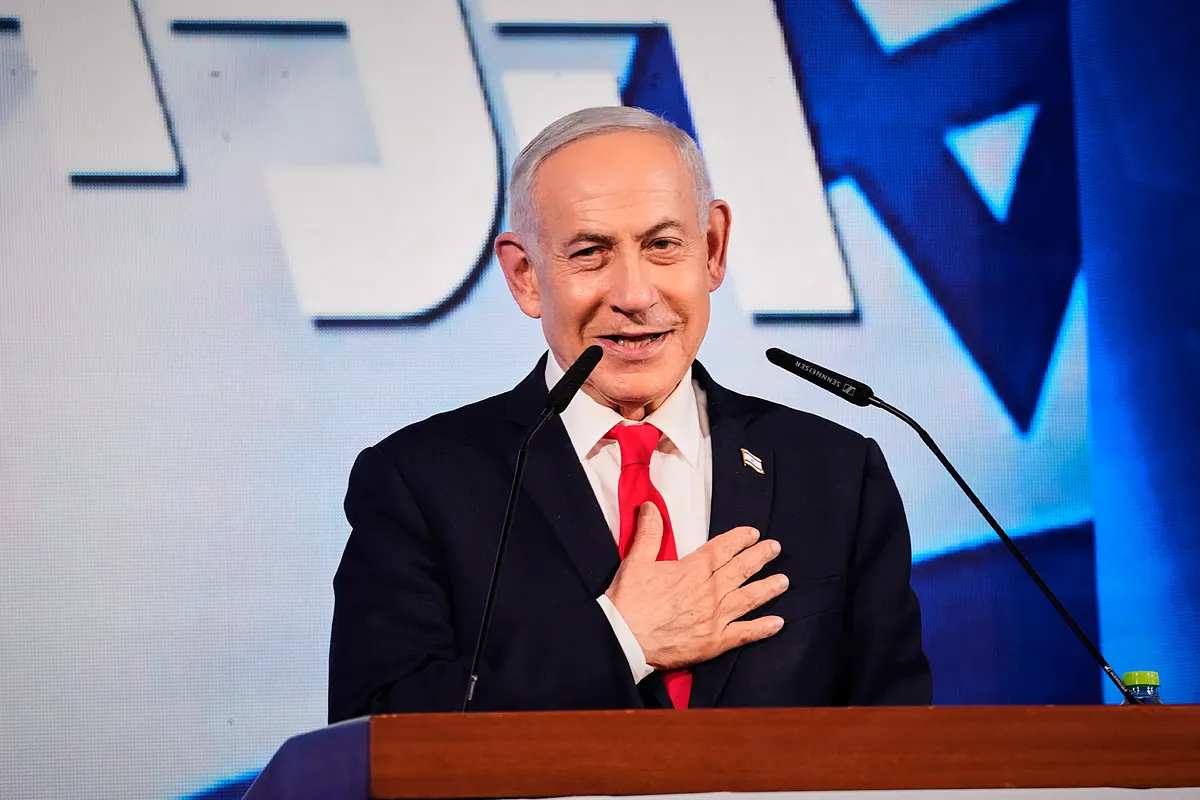
For many Israelis, the October 27th elections felt like a referendum on Benjamin Netanyahu’s long tenure as Prime Minister. The results, however, offered no clear answer. While the Likud party, led by Netanyahu, emerged with the largest single share of the vote – 26% – the overall outcome was remarkably tight. Projections showed the Likud bloc securing 53 seats in the 120-seat Knesset, Israel’s parliament, leaving them short of the 61 needed to form a governing coalition. The opposition, meanwhile, was poised to take 48 seats. But the most striking shift came from an unexpected source: Palestinian parties, representing Israeli citizens of Palestinian descent, achieved a record-breaking result, sending 19 representatives to the Knesset.

This surge in representation, rather than being celebrated as a demonstration of Israel’s democratic process, immediately became a focal point of contention. Within hours of the polls closing, the Likud party launched a blistering attack, alleging widespread election fraud perpetrated by Arab parties. The claims weren’t subtle. The party accused its rivals of “serious crimes” including bribery, threats, and the manipulation of voter lists. This wasn’t simply a dispute over a few votes; the Likud framed the situation as a fundamental challenge to the legitimacy of the election itself.
The accusations didn’t exist in a vacuum. Netanyahu’s political career has, at times, been defined by appeals to nationalist sentiment and warnings about perceived threats to Israel’s security. The Likud’s claims resonated with that established narrative. The party stated it had presented “hundreds of testimonies and evidence” to both the Israeli police and the Shin Bet, Israel’s internal security agency, as well as the Central Election Committee. The specific nature of this evidence remains largely unspecified in public statements, but the party insists it demonstrates a systematic effort to steal the election.
The Central Election Committee, tasked with overseeing the integrity of the electoral process, has acknowledged the allegations and initiated a review.
“We have provided evidence of election irregularities in Arab cities and areas to the police, Shin Bet, and the election commission,” a Likud spokesperson said. The party demanded a thorough investigation, and even legal action, against those they accused of wrongdoing. This demand wasn’t merely procedural; it was a clear attempt to delegitimize the gains made by Arab parties and potentially invalidate votes cast in predominantly Palestinian areas.

🇮🇱 ISRAEL’S ARAB PARTIES MAY HAVE JUST PUT THEMSELVES IN A POSITION TO DECIDE WHO GETS THE FIRST SHOT AT FORMING THE NEXT GOVERNMENT. The activist and founder of Palestine House of Freedom says their unprecedented turnout and roughly 17–18 projected seats give them leverage that goes far beyond joining a coalition. The key moment comes when every party meets Israel’s president and recommends who should be tasked with forming a government. Miko Peled argues the Arab parties could use those votes to back Gadi Eisenkot, giving him the first opportunity to build a coalition before Netanyahu. They may not need a seat at the table to completely reshape who gets to build it. @mikopeled
This isn’t the first time accusations of election fraud have surfaced in Israeli politics. In the past, similar claims have been leveled against Arab parties, often framed within a broader context of distrust and prejudice. The current situation, however, feels particularly fraught. Netanyahu’s bloc lost 10 seats compared to the previous election, making the need to secure a coalition all the more urgent – and the temptation to challenge the results, perhaps, all the more strong. The narrow margin of the outcome means that even a small number of invalidated votes could significantly alter the balance of power.
While the Likud focused on allegations of fraud, opposition leaders began exploring potential coalition arrangements. Yosef Jabarin, a prominent figure within the Arab coalition, made a pointed statement that underscored the stakes. “We are ready to pave the way for the departure of the Netanyahu government,” he declared. “We offer a completely different alternative to the government of blood, ethnic superiority, and exclusion.” This statement, while a clear indication of the Arab parties’ willingness to engage in coalition building, also highlights the deep ideological divisions that characterize Israeli politics. The Arab parties’ willingness to potentially support a government led by anyone but Netanyahu is a significant development, but it also underscores the challenges of forming a stable coalition in a deeply polarized environment.

28 Oct, 22:33 Israel time Ballots counted: 5,114,634 Stations reporting: 11,687 Valid: 5,092,038 Invalid: 22,596 Counted votes (% of 5,092,038 counted valid votes): Bibi's bloc: 2,134,300 (41.91%) Likud: 1,053,232 (20.68%) Shas: 270,239 (5.31%) United Torah Judaism: 288,652 (5.67%) Otzma Yehudit: 282,018 (5.54%) Religious Zionism–Zehut: 240,159 (4.72%) Opposition: 1,919,098 (37.69%) Yashar! (Eisenkot): 825,023 (16.20%) Together (Bennett–Lapid): 459,605 (9.03%) Democrats (Golan): 331,812 (6.52%) Yisrael Beytenu (Liberman): 302,658 (5.94%) Arab parties: 773,392 (15.19%) Joint List: 467,533 (9.18%) Ra’am: 305,859 (6.01%) Other lists: 265,248 (5.21%) Reservists–Economic Party: 133,941 (2.63%) Amcha Israel: 81,722 (1.60%) Others: 49,585 (0.97%)
The Central Election Committee, tasked with overseeing the integrity of the electoral process, has acknowledged the allegations and initiated a review. As of October 28th, with 85.6% of votes tallied, the committee is working to assess the validity of the claims made by the Likud party. However, the committee’s response has been measured, and there’s no indication yet that the accusations will lead to a widespread invalidation of votes. The committee’s neutrality is crucial in maintaining public trust in the electoral system, but its findings will undoubtedly be scrutinized by both sides.

The accusations of fraud have thrown the already complex process of coalition building into further disarray. With neither the Likud-led bloc nor the opposition able to secure a clear majority, the country faces a period of political uncertainty. The Likud’s insistence on investigating alleged fraud could delay the formation of a government for weeks, or even months. The situation is particularly sensitive given the ongoing regional tensions and the potential for further instability.
As of late October 2026, Israel remains in a state of political limbo. The Likud party continues to push for an investigation into alleged election fraud, while opposition leaders explore potential coalition arrangements. The record-breaking representation of Arab parties in the Knesset has become a central point of contention, highlighting the deep divisions within Israeli society. The coming weeks will be critical in determining whether a stable government can be formed, or whether the country will be forced to return to the polls for another round of elections. The outcome will have profound implications for Israel’s political landscape and its future direction.