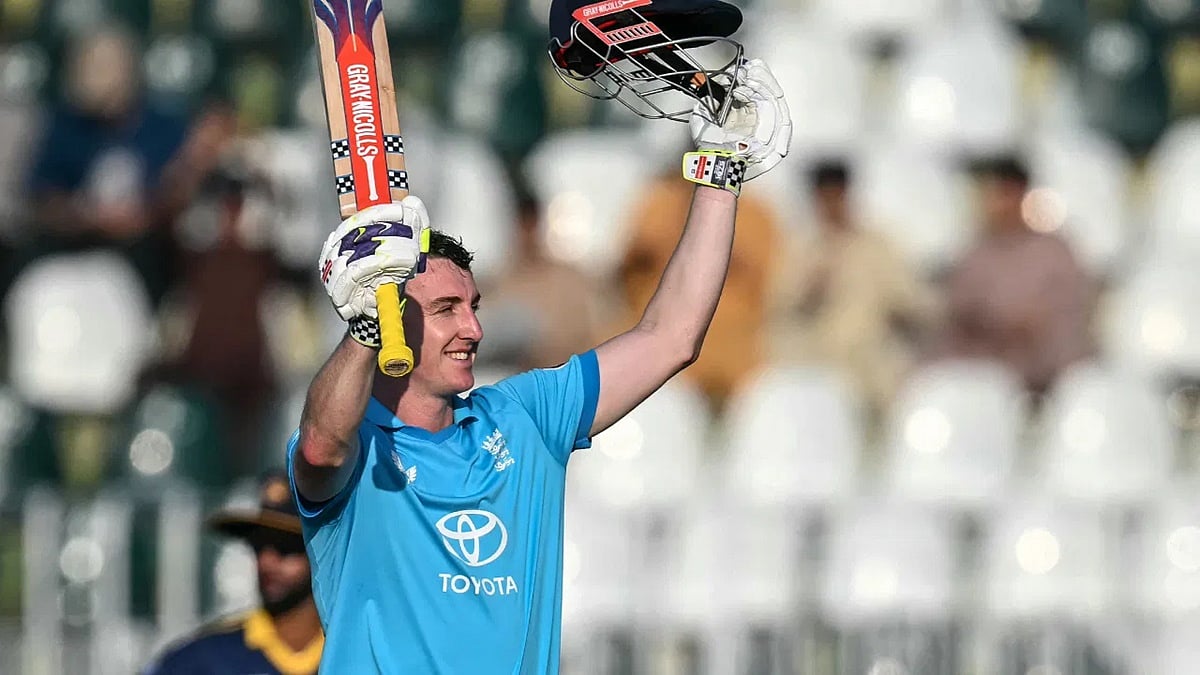
For anyone stepping onto a cricket ground for the first time, the sight of a batsman turning a modest innings into a blistering onslaught can feel like watching a sprinter burst from the blocks. That exact drama unfolded on 22 October 2026 in Rawalpindi, where England’s Harri Brook took the crease and, in just 114 deliveries, amassed 202 runs. The raw numbers—202 runs off 114 balls—read like a headline, but the story behind them reshapes how we think about speed, skill, and the limits of one‑day cricket.

One‑day cricket, officially known as List A cricket, traditionally gives each side a fixed number of overs—typically 50—to score as many runs as possible. Within that framework, a double‑century (200 runs or more) is already a rare feat; achieving it in fewer than 120 balls is almost unheard of. Brook’s innings, however, compressed that rarity into a single, relentless surge. Each ball he faced contributed to a cumulative pressure that forced bowlers to rethink their lines, lengths, and even their very roles on the field. The sheer volume of runs—202—means he alone outscored many entire teams, while the 114‑ball cadence translates to a strike rate well above 177, a metric that quantifies runs per 100 balls and underscores the ferocity of his attack.
Before Brook’s performance, the record for the fastest double‑century belonged to India’s Shubman Gill, who reached the 200‑run mark in 117 balls. Gill’s achievement had already stretched the imagination of fans and analysts, establishing a new standard for what could be accomplished in a limited‑overs match. Brook’s 114‑ball innings not only shaved three deliveries off that benchmark but also signaled a shift in the competitive mindset of modern batsmen. The incremental improvement may seem modest—three balls—but in a sport where every delivery is a strategic battle, that margin represents a decisive edge.
The incremental improvement may seem modest—three balls—but in a sport where every delivery is a strategic battle, that margin represents a decisive edge.
Records in sport serve as reference points, a way for generations to compare eras and gauge progress. In cricket, where conditions vary wildly—from the pace of a Caribbean pitch to the spin‑friendly turn of subcontinental soils—a world record carries weight precisely because it transcends those variables. Brook’s achievement in Rawalpindi, a venue known for its balanced conditions, suggests that the combination of technique, physical conditioning, and mental acuity can produce results that outpace even the most favorable environments. Moreover, the record challenges the conventional wisdom that one‑day innings must be paced conservatively; it demonstrates that aggressive intent, when executed with precision, can rewrite the playbook.
The ripple effect of Brook’s innings extends beyond the scorecard. Coaches at every level now have a new case study in how to structure an innings that maximizes run flow without sacrificing wicket preservation. Young batsmen watching the footage will notice the timing of his shots, the way he rotated the strike, and how he capitalized on every loose delivery. For bowlers, the record is a reminder that traditional defensive fields may no longer suffice against a batsman capable of turning a single over into a cascade of boundaries.
As the cricketing world digests Brook’s 202‑run, 114‑ball masterpiece, the conversation inevitably turns to the next challenger. Will another player eclipse this mark within the same season, or will Brook’s record stand as a high‑water mark for years to come? The answer will depend on a confluence of factors—player form, pitch conditions, and perhaps most importantly, the evolving philosophy of one‑day cricket itself. For now, the record sits as a testament to what is possible when talent meets opportunity, and it invites fans and players alike to imagine the next extraordinary innings that will redefine the sport.