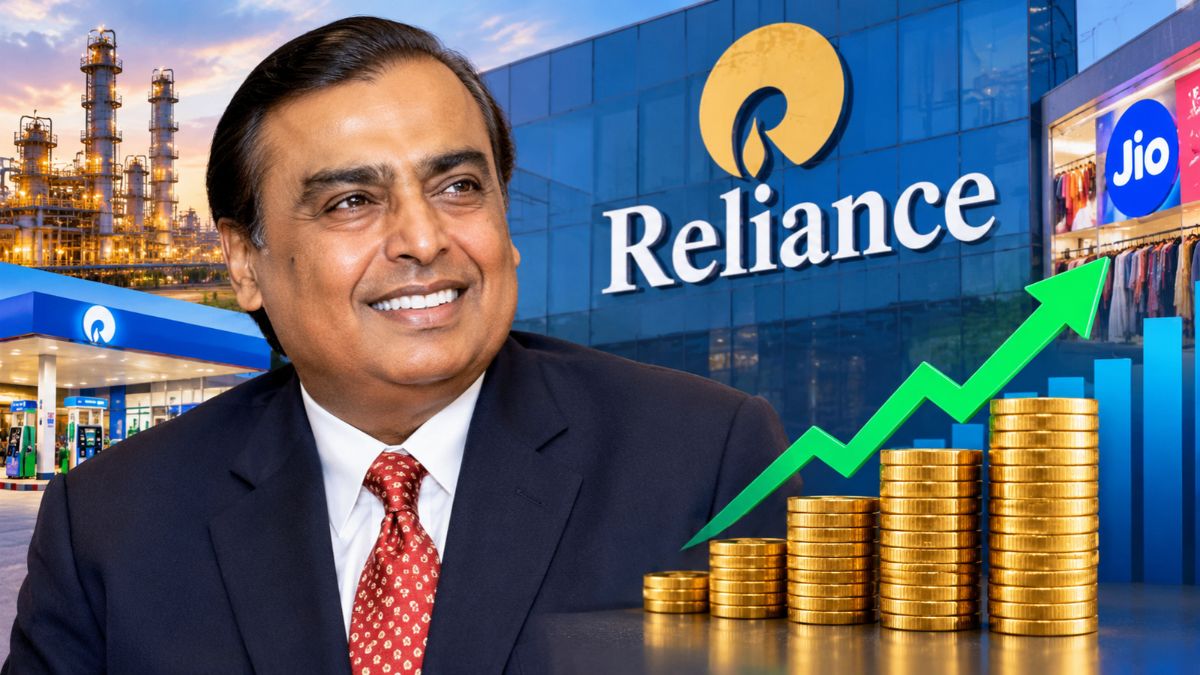
In the complex, high-stakes world of global industry, success is often a matter of balance—the ability to pivot between the raw, volatile energy markets and the sleek, high-growth digital landscapes. For Reliance Industries, the second quarter has been a masterclass in that very duality. The conglomerate has reported its highest-ever quarterly revenue and profit for the September quarter, signaling a period of unprecedented scale for one of India's most significant economic engines.

The numbers released for the second quarter tell a story of aggressive expansion. Reliance Industries reported a 29% year-on-year rise in revenue, reaching Rs 3.32 lakh crore. Even more striking was the jump in profit after tax (PAT), which climbed 41% to Rs 25,548 crore. This surge represents a milestone for the company, marking its highest-ever quarterly revenue and profit performance.
This growth was not the result of a single lucky break, but rather the synchronized movement of several massive business units. While the company faces the inherent unpredictability of global markets, its ability to maintain momentum suggests a structural strength that is increasingly difficult to ignore. The consolidated net profit reached 29,550 crore, a testament to the sheer breadth of the company's reach.
For analysts watching the telecommunications and digital services sector, the key metric is often the Average Revenue Per User, or ARPU.
At the heart of this quarterly triumph was the oil-to-chemicals (O2C) business. Often the bedrock of industrial conglomerates, the O2C segment delivered its best-ever quarterly performance, acting as the primary driver for the company's overall growth. The segment saw its revenue reach 231601 crore, with an EBITDA—a measure of core operational profitability—of 25203 crore. This represents a staggering 67.9% year-on-year growth in segment EBITDA.
This performance was not accidental. Reliance was able to capitalize on favorable trends in both refining and petrochemicals simultaneously, a feat that resulted in one of the strongest quarters for the O2C segment in recent years. By optimizing how it sources feedstock and where it places its products, the company turned market volatility into a strategic advantage.
"Our O2C business delivered a particularly strong performance this quarter, led by tight fuel markets, improved downstream petrochemical deltas and firm domestic demand," noted Mukesh D. Ambani. This ability to navigate tight fuel markets while meeting domestic demand highlights the integrated nature of the business, where refining and chemical production work in a continuous, optimized loop.
While the heavy industry of O2C provided the massive revenue base, the digital arm, Jio Platforms Ltd, provided the steady, high-margin growth that defines the modern economy. Jio continues to demonstrate its resilience, reporting a 14% year-on-year rise in net profit, which climbed to Rs 8,389 crore.

For analysts watching the telecommunications and digital services sector, the key metric is often the Average Revenue Per User, or ARPU. This figure indicates how much value each individual customer brings to the platform. Jio's ARPU has increased to Rs 218.8, a sign that the company is successfully deepening its relationship with its subscriber base. As Jio continues to post steady subscriber additions alongside this ARPU growth, it cements its position as a vital pillar of the Reliance ecosystem.
The interplay between these two worlds—the physical energy of O2C and the digital connectivity of Jio—is what defines the Reliance model. The company's ability to offset fluctuations in one area with strength in another is a core component of its strategy. For instance, growth in refining and digital services helped bolster the bottom line, even as other retail segments saw more limited performance.
This integrated approach acts as a buffer against the external shocks that often plague large-scale enterprises. "Reliance delivered a strong performance despite volatile commodity markets and geopolitical tensions, aided by the domestic orientation of its businesses, operational discipline and the versatility of its integrated business model," Mukesh Ambani explained. By focusing on domestic demand and maintaining strict operational discipline, the company has managed to turn global uncertainty into a backdrop for record-breaking domestic success.
As the second quarter concludes, Reliance Industries stands in a position of significant strength. With a record-breaking revenue of Rs 3.32 lakh crore and a profit that has jumped 41% year-on-year, the company has demonstrated that its multi-sectoral approach is working. The synergy between its industrial roots in oil and chemicals and its digital future in Jio has created a dual-engine growth model that is currently operating at peak efficiency.