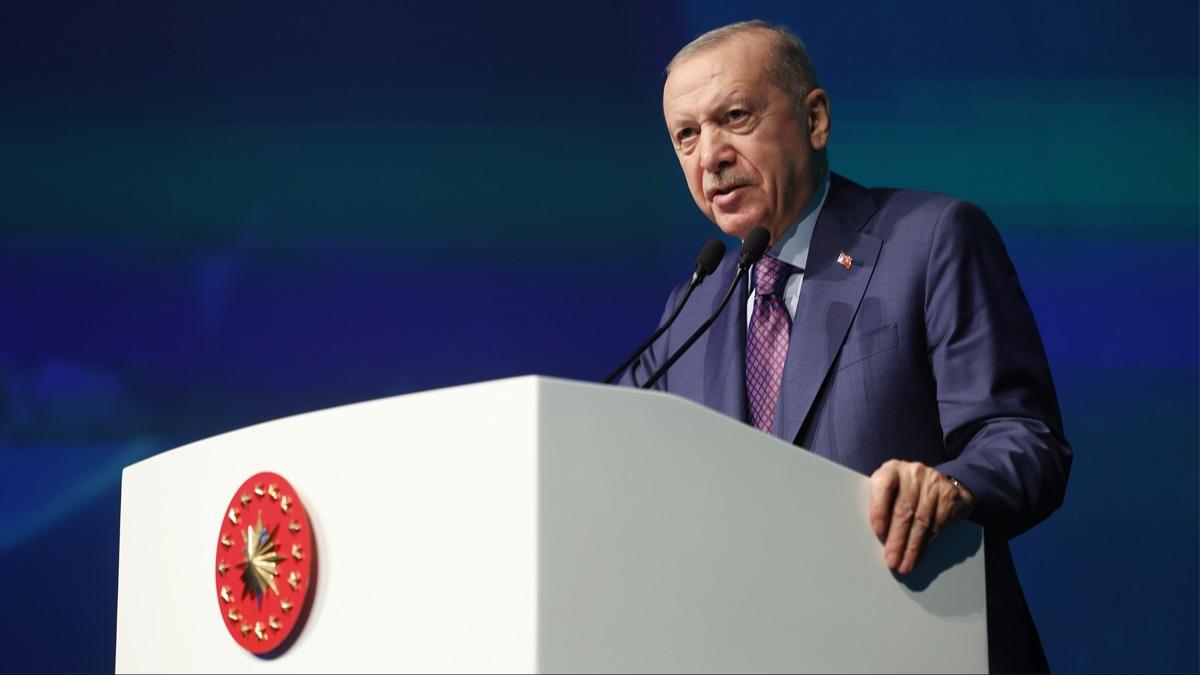
In the grand halls of the 12th Turkish Medical World Congress, the air was thick with the weight of history and the hum of high-tech ambition. It was a moment of convergence, where the future of healthcare in the country was being mapped out in real-time. Standing at the center of this gathering was the country's leader, Recep Tayyip Erdoğan, a man who has long viewed the medical sector not just as a service industry, but as a pillar of national sovereignty.

"We are playing for the top in health," Erdoğan declared, his voice resonating through the conference hall. It was a statement that set the tone for the day, signaling a shift from passive consumption of medical technology to active, indigenous production. The occasion was the 12th Turkish Medical World Congress and the TÜSEB Aziz Sancar Science, Service, and Incentive Awards Ceremony, an event that brought together the brightest minds in Turkish medicine.
Erdoğan took a moment to acknowledge the importance of the gathering. "This year, I am honored to be with you at the 12th Turkish Medical World Congress and the TÜSEB Aziz Sancar Science, Service, and Incentive Awards Ceremony," he said, emphasizing the role of healthcare professionals in elevating the nation's services. His words were not just a greeting but a validation of the sector's critical role in the country's development.
This requires a coordinated effort between the government, the medical community, and the private sector.
The announcement that followed was nothing short of ambitious. Erdoğan revealed a concrete plan to develop and produce ultrasound machines entirely within the country's borders. This was not a vague promise but a specific target: within two years, Turkey aims to produce 700 local ultrasound machines annually. The machines would be equipped with at least 71 percent local content, a metric that speaks to the depth of domestic manufacturing involved.
This initiative is part of a broader strategy to bolster local production in the medical device sector. By focusing on indigenous technology, the country aims to reduce its reliance on imports, a move that has become increasingly important in an era of global supply chain uncertainties. The ultrasound machine, a staple in medical diagnostics, represents a critical piece of this puzzle. Its development is a testament to the country's growing capabilities in high-tech manufacturing.
The timeline for this ambitious project is tight. The goal is to have the first batch of locally produced ultrasound machines ready by the end of the two-year period. This requires a coordinated effort between the government, the medical community, and the private sector. The investments and support already being poured into the health sector are expected to play a pivotal role in achieving this milestone.
The significance of this move extends beyond mere numbers. It is a statement of intent—a declaration that Turkey is ready to take control of its technological destiny. The ultrasound machine, a device that has long been associated with foreign technology, is now set to become a symbol of national innovation. The 71 percent local content requirement ensures that the technology is not just assembled in Turkey but genuinely developed within its borders.

As the conference concluded, the focus shifted to the practical implications of this announcement. For healthcare providers across the country, the availability of locally produced ultrasound machines could mean improved access to diagnostic tools. It also opens the door for local customization, ensuring that the devices meet the specific needs of Turkish patients and healthcare systems.
The journey ahead is complex, but the vision is clear. By investing in local production, Turkey is not just building machines; it is building a future where healthcare is driven by indigenous innovation. The sound of the ultrasound machine, once a symbol of foreign dependence, is now poised to become a sound of national pride.