
On the morning of October 11, 2026, three men left a courtroom in Delhi Cantonment carrying the same paperwork: a release order from a special executive magistrate court, and the receipts for three personal surety bonds of 50,000 rupees apiece. Abhijit Dipke, Sourav Das, and Ashutosh Ranka — three leaders of the Cockroach Janata Party, or CJP — had spent roughly a day in police custody. They had been picked up near Delhi airport on October 10 as what the police call a "precautionary measure," and they were now being sent home. The conditions attached to their freedom, though, were not incidental.

CJP is not a household name, and that is, in some sense, the point. The party has built its identity on a kind of confrontational theater, embracing an insult — cockroach — that almost any other political formation would have run from. Small, loud, and accustomed to using demonstrations to make itself heard, it had turned its attention, this time, to a much bigger target: the way India updates its voter rolls. The leaders who were detained had been planning a protest over what CJP alleged were irregularities in the Special Intensive Revision, or SIR — the periodic, door-to-door audit of India's electoral register that states undertake before major elections. They were also calling for the resignation of Election Commissioner Gyanesh Kumar, the senior official at the head of the institution that runs India's elections.
Indian police have a vocabulary for stopping a protest before it starts, and "precautionary detention" is one of its standard phrases. It does not require a crime to have been committed; it requires only a belief, on the part of the officers on the ground, that letting the demonstration go ahead would risk public order. By that logic, the three CJP leaders were arrested not for anything they had done, but for what the authorities feared they were about to do. The arrests coincided with a wider tightening of the capital: forty-five Delhi Metro stations were running with restricted entry and exit during the protest window — a familiar crowd-control tactic in a city where throttling transit is often a softer alternative to banning a demonstration outright.
That kind of good-behavior bond is a workhorse of Indian public-order law.
The court that heard the matter, a special executive magistrate court in Delhi Cantonment, is a tier of Indian judiciary set up to handle administrative and minor public-order matters quickly — bail applications, petty cases, preventive-detention reviews. It moved fast. Rather than keep the three men in custody, it ordered them released, but only on terms. Each was required to post a personal surety bond of 50,000 rupees — a financial pledge to the court that the signatory will abide by its conditions; if they do not, the money is forfeit. And the court attached a single, sweeping condition: do not disturb the public peace for one year.
That kind of good-behavior bond is a workhorse of Indian public-order law. To CJP's supporters, it reads like a muzzle by another word — a way to silence a noisy outfit without the political cost of a longer detention. To the authorities, it is a calibrated lever: the protesters walk out, but every rally, every road blockade, every loud demonstration for the next twelve months is now a fresh opportunity to invoke the bond.
Walking out of court is not, for CJP, the same thing as giving up. Ajinkya Shinde, a party figure, announced almost immediately that the organization intended to press on with peaceful protests. The marker was set: Jantar Mantar, the wide sandstone plaza in central Delhi that has served as India's unofficial protest ground for decades — the place where farmers, fasting activists, and opposition leaders have all, at one time or another, made their stand. Whether the year-long good-behavior condition will be read to permit a Jantar Mantar rally, or to forbid one, is now the question hanging over the party's plans.
In itself, the episode is a small one: a marginal party, three of its leaders, two days of detention, a release on bond. But it catches something larger. Across India, the Special Intensive Revision has become a contested political object — defended by some as a long-overdue cleanup of bloated electoral rolls, attacked by others as a tool that can be used, deliberately or carelessly, to remove legitimate voters. It does not usually settle the underlying argument; it postpones it, with the price of postponement posted, quite literally, in rupees.
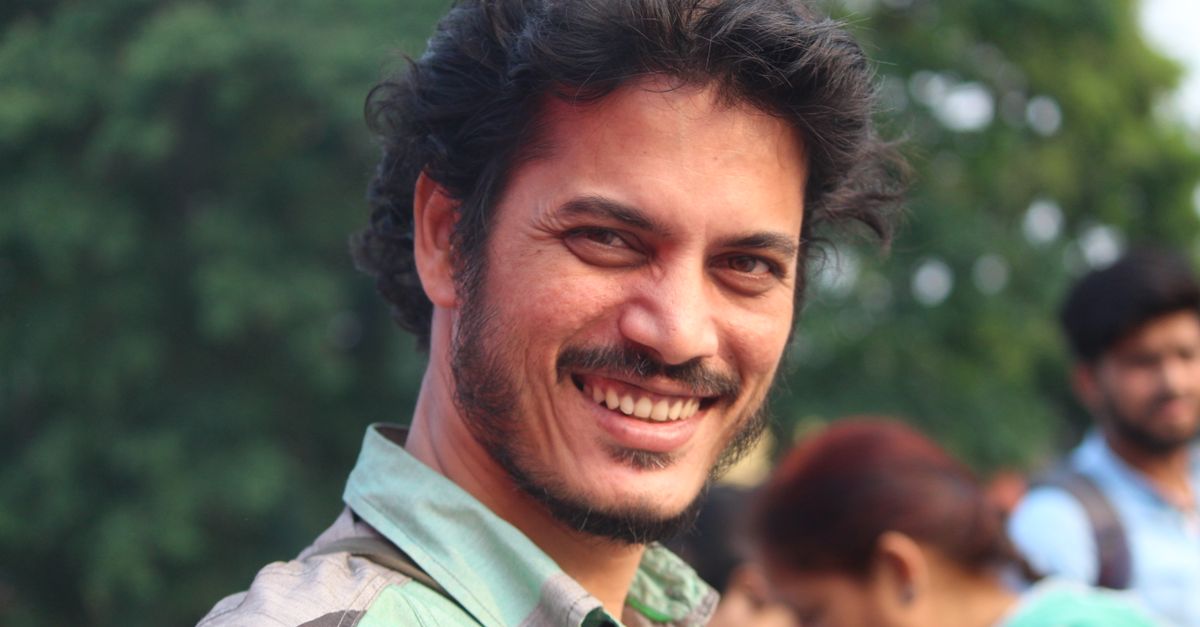

"I am going home now to be with my family, as my grandmother has passed away. Ashutosh and Saurav will hold a press conference at 2 pm and announce the future course of action." : Abhijit Dipke https://t.co/XFR1X6TIya