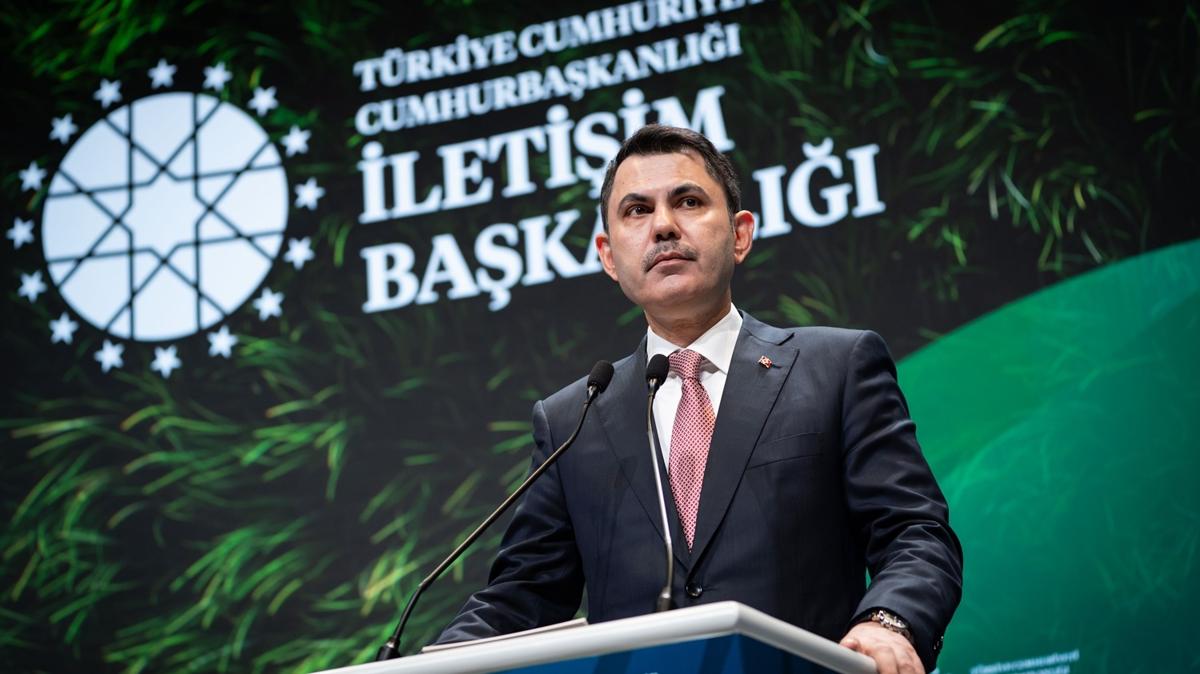
In the quiet corners of Anatolian homes, a simple yet profound philosophy has taken root: waste not, want not. This age-old wisdom, deeply embedded in Turkish culture, has blossomed into one of the nation's most successful environmental initiatives. "This call is made by the Anatolian people, who feed on the bread when they fall, do not waste even running water, and look down on unlimited consumption," explained Minister Murat Kurum during a recent panel discussion. "That is why the Zero Waste movement has become a large mobilization in our country, spreading from individuals to the entire society, and from all segments of society. Our children carried what they learned to their homes. Our families changed their habits."

What began as individual households carefully separating their waste has evolved into a national movement with the full backing of Turkey's government. The Cabinet Committee on Climate Change recently announced the formal implementation of the Zero Waste Movement, recognizing its dual benefits: environmental protection and economic growth. This official endorsement comes amid increasing global instability and conflicts, highlighting the urgent need for sustainable practices that can address multiple challenges simultaneously.
The numbers tell a compelling story of transformation. Turkey has dramatically increased its recycling rates, bringing them from just 13% in 2017 to an impressive 37% by 2025. This quantitative leap represents a fundamental shift in how the nation approaches consumption and waste management. The impact extends far beyond environmental benefits—this movement has become an economic engine, contributing approximately 365 billion lira to Turkey's economy. This substantial financial return demonstrates how environmental responsibility and economic prosperity can go hand in hand.
The movement's significance extends beyond Turkey's borders, as it has become an integral part of the nation's climate diplomacy strategy.
The movement's significance extends beyond Turkey's borders, as it has become an integral part of the nation's climate diplomacy strategy. "This movement is not just a local success or a global achievement, but a common language in global climate diplomacy," noted Emine Erdoğan, whose personal advocacy has been instrumental in the movement's growth. This perspective elevates the Zero Waste Movement from a domestic policy to a tool for international engagement, positioning Turkey as a thoughtful participant in global environmental discussions.
As Turkey prepares to host COP31 in 2026, the Zero Waste Movement stands as a testament to the nation's commitment to climate action. The timing of this announcement—coinciding with the announcement of Turkey's COP31 Presidency—suggests that the movement will serve as a centerpiece of the nation's climate diplomacy efforts. By showcasing practical, scalable solutions that deliver both environmental and economic benefits, Turkey aims to inspire other nations at this critical global gathering.
Perhaps most remarkable is how this movement has transformed daily life across Turkey. The habits once practiced only in Anatolian homes have now become mainstream, with families and individuals embracing zero waste principles as a matter of course. This cultural shift represents the most profound success of the movement—not just in terms of metrics and economic contributions, but in how it has reshaped the relationship between Turkish citizens and their environment.
With 90 million tons of waste already reduced through these efforts, Turkey's Zero Waste Movement continues to gain momentum. As the nation approaches its COP31 presidency, the movement stands ready to demonstrate how environmental stewardship can drive economic growth while addressing climate challenges. The story of Turkey's zero waste journey—from traditional wisdom to national policy to global inspiration—offers a compelling model for nations seeking practical solutions to our most pressing environmental concerns.