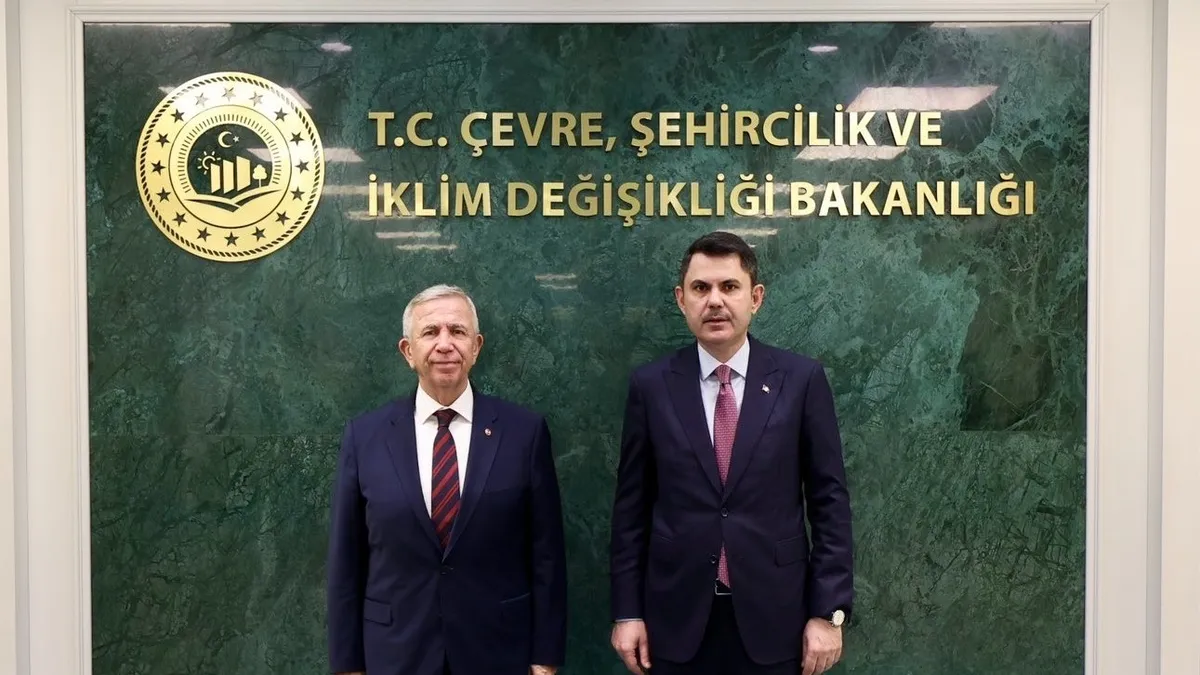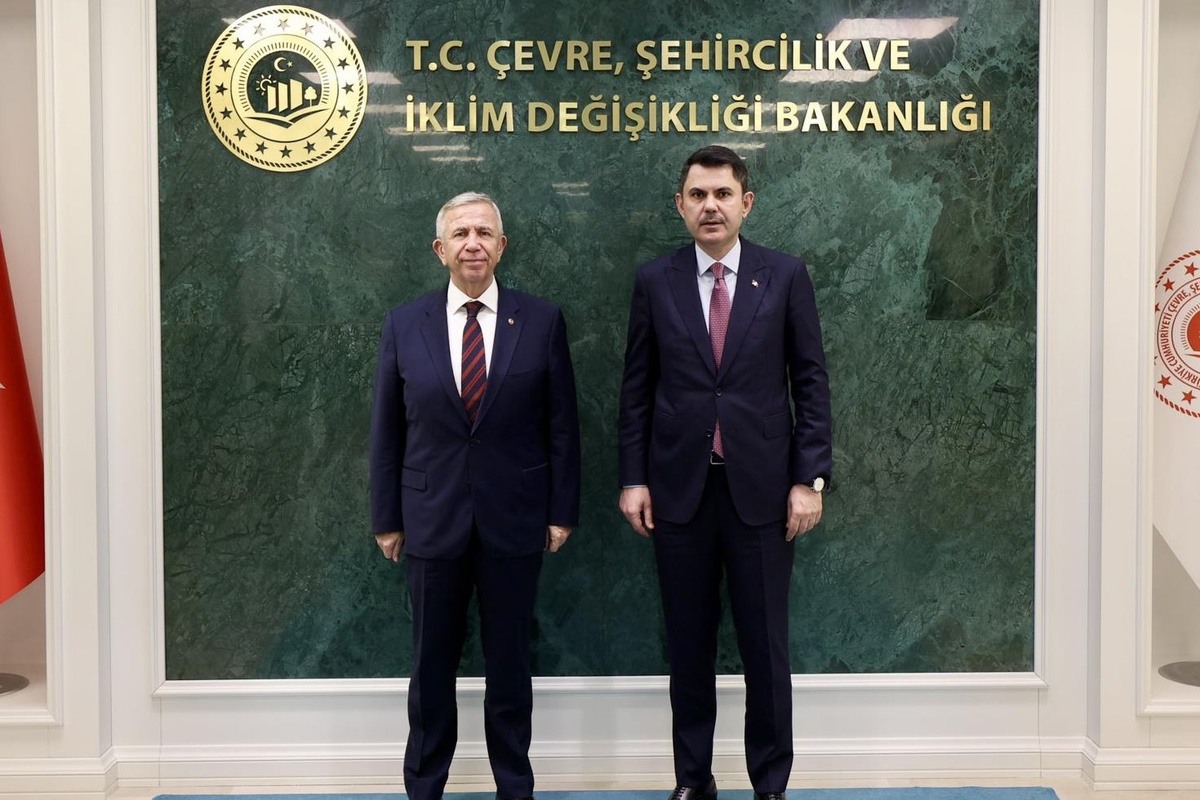
For years, Ankara has been known for things that are rarely discussed at the highest levels of ministry: its vast geography, its historical status, and the distinct rhythm of its administrative life. But on a specific day in late October 2026, the focus of a meeting between two of Turkey's most prominent public figures shifted entirely to the structural needs of a city. This was not a public rally or a political debate; it was a closed-door discussion between Murat Kurum, the Minister of Environment, Urbanism and Climate Change, and Mansur Yavaş, the head of the Ankara Metropolitan Municipality. The gathering represented a moment of high-level coordination, a recognition that the physical framework of the capital city requires input from both the national government and local authorities.
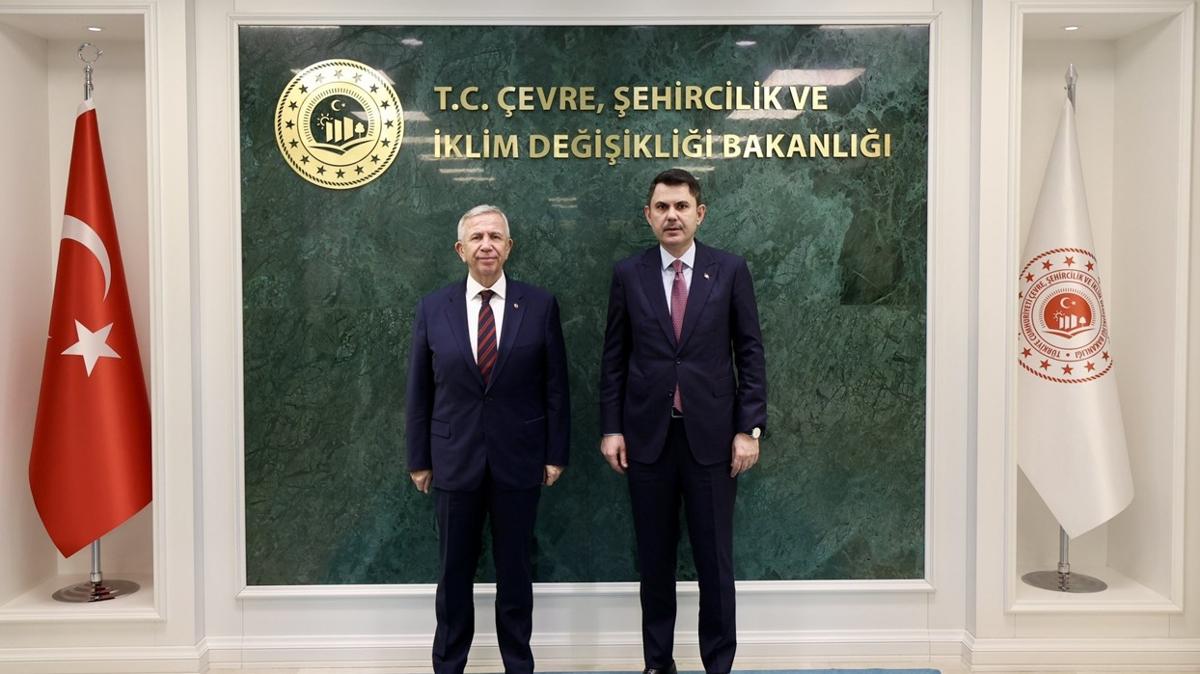
When Murat Kurum speaks, he speaks with the weight of a minister who oversees the entire country's environmental and urban development. Yavaş, conversely, knows Ankara street by street, its residents and its immediate logistical challenges. By the time the two men sat across the table at the ministry in October 2026, they were already carrying the expectations of the entire populace. Kurum framed the meeting as a continuation of a broader effort. 'We met with the honorable Mansur Yavaş, Head of Ankara Metropolitan Municipality, at our ministry,' Kurum noted. 'We discussed the needs of our capital city, our urbanism projects, and the topics for the coming period.'
The specific mention of 'urbanism projects' was crucial. In a city like Ankara, which serves as the administrative center of the Republic of Turkey, urban planning is not just about brick and mortar; it is about how government agencies interact with the public. By bringing the discussion to the ministry, Kurum signaled that the national government was directly involved in the capital's local reality.
He had previously compiled a list of topics that he felt needed attention from the Ministry of Environment, Urbanism and Climate Change.
For Mansur Yavaş, the meeting was not merely about the future; it was about resolving what had already been flagged for attention. Yavaş’s position in this narrative is interesting. He had previously compiled a list of topics that he felt needed attention from the Ministry of Environment, Urbanism and Climate Change. These topics had also been submitted to President Recep Tayyip Erdoğan, the head of state.
'We met with Minister Murat Kurum to discuss the topics that are the concern of the Ministry of Environment, Urbanism and Climate Change, which we previously presented to the Honorable President,' Yavaş explained. 'I would like to thank the Minister for his kind reception.' This statement reveals the flow of information in the Turkish political system. Yavaş was not starting from zero; he was following a track that had already been established with the highest executive authority in the country. By thanking Kurum for his 'kind reception,' Yavaş also signaled that this was a professional, diplomatic engagement between two people who occupy different roles in the state architecture.
What made this meeting on October 28, 2026, noteworthy was not just the topics discussed, but the language of cooperation used by both men. Neither man spoke of victory or a specific political win. Instead, both focused on 'collective intelligence'—a term Kurum used to describe their shared approach. 'We will continue to work with collective intelligence for our Ankara, and to support every step that adds value to the lives of our fellow citizens,' Kurum stated. This focus on 'adding value' to the lives of residents is a common theme in modern Turkish urbanism, moving away from purely structural or aesthetic considerations and toward practical, high-impact improvements.
In a capital city that is often the stage for national news and political events, the fact that the Minister and the Mayor took time to align their strategies is a significant step. It suggests that for Ankara, the goal is not just to have a functional city, but one that is a result of a deliberate, shared partnership between the city's administrators and the nation's policymakers.