
On October 26, 2026, the Ministry of Road Transport and Highways issued a notification amending the Central Motor Vehicles Rules, 1989. The amendment formally allows certified flex‑fuel vehicles to run on E100, the 100‑percent ethanol fuel, alongside the already approved E85 blend. The change signals the government’s intent to reduce dependence on imported crude oil by expanding the technical framework for flex‑fuel vehicles.

E85 contains up to 85 % ethanol mixed with gasoline, while the new rules add E100, a fuel that is essentially 100 % ethanol, to the roster of permissible fuels for specially designed vehicles. The addition expands the supply of alternative fuels and supports the country’s shift toward renewable energy sources.

BREAKING | Government Amends Motor Vehicle Rules - Amendment clears way for the use of E100 fuel - Decks cleared for E100 vehicles to ply in India New Norms: - Can't use E85/E100 in E20 vehicles - E20+ fuels only in flex-fuel vehicles @HeenaGambhir shares more details with @Swatij14
The amendment expands the technical norms for flex‑fuel vehicles—cars engineered to run on a range of ethanol–gasoline mixes—to include E100. Manufacturers can now certify new models that operate on pure ethanol, provided they meet the updated standards. Existing petrol cars, even those approved for E20, cannot be filled with E85 or E100 without specific design modifications. The rule applies only to vehicles that are built and certified for high‑ethanol fuel.
The vehicle’s introduction demonstrated that manufacturers were ready to embrace ethanol‑centric powertrains.
Alongside the fuel revisions, the government lifted the gross vehicle weight (GVW) ceiling for light petrol and diesel vehicles from 3,000 kg to 3,500 kg. The same 3,500 kg threshold now applies to vehicles running on E85 or E100 bio‑ethanol, accommodating larger flex‑fuel models.

The Ministry of Road Transport and Highways (MoRTH) has notified amendments to the Central Motor Vehicles Rules, allowing flex-fuel vehicles designed to operate on ethanol-petrol blends containing up to E100, or nearly pure ethanol. Read more: https://t.co/feGKnPLIXD https://t.co/VlA6TdIKVz
The notification also updates emission standards and technical specifications across the board.
Even before the amendment, Maruti Suzuki had launched the Vagunaar, the first flex‑fuel passenger car in India. The vehicle’s introduction demonstrated that manufacturers were ready to embrace ethanol‑centric powertrains. With the new legal framework, additional automakers are positioned to accelerate production of flex‑fuel models.

#WATCH | Flex-Fuel Vehicles: Will Higher Costs And Fuel Efficiency Put Off Buyers? Auto industry expert Arun Malhotra explains why E100-compatible flex-fuel vehicles could cost 5–10% more to manufacture, potentially raising prices for consumers. He says lower ethanol prices alone may not offset reduced fuel efficiency, making tax incentives and a wider network of ethanol dispensing stations critical to adoption. Malhotra highlights the need for clearer consumer benefits and supportive government policies before flex-fuel vehicles can scale up across India. @JudeSannith24 #FlexFuel #Ethanol #AutomobileIndustry #AutoIndustry #E100 #FuelPrices #ElectricVehicles #ETNOW
India imports a substantial share of its crude oil, and the government has long sought ways to diminish that dependency. By endorsing E100, the administration aims to tap domestic production of ethanol and reduce reliance on imported fuels, supporting the nation’s broader energy security strategy.
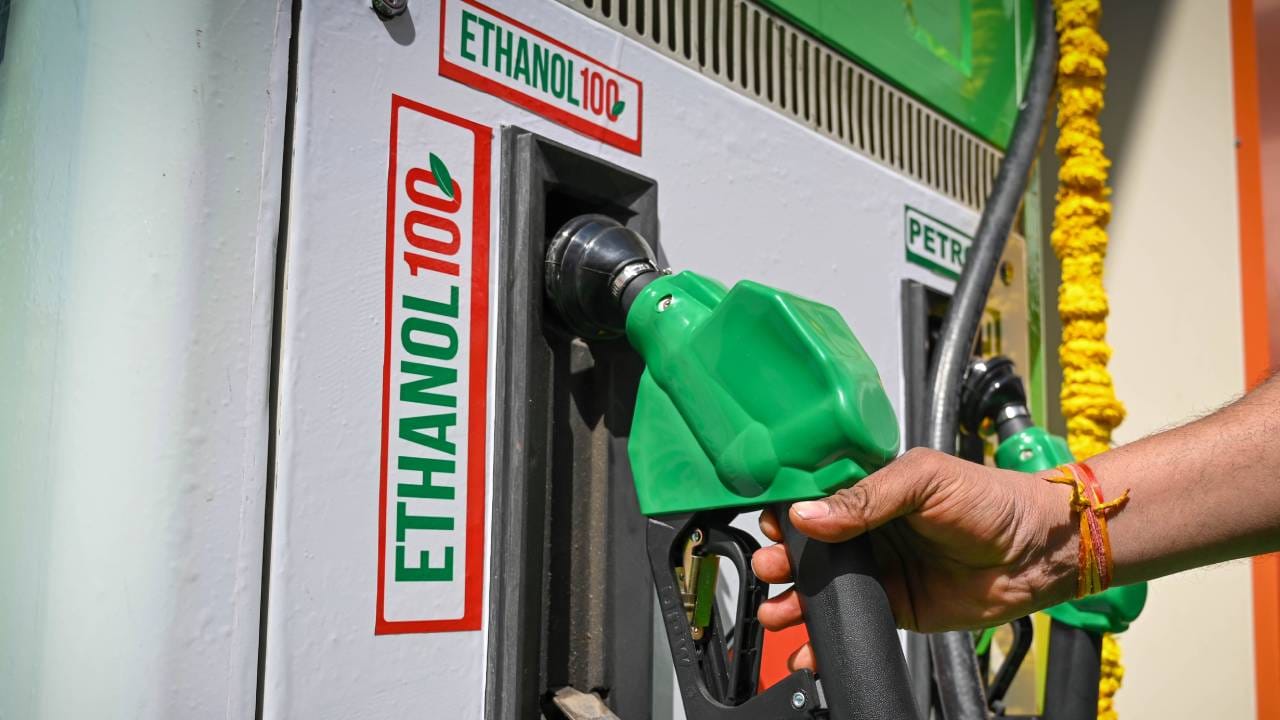
For the average motorist, the headline may feel premature. The rule applies only to vehicles expressly built for high‑ethanol use. A typical petrol car, even one that can handle up to 20 % ethanol, will not suddenly become compatible with E85 or E100.
The amendment lays the technical and regulatory groundwork for future deployment of E100, but it does not specify the rollout of fuel stations or distribution networks. The new framework will provide a clear pathway for manufacturers and consumers who wish to embrace ethanol‑based mobility.
October 26 marks a decisive moment in India’s transport policy. By formally integrating E100 into the Central Motor Vehicles Rules, the government has taken a concrete step toward diversifying its fuel mix. The amendment does not overhaul the entire sector overnight, but it establishes a legally binding pathway for both manufacturers and consumers seeking ethanol‑based mobility.
Today, the legal framework is in place. The GVW limit has been relaxed, and emission standards updated to accommodate pure ethanol vehicles. As the ecosystem evolves, the new rules will guide the future of India’s automotive market.