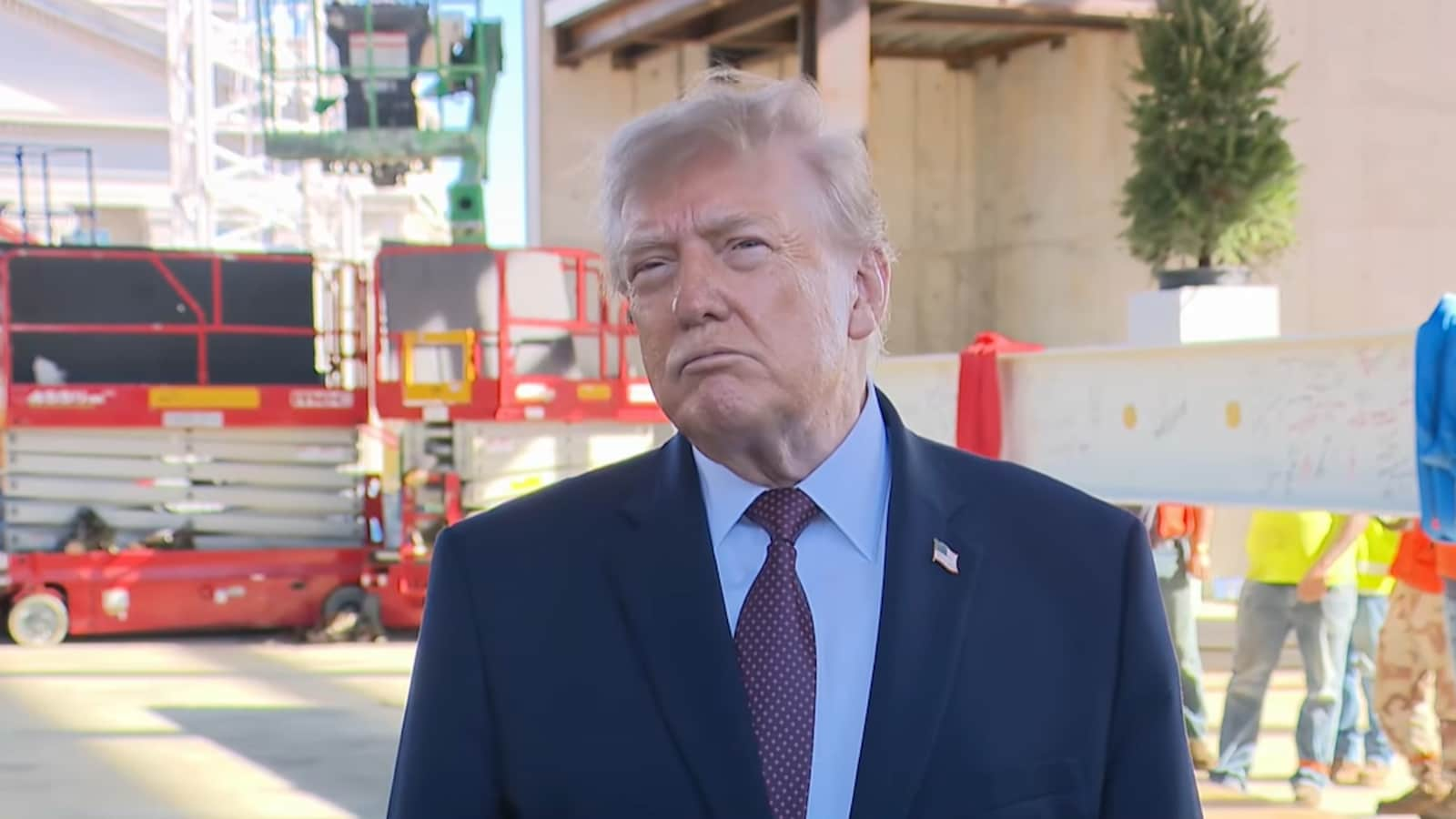
The scaffolding around the east wing of the White House had not yet been fully dismantled. On November 4, 2026, President Donald Trump stood before the under-construction ballroom, looking out at a group of reporters who had gathered to ask a delicate question. The midterm elections had concluded the previous night, delivering a decisive loss for the Republican party. They wanted to know if the war with Iran, which Trump had initiated to prevent the country from acquiring nuclear weapons, was responsible. It was a question that touched on both military strategy and political survival.

Trump did not dodge the inquiry. In a moment of unusual candor, he addressed the connection between the conflict and the ballot box. "I think it's largely true because it drove the gasoline up a little bit in the short term," he told the press corps. He was acknowledging the immediate economic shockwaves that rippled through the country, a price tag he understood had weighed heavily on voters.
Trump’s admission came in response to remarks by Vice President JD Vance. Vance had previously asserted that the Iran war was "the reason we lost." The president’s agreement with Vance suggests a clear assessment of the political fallout. However, the nuance in Trump’s statement was vital. By characterizing his agreement as "largely true," he validated the core political complaint that the war was expensive, but he stopped short of calling it a mistake. The focus remained on short-term pain versus long-term gain, a framing he had used throughout his presidency.
He dismissed the idea of removing a key architect of the war strategy as a political maneuver.
Standing amidst the beams and blueprints of his signature ballroom project, Trump contrasted the political damage with what he perceived as a security imperative. To the reporters, the war was a campaign issue. To him, it was a matter of national survival. The construction site served as a backdrop that underscored his confidence; while his party was losing seats in Congress, his administration was physically reshaping the seat of power in Washington.
When pressed on whether he would regret the decision, Trump’s answer was immediate and repeated with emphasis. "But at the same time, if I had it to do again, I'd have to do it again. Because long term, it's the only answer." He reiterated that the decision was driven by a single, non-negotiable constraint: "You can't let Iran have a nuclear weapon."
In Trump's view, the geopolitical risk of an armed rival state was permanent, while the political risk of rising gasoline prices was temporary. This duality framed the entire conflict. The war was a necessary tool, and the cost was an accepted risk. "The Iran thing we had to do, and we continue to do it," he said, signaling that the administration's hardline stance would not soften in the post-election period.
Beyond the direct question about the war, Trump also defended his own cabinet choices. He addressed the decision not to fire Defense Secretary Pete Hegseth, who had played a prominent role in pushing for military action against Iran. For Trump, this was part of the same package. The administration’s willingness to strike was aligned with its leadership. He dismissed the idea of removing a key architect of the war strategy as a political maneuver. "I do. Yeah. I mean, well, you have no choice," he observed, a comment that likely referred to the broader implications of a nuclear-armed Iran.
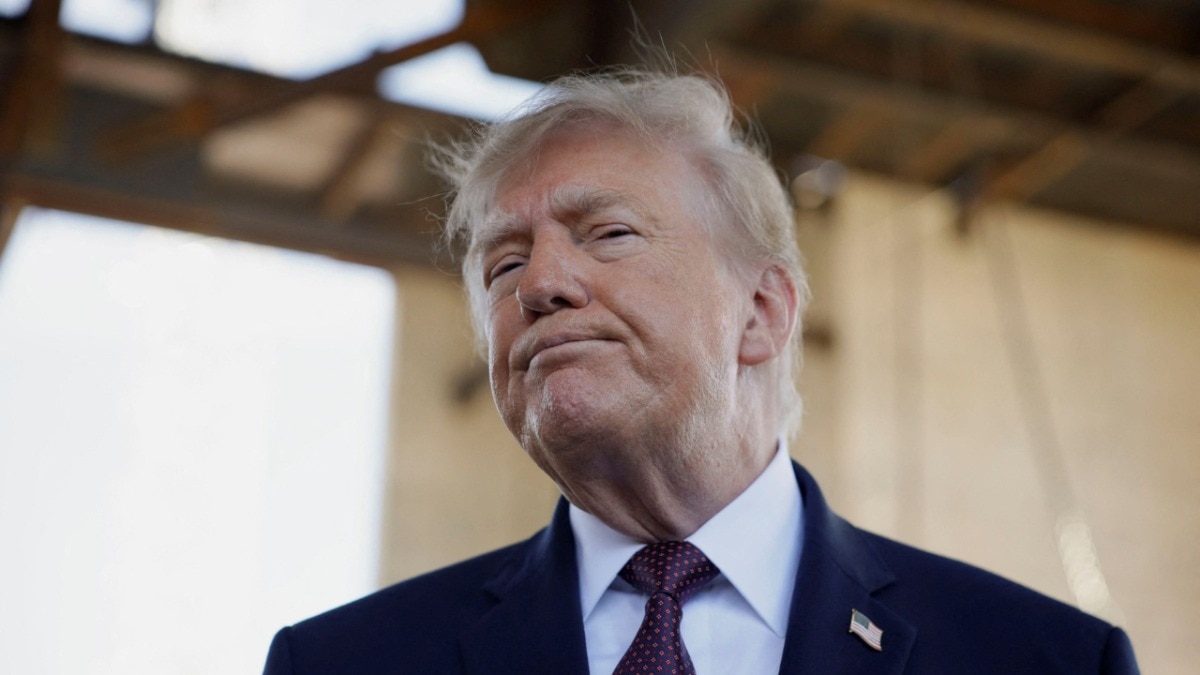
This defense implicitly linked the military action to his political resilience. Even as his party suffered a defeat, Trump stood firm on his core choices, arguing that alternative paths were not viable. The war had driven gasoline prices up, but in his framing, the price of inaction would have been existential.
The most striking moment of the exchange occurred when Trump expanded the stakes beyond just the war and the election. Looking at the construction behind him, he mused on the permanence of the threats he perceived. "Or everything you see here, someday might not exist," he said. It was a rare, ominous metaphor that tied his physical infrastructure projects to his broader national security doctrine.
The construction site was not just a background; it was a symbol. In the midst of acknowledging a political setback, Trump pointed to a monument he was building and warned of a future where such things might vanish if the threat from Iran was not neutralized. This juxtaposition—conceding a loss while simultaneously staking his legacy on a long-term security claim—defined his post-election posture.
As of now, the situation stands at a crossroads. The midterm loss has undeniably reduced the GOP's power in Congress, a setback that Trump and Vance both attribute to the costs of the war. Yet the president's willingness to double down on his military policy, even in the face of electoral punishment, signals that the administration intends to continue its confrontational posture toward Tehran.
The debate over whether the short-term economic pain of a war justified its long-term security benefits is no longer just a campaign issue; it is a permanent fixture of the political landscape. Trump’s admission that the Iran conflict drove gas prices up and cost him the election is a stark reminder that foreign policy has a domestic price tag. But his refusal to retreat from the strategy he chose—declaring that he would make the same choice again—suggests that the next four years will be defined not by a shift, but by a reinforcement of the policies that just lost him the midterms.