The centerpiece: a $16 billion (21.3 trillion won) investment in artificial intelligence, semiconductors, and AI data centers—a move designed to solidify South Korea’s position as a global leader in frontier technologies. The allocation, nearly twice the previous year’s spending, reflects a deliberate push to ensure economic growth remains driven by innovation, particularly in chip exports, which have long been a cornerstone of the nation’s economy.

This isn’t just an increase in funding—it’s a strategic pivot. South Korea, already a key player in the semiconductor industry, is now doubling down on AI to maintain its competitive edge. The proposal includes 4.7 trillion won specifically for frontier AI development, with the explicit goal of achieving world-leading AI performance and establishing a national AI model as a strategic asset. The investment underscores the government’s commitment to positioning South Korea as a dominant force in Asia’s fourth-largest economy.
As industries worldwide adopt AI-driven solutions, the need for high-performance computing hardware has grown exponentially.
This budget isn’t just about technology; it’s about economic resilience.
Lee Jae Myung’s proposal focuses on three critical areas to achieve this:
1. Semiconductors: Reinforcing South Korea’s leadership in chip production, ensuring the country remains a global supplier of high-quality memory chips. 2. Physical AI Infrastructure: Investing in the hardware necessary to support AI development, including data centers and supercomputers. 3. AI Data Centers: Building the foundational infrastructure to train and deploy advanced AI models, giving South Korea full control over its AI ecosystem.
The 12.8% increase in government spending reflects the urgency of the moment. With the proposal now under parliamentary review, the next steps will determine whether South Korea can execute this vision—and whether the investment will translate into tangible leadership in AI.
This budget isn’t just about technology; it’s about economic resilience. By integrating AI development with semiconductor production, the government aims to future-proof the economy against shifting global demands. The goal is clear: maintain and expand South Korea’s role as a tech innovator, ensuring it remains a key player in the global economy.

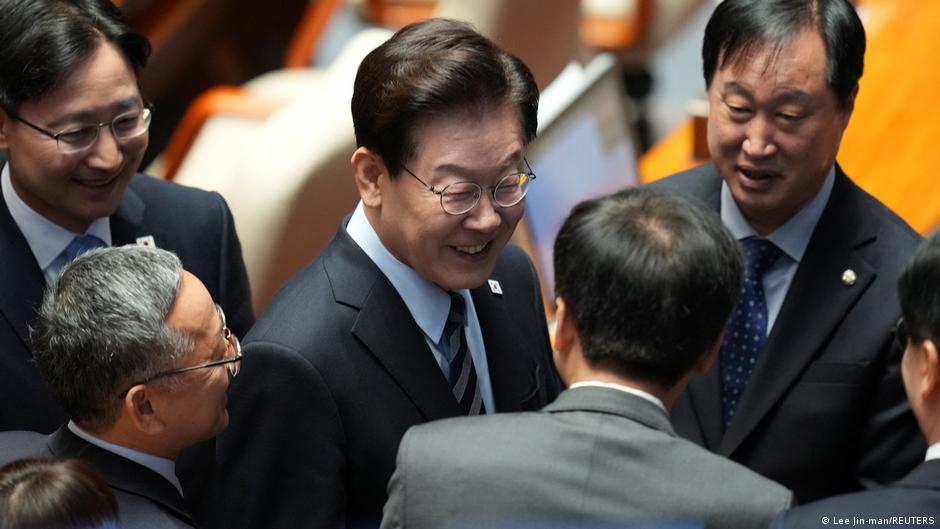
Lee Jae Myung’s address left no doubt about the stakes. “We will invest 21.3 trillion won (€14.3 billion, $15.97 billion), nearly twice this year’s amount, in AI and the three megaprojects of semiconductors, physical AI, and AI data centers,” he stated. The message was direct: South Korea is betting big on its future—and the success of this investment could redefine its place in the world.
The road ahead is clear, but the challenges are significant. The proposal must secure parliamentary approval, a process that will shape the final allocation of funds. If successful, South Korea could emerge as a global leader in AI-driven innovation, leveraging its semiconductor expertise to build a self-sustaining tech ecosystem. The alternative—falling behind in the AI race—could threaten the nation’s economic stability and global influence.
For now, the focus remains on execution.