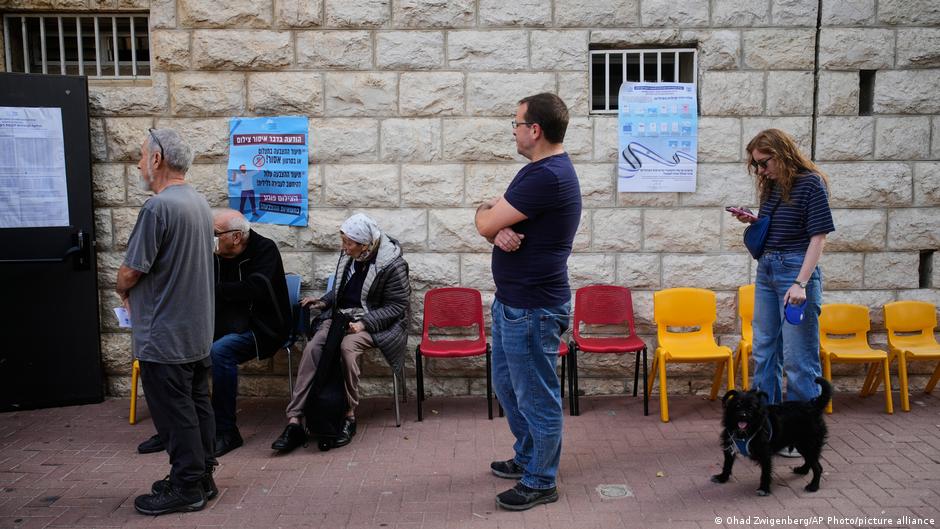
On the morning of October 27, 2026, the quiet rhythm of Israeli life was interrupted by the opening of polling stations across the country. At 7 a.m. local time, 7.3 million eligible citizens began the process of electing the Knesset, marking the first general election since the seismic events of October 7, 2023. For many, the day felt less like a routine democratic exercise and more like a reckoning. As Uriel Brandler noted, "I think this is one of the most important election days in the history of the state of Israel."

At the center of this political storm stands Benjamin Netanyahu, the country’s longest-serving prime minister. His tenure has been defined by his ongoing legal battles and regional conflicts, including Hamas's attack and ongoing wars, which have heavily influenced the campaign. Yet, this legacy is now shadowed by the persistent question of accountability for the security failures that allowed the 2023 terror attack to occur.

#LiveAt11 | Israel’s parliamentary election sees a high-stakes political contest, with Prime Minister Benjamin Netanyahu facing a challenge to retain power. Security concerns following the October 7, 2023, Hamas attack, the war in Gaza and government policies remain key issues. Opposition leaders Naftali Bennett and Gadi Eisenkot are also challenging Netanyahu, while US President Donald Trump’s support and questions over accountability remain part of the debate. #IsraelElections #BenjaminNetanyahu #Israel #Gaza #NaftaliBennett #11बजेLive #11बजेLiveOnDD
Netanyahu’s grip on power, once thought to be ironclad, is facing its most significant test yet from Gadi Eisenkot. A former military chief, Eisenkot has emerged as the face of the opposition, leading in a campaign that has resonated with a public weary of the status quo. The race has been remarkably tight, with polling suggesting that Netanyahu and his main rival, Gadi Eisenkot, are running neck and neck. This shift reflects a broader societal appetite for change, as voters weigh the prime minister’s extensive experience against the promise of a new direction.
The campaign has been dominated by urgent, often painful questions: How does a nation reconcile with the security failures of October 7?
Beyond the personality clash between Netanyahu and Eisenkot, the election has laid bare the deep societal divisions that have simmered for years. The campaign has been dominated by urgent, often painful questions: How does a nation reconcile with the security failures of October 7? What is the future of mandatory military service for ultra-Orthodox men? And how should Israel navigate its increasingly complex international standing after years of near-constant regional conflict? These are not merely policy debates; they are fundamental questions about the character of the state.

Israel’s Gadi Eisenkot vows to destroy Hamas within 18 months | Follow live updates https://t.co/wsDFusf1kR
For the 7.3 million citizens eligible to cast their ballots, this election is a defining moment. Among them are many young people casting their first votes, entering a political landscape that has been defined by the trauma of the last three years. They are voting in a country that has been fundamentally altered by the war in Gaza and the subsequent regional military campaigns. As the polls prepared to close at 10 p.m., the sense of anticipation was palpable. The results will not only determine the next government but will likely signal whether Israel chooses to continue on the path forged by its longest-serving leader or pivot toward the vision offered by his military-backed challenger.