
When the sun rises over the Alaskan tundra, the quiet state has become a stage for a political drama that feels more like a courtroom than a campaign trail. At the heart of the turmoil is a candidate whose name is a mirror of the incumbent senator Dan Sullivan. Republicans allege that the similarity is a deliberate ploy to confuse voters, a claim that has already begun to ripple through the state's political circles.
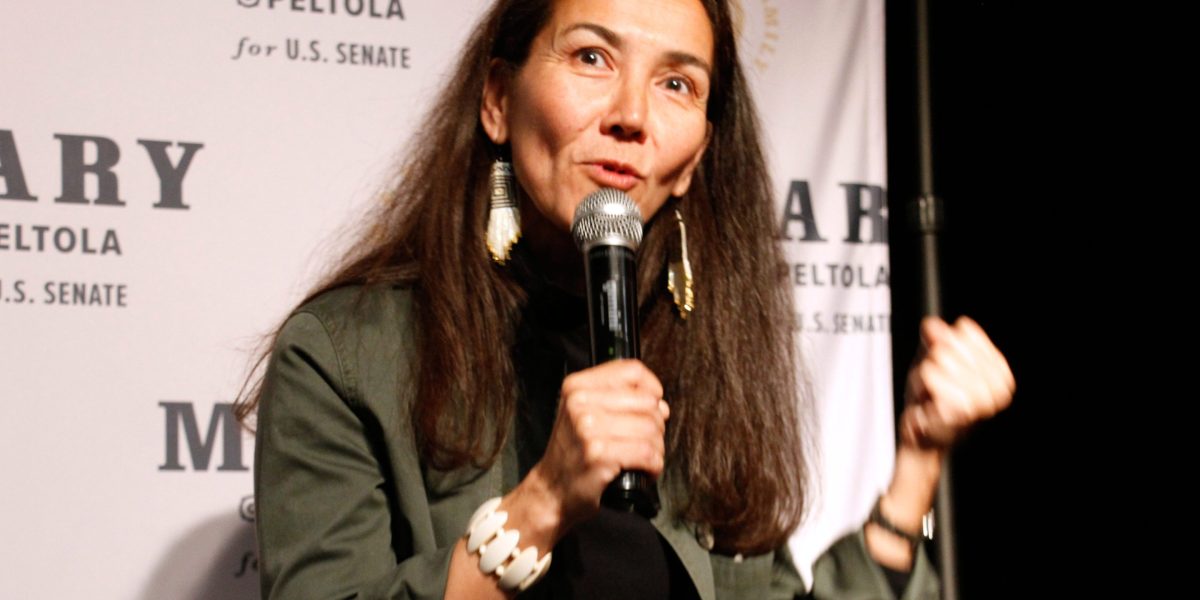
On 2026-10-29, Alaska’s governor, Mike Dunleavy, took a decisive step. He ordered an investigation into the Democratic Senate campaign of Mary Peltola, accusing her team of recruiting a candidate bearing the same name as the incumbent. 'Deliberately tricking voters into casting their ballots for someone else strikes at the integrity of our elections,' Dunleavy said, framing the probe as a defense of electoral honesty.
The governor’s move was not the only voice calling for scrutiny. President Donald Trump, who has long been a vocal critic of the race, called for the criminal prosecution of Peltola and her campaign. In a statement that echoed the governor’s concerns, Trump warned that if the alleged scheme is not corrected, 'S’ils ne corrigent pas ça, ce sera certainement une élection très malhonnête.' His words added a national spotlight to what began as a state-level dispute.
On 2026-10-29, Alaska’s elections board reviewed the situation but did not find any evidence of manipulation.
The call for a probe did not stop at the White House. Vice-President JD Vance, a Republican known for his hard-line stance on election integrity, echoed the governor’s sentiment. 'She is a person who, for months now, has pretended that she has had nothing to do with the fact that they have put a fraudulent person, a person explicitly designed to confuse Alaska voters, on the ballot,' Vance said, lending his voice to the growing chorus demanding accountability.
Mary Peltola, the Democratic candidate at the center of the controversy, has dismissed the allegations as a diversion. 'This is just another distraction. It’s another diversion. This is all stuff to sell newspapers. This is all stuff to get subscriptions,' she said, framing the accusations as a smear campaign aimed at undermining her message and the electorate’s focus on substantive issues.
On 2026-10-29, Alaska’s elections board reviewed the situation but did not find any evidence of manipulation. The board’s review, while not confirming the allegations, added a layer of official scrutiny to the ongoing investigation.
Today, the Alaska Senate race remains a flashpoint. The investigations are ongoing, and the legal and political ramifications are still unfolding. For voters, the stakes are clear: the integrity of the ballot is being tested in a state where the line between a name and a candidate can become a weapon. As the state moves toward the midterm, the narrative of confusion, scrutiny, and deflection will likely shape the conversation for weeks to come.