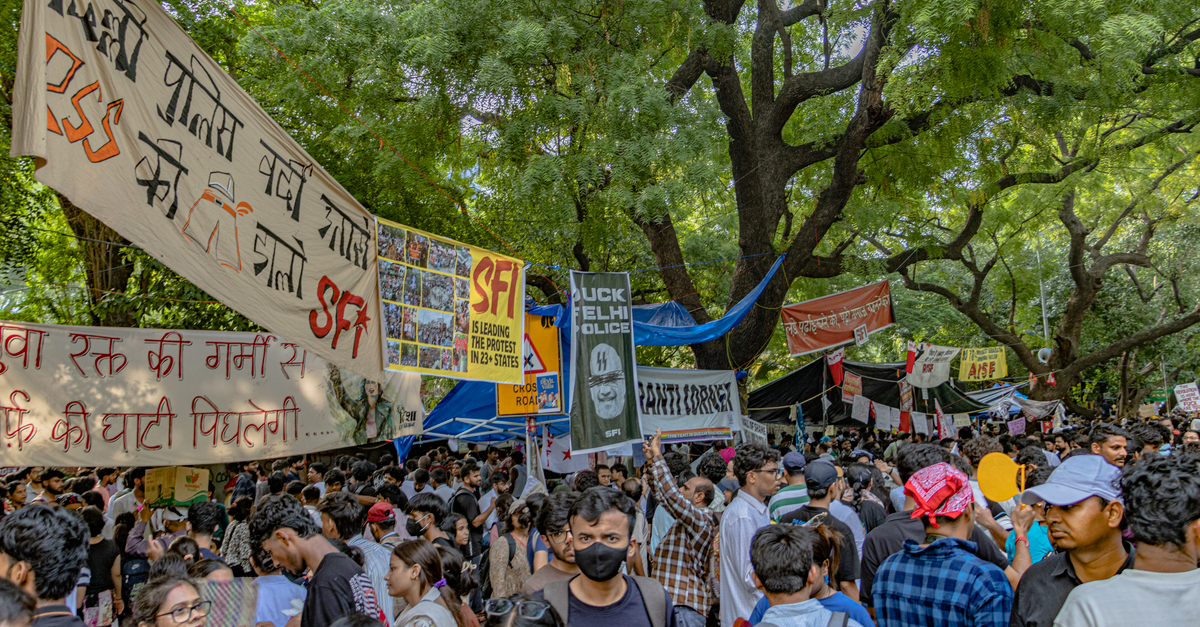
In the days leading up to Saturday, October 10, 2026, Delhi authorities began preparing for significant disruptions. The trigger was a planned protest by the Cockroach Janta Party (CJP) that called for the resignation of Chief Election Commissioner Gyanesh Kumar, whom the party accuses of involvement in vote‑theft allegations. The protest was to take place at Jantar Mantar, a traditional rally point in central Delhi.
To anticipate the expected crowds, Indian Railways announced the cancellation of all mail and express trains arriving at New Delhi and Hazrat Nizamuddin stations between 4 AM and 2 PM on October 10. The Railway Board announced the cancellations, which coincide with the planned CJP protest.

CJP Protest News LIVE: Are metro stations closed? Check Supreme Court ruling, cancelled trains, and traffic diversions https://t.co/8NMJtkFv5G
The Delhi Police asked the Delhi Metro Rail Corporation to close 57 metro stations from 9 PM on Friday, October 9, until further notice. The list includes major hubs such as Rajiv Chowk and INA.
It followed a series of demonstrations by various opposition parties that have also accused the Election Commission of electoral malpractice.
Authorities said they would deploy over 23,000 security personnel across the city on the day of the protest.

What happened before the CJP protest at Jantar Mantar on October 10th? 1. Internet will be shut down within a 4-km radius of the Janpath-Kartavpath crossing from 10 pm tonight until 10 pm tomorrow. 2. North Western Railway has cancelled 13 trains to Delhi for two days. 3. Metro services in Delhi are closed. 4. Cement barricades are being erected at the Noida border. 5. A total of 38,000 soldiers and policemen have been called in. 6. Internet shutdown. But no force can stop the youth.
Despite the party’s preparations, the Delhi Police refused to grant permission for the CJP gathering at Jantar Mantar. The refusal was based on two grounds: the organisers failed to submit the mandatory 10‑day advance notice required for public assemblies, and they had previously violated protest guidelines.
In parts of central Delhi, Section 163 of the Bharatiya Nagarik Suraksha Sanhita (BNSS) is in force, with warnings of legal action for violations.

#Disscussion | @DelhiPolice has denied permission for the proposed October 10 protest at Jantar Mantar, citing public safety, law and order, and traffic concerns. The Supreme Court has stressed that trains and metro stations cannot be completely shut down and that a protest should not bring the entire city to a standstill. Experts discuss the security arrangements, the balance between the right to protest and public convenience, and the impact of the ongoing demonstrations on commuters in Delhi. #Delhi #JantarMantar #DelhiPolice #SupremeCourt
The CJP’s call for the CEC’s resignation did not occur in isolation. It followed a series of demonstrations by various opposition parties that have also accused the Election Commission of electoral malpractice. Abhijit Deepke expressed outrage against the Indian central government following the train cancellations.
On the Thursday before the protest, Joint Commissioner of Police (Transport) Rajneesh Gupta issued a letter indicating that metro train frequencies through the affected stations could be reduced on October 10, depending on the situation.
Abhijit Deepke responded to the cancellations and the denial of permission with sharp criticism. He accused Prime Minister Narendra Modi of having "formalized an emergency" and denounced the detention of youth activists in BJP‑ruled states. Despite the prohibitory orders and the lack of police approval, Deepke declared his intention to travel to Delhi and reach Jantar Mantar regardless of the restrictions.
The brief’s chronology notes that on 2026‑10‑10 the cancellation of mail and express trains arriving in Delhi was to take effect.
Despite the refusal, Abhijit Deepke declared his intention to travel to Delhi and reach Jantar Mantar regardless of the restrictions.