
In the high-stakes arena of Indian democratic processes, the machinery of elections often moves with a momentum that can feel unstoppable. But on October 27, 2026, the Supreme Court of India introduced a deliberate pause into a developing legal situation. The apex court, the nation's highest judicial authority, issued a ten-day stay to the petitioner, Aridhar, providing a crucial window of time in an ongoing dispute regarding an election appeal.
This is not merely a procedural delay; it is a moment of judicial calibration. In the complex ecosystem of Indian governance, the Election Commission serves as the guardian of the ballot, and its decisions carry the weight of constitutional mandate. When those decisions are challenged, the judiciary must step in to ensure that the rules of the game are being followed with absolute precision.
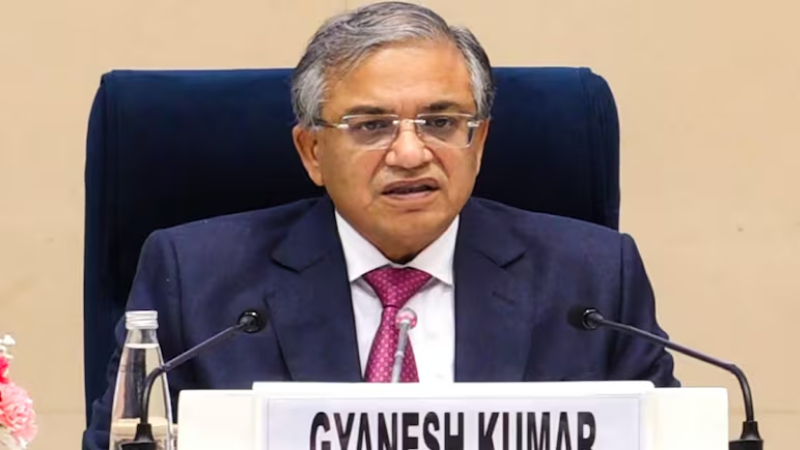
The current legal situation centers on an affidavit submitted by the Chief Election Commissioner. An affidavit is a formal written statement of facts, used as evidence in court, and in this instance, the commission's filing carries significant implications for the direction of the case. The affidavit provided by the Election Commission supports the appeal brought forward by the matter in question.
The decision to grant this ten-day stay was made by a specific judicial bench tasked with navigating the intricacies of this election appeal.
When the central authority responsible for conducting elections sides with an appellant against a previous decision, it signals a moment of profound legal scrutiny. The commission's position suggests that the initial ruling is being re-evaluated under the watchful eye of the court, necessitating this temporary halt to allow all parties to digest the new information presented.

The Election Commission has filed its reply in the Supreme Court to the petition on how the three-member Commission functions. 27 pages, approved by all three members. Its argument: every decision was unanimous, and a Commissioner’s note is a “suggestion,” not a decision. Here’s what it addresses, and what it doesn’t. 🧵 (1/10)
The decision to grant this ten-day stay was made by a specific judicial bench tasked with navigating the intricacies of this election appeal. The bench is composed of Justice Suraj Kumar, Jaymaly Bagchi, and V. Mohan. In the Indian legal system, the composition of a bench is vital, as these judges are responsible for interpreting the law and ensuring that the principles of natural justice are upheld during electoral disputes.
By granting Aridhar this period to respond to the commission's affidavit, the bench is ensuring that the legal process remains adversarial and balanced. In such a system, no single party should have the advantage of a surprise filing without the opportunity to prepare a rebuttal. The ten-day window is the court's way of maintaining the equilibrium between the petitioner, the appellant, and the constitutional authority of the Election Commission.
As the ten-day countdown begins, the focus shifts to how Aridhar will respond to the commission's support of the appeal. The outcome of this period will likely dictate the next phase of the election dispute. For now, the legal machinery has slowed, allowing the arguments to be refined and the facts to be laid bare before the Supreme Court can move toward a definitive resolution.

The Election Commission of India, CEC Gyanesh Kumar and the two Election Commissioners have filed a joint affidavit highlighting that any attempt to restrain the functioning of the CEC will be contrary to law. https://t.co/YWbV4YHu2j ✍️@kdrajagopal