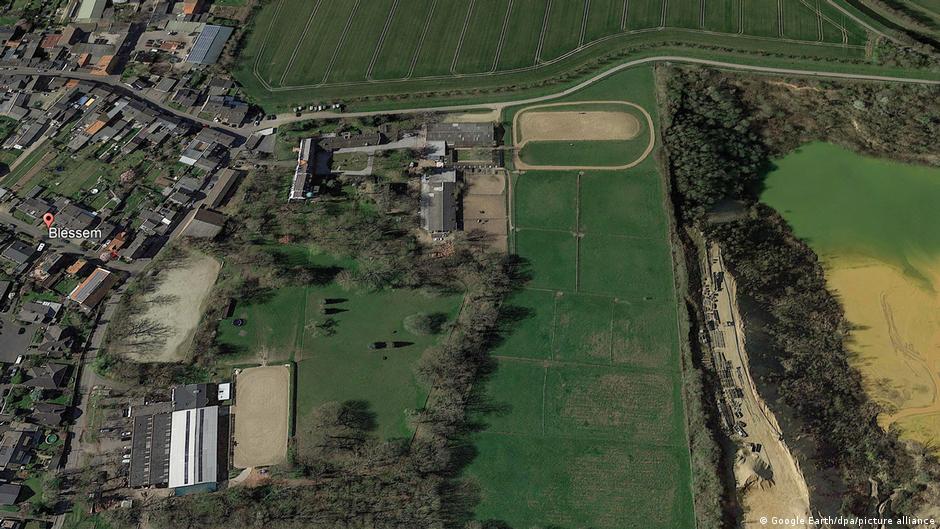
In a groundbreaking ruling on October 20, 2026, the 3. Zivilkammer des Landgerichts Frankfurt am Main (the Frankfurt Higher Regional Court) issued a significant decision. The court ruled that Google must obtain explicit consent from property owners before publishing detailed 3D aerial images on its services Google Earth and Google Maps. This ruling has far-reaching implications for tech giants and the broader debate over privacy and consent in the digital age.

The decision came in response to a lawsuit filed by a Frankfurt resident who sued Google for publishing images of his property on Google Earth and Maps without his consent. The man, who wished to remain anonymous, had been using his property for personal and business purposes, unaware that his home was being captured in such detail. The court found that Google had infringed on the man's privacy by publishing images that included private areas not visible from the street, as well as potential security weaknesses.
The court's ruling was based on the German Civil Code, which protects the right to privacy and the right to personal integrity. The Frankfurt court criticized Google's method of collecting images through 'snooping' without prior notice, making it impossible for residents to protect private areas. The court also dismissed Google's arguments about the public's right to information, stating that the detailed images of private properties are not necessary for infrastructure planning, urban development, or educational purposes.
It also raises questions about the methods used by tech companies to collect data and the responsibilities they have towards property owners.
Google, through its parent company Alphabet Inc., has been under increasing scrutiny for its data collection practices. The company has long argued that it contributes to the democratization of knowledge by making vast amounts of information available to the public. However, the Frankfurt court's decision underscores that this argument cannot justify invading private spaces. A spokesperson for Google stated, 'While we believe that the public has a right to information, we respect the court's decision and will comply with the ruling.'
This ruling is not just about one man's property; it sets a precedent that could reshape how tech giants handle privacy and consent in their mapping services. The decision highlights the tension between the public's right to information and the individual's right to privacy. It also raises questions about the methods used by tech companies to collect data and the responsibilities they have towards property owners.
While the ruling is a significant victory for the Frankfurt man and privacy advocates, it is not the final word. Google has the right to appeal the decision, and the outcome of any appeal could have far-reaching consequences. If the ruling stands, it could lead to changes in how Google and other tech companies operate in Germany and potentially in other countries with similar privacy laws. The court's decision is a reminder that the balance between transparency and privacy is a delicate one, and that tech companies must navigate it carefully.
The Frankfurt court's ruling could have implications beyond Germany. As tech companies continue to expand their mapping services globally, they will need to consider how to balance the public's right to information with the privacy rights of individuals. This may lead to more stringent data collection policies and greater transparency in how data is used and shared. The ruling also highlights the importance of clear communication with property owners and the need for tech companies to seek consent before collecting and publishing sensitive information.

In the end, the Frankfurt court's decision sends a clear message: in the digital age, privacy is a fundamental right that must be protected. Tech companies like Google must respect this right and operate within the boundaries set by the law. The ruling is a step towards a more balanced approach to data collection and privacy, one that respects both the public's right to information and the individual's right to privacy.