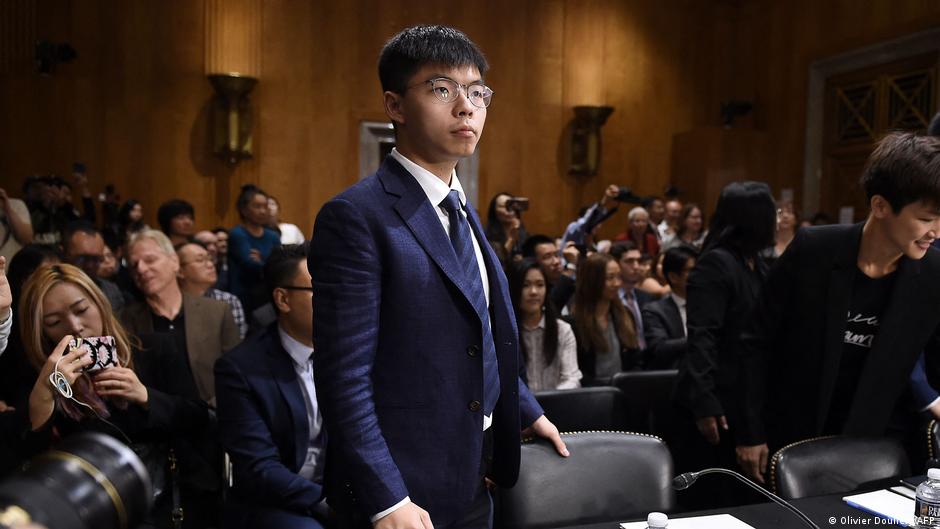
On a gray November morning, a courtroom in Hong Kong fell silent as the judge read the verdict. Joshua Wong, the 30-year-old face of the city’s pro-democracy movement, stood in the dock, his familiar round glasses and slight frame unchanged from the student protests that made him a global symbol. The charge was collusion with foreign powers, and the sentence was an additional 10 years in prison—a term that, when added to his existing sentence, would keep him behind bars until 2036. For his supporters, who had packed the gallery and gathered outside in large numbers, the decision was both a devastating blow and a rallying cry. For Hong Kong’s authorities, it was another step in the quiet consolidation of a legal framework that has reshaped the city since 2020.

To understand Joshua Wong, you have to go back to a time when Hong Kong’s streets were the stage for a different kind of politics. Wong first became a household name in 2014, as a teenager leading protests against Beijing’s plans to introduce national education into local schools. He was barely old enough to vote, yet his defiance—captured in countless photographs of a slight youth facing down police lines—made him the accidental icon of a generation. By 2014, he was one of the leaders of the Umbrella Movement, a 79-day occupation of the city’s main commercial districts that demanded genuine universal suffrage. The movement fizzled, but Wong’s legend grew. He was arrested, released, and arrested again, each cycle cementing his status as the most recognizable figure in a movement that had no official leader.
When Beijing imposed the National Security Law on Hong Kong in 2020, it did so with a sweeping definition of what constituted a threat to national security. The law criminalized acts of secession, subversion, terrorism, and—crucially for Wong—collusion with foreign or external forces. The charge of collusion, as outlined in the law, covers any agreement or act that seeks foreign intervention in Hong Kong affairs, including requests for sanctions or other measures against the city or China. For Wong, who had long advocated for international pressure on Beijing, the law was a direct threat. In June 2025, Hong Kong authorities formally accused him of seeking foreign help for sanctions, a move that set the stage for his trial. The accusation was not new in substance—Wong had publicly called for foreign governments to impose sanctions on Hong Kong officials—but under the new law, such calls were no longer just rhetoric; they were crimes.
The sentence was severe enough to ensure that Wong would spend most of his remaining youth in prison.

Hong Kong activist Joshua Wong sentenced to 10 more years https://t.co/EcadAFslXJ
The trial itself was a study in the new normal. Proceedings were held under the National Security Law, which allows for closed-door hearings and restricts the disclosure of evidence. Wong, who had been in custody since 2016 on earlier charges, faced the collusion charge with the same defiance he had shown in his youth. The court’s decision, handed down on November 5, 2026, sentenced him to an additional 10 years, to be served consecutively with his existing term. The sentence was severe enough to ensure that Wong would spend most of his remaining youth in prison.
For Wong’s supporters, the sentence was a bitter confirmation of what they had long feared: the National Security Law was not just a tool for punishing past actions but a mechanism for dismantling the pro-democracy movement itself. Wong was one of the last major figures from the 2014 Umbrella Movement still active in public life. Many of his peers had already been jailed, had fled into exile, or had quietly withdrawn from politics. His imprisonment, combined with his existing term, effectively removes the movement’s most visible symbol from the scene for the foreseeable future. Outside the courthouse, his followers chanted slogans and waved banners, but the energy was tinged with resignation. The large numbers who turned out for the trial were a testament to his enduring appeal, but they also underscored the movement’s fragility: a leaderless opposition, facing a legal framework that leaves little room for dissent.

Joshua Wong, once a rising political star in Hong Kong's pro-democracy movement, has been sentenced again under Beijing's national security law. https://t.co/6GFhJnTmKi
Wong’s case has always had an international dimension, and his sentence is likely to reverberate far beyond Hong Kong. Western governments, which have criticized the National Security Law, will see this as another example of its harsh application. Human rights groups have already expressed concerns about the trial, pointing to the law’s vague definitions and the lack of due process. For Beijing, however, the sentence is a matter of sovereignty—a necessary measure to protect national security against foreign interference. The charge of collusion with foreign powers is particularly sensitive, as it touches on the broader geopolitical struggle between China and the West. Wong’s calls for sanctions, once a standard tactic of pro-democracy activists, are now a criminal offense, and his case serves as a warning to others who might consider following his path.
For now, Joshua Wong remains in prison, his release date set for 2036, when he will be 40 years old. The sentence does not end the pro-democracy movement in Hong Kong, but it does mark a definitive chapter in its history. The boy who once stood up to an empire now faces his own long shadow.

Hong Kong activist Joshua Wong sentenced to 10 more years https://t.co/VJlh6b3oul