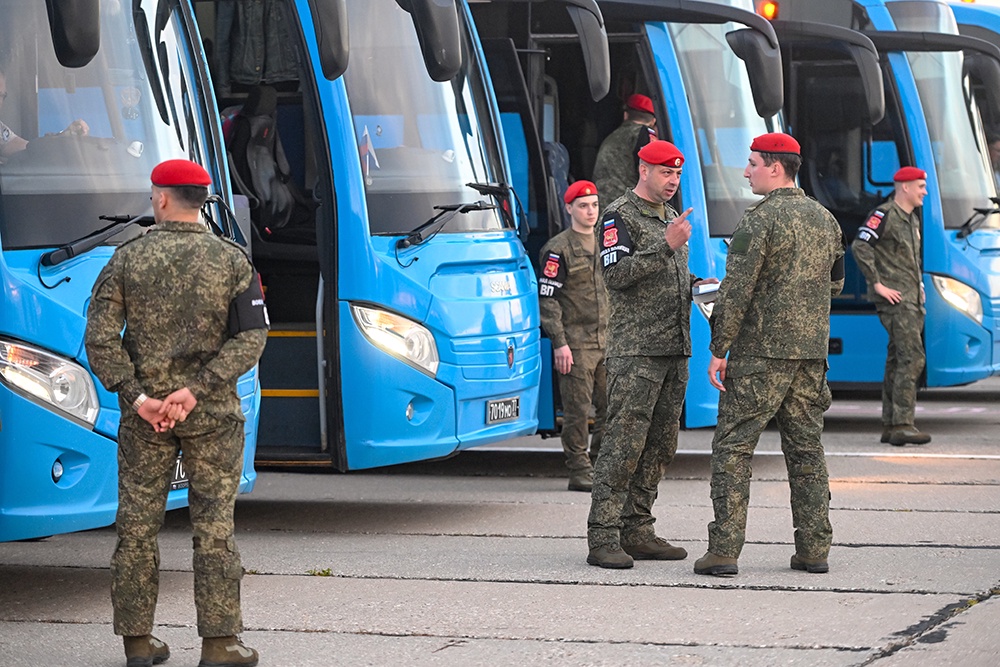
When a thin line of military trucks rolled out of a checkpoint in Belarus on the morning of October 23, 2026, the faces inside told a story that few outsiders ever see. Russian soldiers, gaunt from months of confinement, were escorted under the watchful eye of the Russian human‑rights ombudsman. Their destination: a series of medical and psychological facilities that would prepare them for the long journey home. Across the same border, Ukrainian families awaited the return of their own—270 men who had endured Ukrainian‑controlled captivity. The exchange was not a spontaneous gesture; it was the latest chapter in a painstakingly negotiated process that has, on rare occasions, allowed combatants to leave the battlefield alive.

The October 2026 swap mirrored a precedent set on August 19, 2023, when both sides agreed to exchange 103 prisoners each. That earlier deal, brokered with the mediation of the United Arab Emirates, demonstrated that even amid a protracted conflict, a numerical formula—matching equal numbers on each side—could become a workable template. The 270‑for‑270 exchange simply scaled that model up, showing that the parties were willing to repeat a structure that had previously succeeded. The symmetry of the numbers—270 Russian prisoners for 270 Ukrainian prisoners—underscored a mutual acknowledgment that each side valued the lives of its own soldiers enough to meet the other's demands on a one‑to‑one basis.
Belarus played a pivotal logistical role in the latest exchange. All 270 Russian prisoners were held on Belarusian soil before being transferred back to Russia. The Russian Ministry of Defense confirmed that the soldiers would receive “psychological and medical assistance” while still in Belarus, a step that signals an attempt to address the immediate health needs of returning combatants before they cross the border again. The choice of Belarus as an intermediate location reflects both practical considerations—its proximity to the front lines—and diplomatic ones, as the Belarusian authorities have cooperated with Moscow to facilitate the handover.
The presence of the ombudsman also adds a layer of accountability, ensuring that the promised medical and psychological assistance is not merely rhetorical.
The Ministry of Defense’s statement emphasized that the returning Russian servicemen would undergo medical treatment and rehabilitation once they re‑entered Russian territory. This focus on health care is not merely bureaucratic; it acknowledges the physical injuries and mental trauma that accumulate during captivity. By foregrounding rehabilitation, both governments signal an awareness that the cost of war extends beyond the battlefield and that reintegration is a necessary, albeit challenging, next step.
On the same day as the exchange, the Russian human‑rights ombudsman met with the newly returned soldiers. The meeting, recorded in the official chronology, served a dual purpose: it provided a formal channel for the soldiers to voice any concerns about their treatment, and it offered the state a visible demonstration of its commitment to the welfare of its servicemen. The presence of the ombudsman also adds a layer of accountability, ensuring that the promised medical and psychological assistance is not merely rhetorical.
The stark symmetry of the figures—270 prisoners on each side—offers a clear, if sobering, metric of the exchange’s scale. Compared with the 103‑person swap three years earlier, the current deal more than doubled the number of lives moved in a single operation. The repetition of the “270‑for‑270” formula suggests that both Moscow and Kyiv have settled on a pragmatic baseline that balances diplomatic feasibility with domestic expectations. It also hints at the underlying logistics: arranging transport, medical screening, and legal documentation for such a large cohort requires coordination that extends beyond the battlefield into ministries of health, defense, and human rights.
Prisoner exchanges have always been delicate, often described as “difficult negotiations.” Talks on such swaps are frequently fraught, yet the successful execution of the October 2026 exchange demonstrates that, despite the broader conflict, channels of communication remain open. The involvement of third‑party mediators in the 2023 exchange—specifically the United Arab Emirates—shows that external actors can facilitate dialogue when direct talks stall. While the current swap did not cite a mediator, the precedent suggests that future exchanges may again rely on diplomatic intermediaries to bridge gaps.
As the sun set on the Belarusian checkpoint that day, the trucks carrying the 270 Russian soldiers began their slow return toward Russian territory, while Ukrainian officials prepared to receive their own. The exchange did not resolve the larger war, but it did provide a momentary balance sheet where lives were accounted for, treated, and sent home. In a conflict where numbers often become abstractions, the concrete tally of 270 on each side reminds observers that behind every statistic lies a human story of survival, loss, and the hope of rehabilitation.
For newcomers to the conflict, the exchange illustrates a paradox: even amid relentless fighting, there exists a structured, almost bureaucratic, process that treats prisoners as assets to be negotiated. The involvement of ministries, human‑rights offices, and medical teams transforms what could be a purely political transaction into a multi‑layered operation that touches on law, health, and morality. Each soldier’s return is a reminder that war’s arithmetic is not just about territory or firepower, but about the individuals whose lives are counted, exchanged, and, ultimately, reclaimed.